Reduce electricity bills
For homes and professional sites that use a substantial share of their electricity while the sun is available.
The estimate tests how closely daytime demand and solar production can work together.
ReneWave designs, supplies, installs and commissions solar systems across Morocco. Share what you know about your site; the first review is free. We complete the remote study and give you a written installation price before the visit.
Most clients do not start with a system type. They start with a bill, a pump, a backup problem, an isolated site, or a quote they are not sure they can trust.
For homes and professional sites that use a substantial share of their electricity while the sun is available.
The estimate tests how closely daytime demand and solar production can work together.

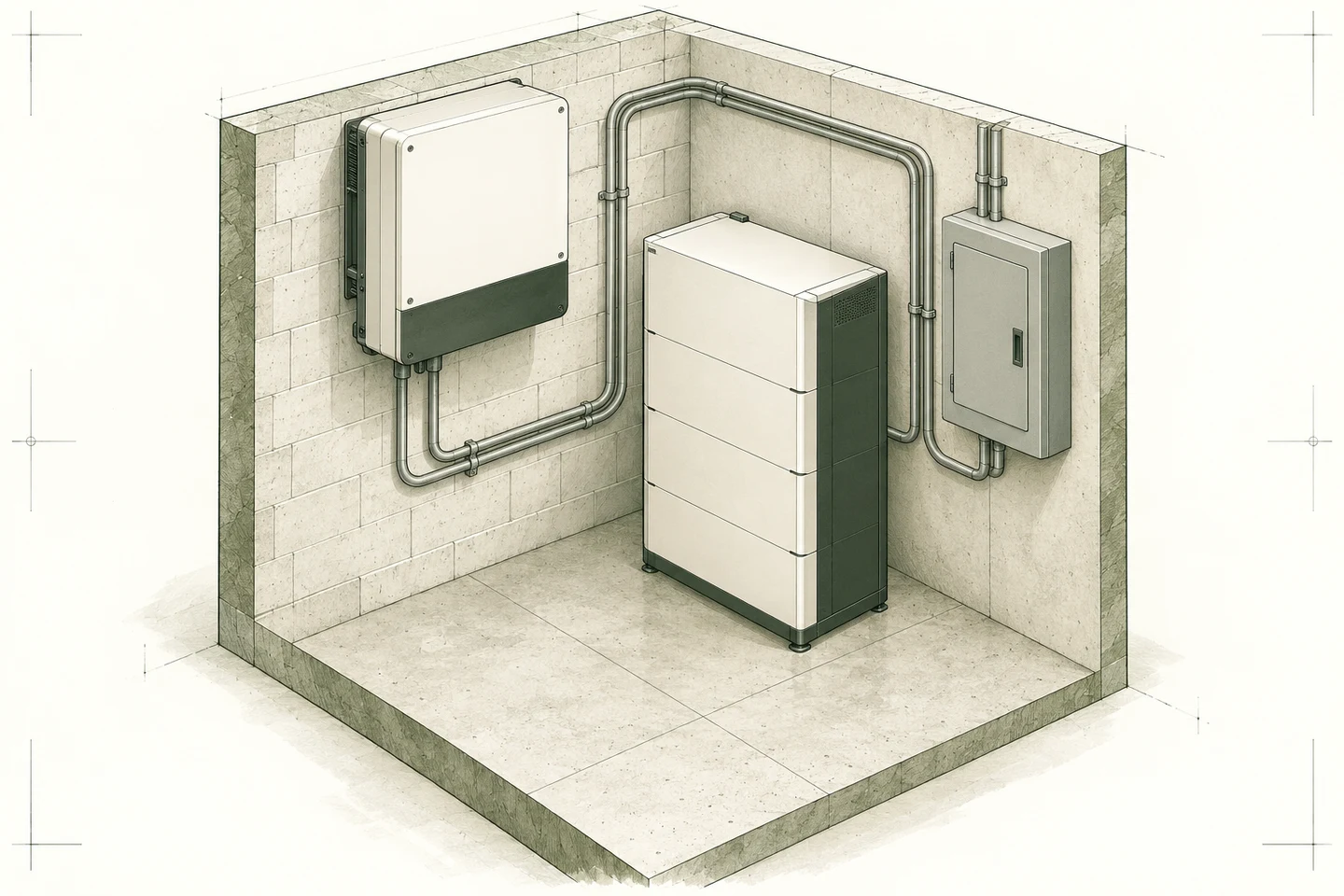
Hybrid solar and battery storage for outages, pumps, refrigeration, lighting, IT, guest comfort, or operational continuity.
Critical loads and required backup hours set the storage and inverter architecture.

Off-grid solar architecture for remote villas, farms, agricultural sites, and locations where grid access is limited.
Autonomy days, seasonal production and backup strategy are sized together.

Solar pumping sized from water demand, head height, flow rate, pump curve, and seasonal operation.
Sizing follows the water volume, pressure and seasonal schedule the site must deliver.

We examine daytime demand, available space and operating priorities before recommending equipment.
A written plan makes the expected production, project scope and costs easier to assess.

Engineering review of another proposal before committing to a system, supplier, or battery bank.
Weak assumptions, missing protections and oversizing become visible before capital is committed.
Start with the operating question. The right architecture follows from it.
Start my solar projectYou do not need to choose a system now. We recommend one after reviewing your site, electricity use and backup priorities.
Reduce grid consumption during operating hours. Best when your load overlaps with solar production.
Add storage where continuity matters: pumps, lighting, refrigeration, IT, guest comfort, or critical operations.
For sites where the grid is unavailable, unstable, or economically impractical.
Pumping is sized from water demand, not panel count.
For businesses that need numbers that survive operational reality.
We complete the Solar Study from your remote information before quoting. If something essential is missing, we ask for it first. The written installation price states its assumptions; a hidden condition or requested change requires a separate written quote and your approval.
We prepare the study remotely before quoting. After acceptance and deposit, you receive its complete written file.
One document shows what we recommend, why it fits the site and which assumptions support the price.
Explore the Solar Study
Expected generation over the year, based on site and system assumptions.

Hour-by-hour annual behavior where the project scope requires detailed modeling.
How much energy is expected to be used directly on site.

Financial analysis based on stated assumptions, not guaranteed figures.

Panels, inverter, batteries, protections, cabling, monitoring, and installation logic.

Tariffs, load profile, degradation, losses, site constraints, and scenario boundaries.
Six engineering checks turn your remote information into a studied design and written price. The later visit confirms installation details.
Read the demand and the site before choosing equipment.

Available bills or known electricity uses, site location, photos and your priorities. Missing details can be filled in later.

Bills are combined with operating schedules, appliance data, interval data or site measurements to estimate when demand occurs.
Turn operating priorities into a defensible architecture.

Panel technology, inverter class and battery chemistry chosen from roof geometry, temperature, backup need and budget window — matched to qualified manufacturers, recommended in writing.
On-grid, hybrid, off-grid or pumping decided from load, grid context and backup requirement. Sized DC/AC, string layout, protections, monitoring.
Check placement, yield and assumptions before setting the written price.
Shading study, tilt and azimuth, roof obstacles, string grouping to avoid mismatch losses, cable runs, inverter placement for temperature.

Written study: architecture, bill of materials, single-line, protections, monitoring, savings scenario, assumptions and limits.
When two system types could work, the study compares their expected use of solar energy and costs, then makes one written recommendation.
A battery can keep selected circuits powered during an outage or carry some daytime solar energy into later hours. These are different objectives, and neither calls for storage by default.
We identify the circuits that must stay on, then assess their power and desired duration. Backup time depends on actual demand and usable capacity.
Storage can shift some unused daytime production into evening use, but it adds cost and conversion losses.
If demand is mainly during daylight and backup is not needed, direct self-consumption may be the better starting point.
Before recommending storage, we review when the site uses electricity, essential-load power, the desired backup period, usable battery capacity, inverter compatibility and cost.
Already have a proposal? We check whether the system fits your site, the equipment fits the job and the financial assumptions hold up before you commit.
We confirm the review scope, timing and fee before any paid work begins.
Engineering review before commitment
System size vs. real load
kWp cross-checked against operating hours and consumption profile.
Production estimate & assumptions
Underlying irradiance, losses, tilt and shading assumptions checked.
Equipment selection & inverter logic
Panel technology, inverter class and DC/AC ratio against the site.
Battery assumptions & usable capacity
Depth of discharge, chemistry, and backup duration against critical loads.
Electrical protections & installation scope
DC/AC protections, earthing, monitoring and BOM completeness.
Estimated payback & tariff treatment
Scenario recomputed on the real client tariff with written assumptions.
Send what you know about your site. Here is what happens next, and when each payment is due.
We review your inputs, request anything missing and complete the remote Solar Study before quoting. The quote lists equipment, study and installation separately.
Accept the written quote to receive your complete Solar Study file and arrange the site visit.
The visit confirms cable routes and installation details. We then deliver and install the agreed system.
We test the system and hand over its records, manufacturer warranty documents and the 24-month workmanship warranty.
The accepted quote states deposit and cancellation terms. A hidden condition or requested change requires a separate written quote and your approval.
Every application has its own load profile, continuity priority, and operational rhythm. Open the guide closest to your site.
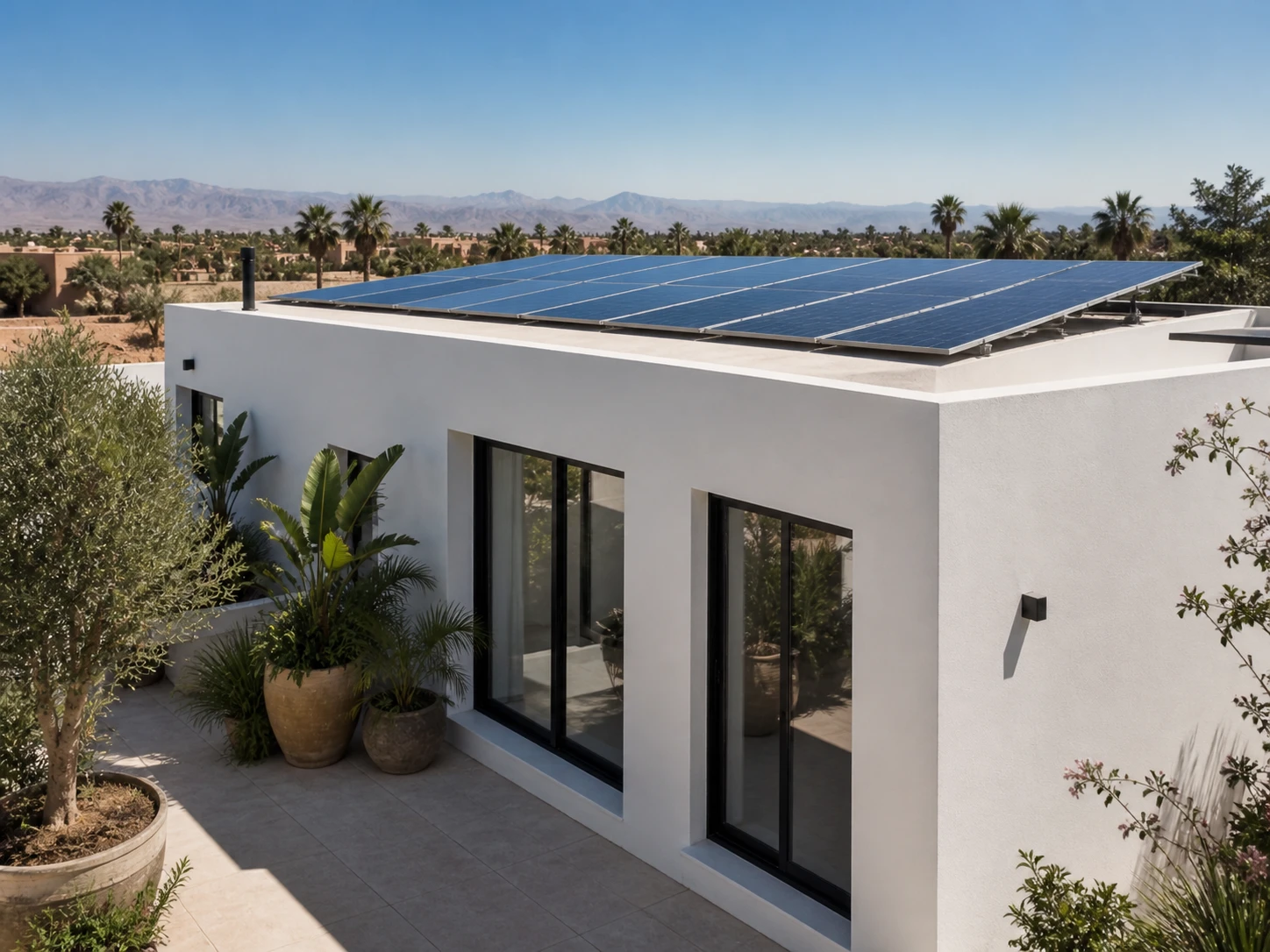
Self-consumption, backup circuits, and honest sizing for residential sites.
Open the guide
Guest comfort, hot water, pumps, refrigeration, and operational continuity.
Open the guide
Kitchen cycles, refrigeration, and service-hour load matching.
Open the guide
Continuous refrigeration loads and backup logic for the cold chain.
Open the guide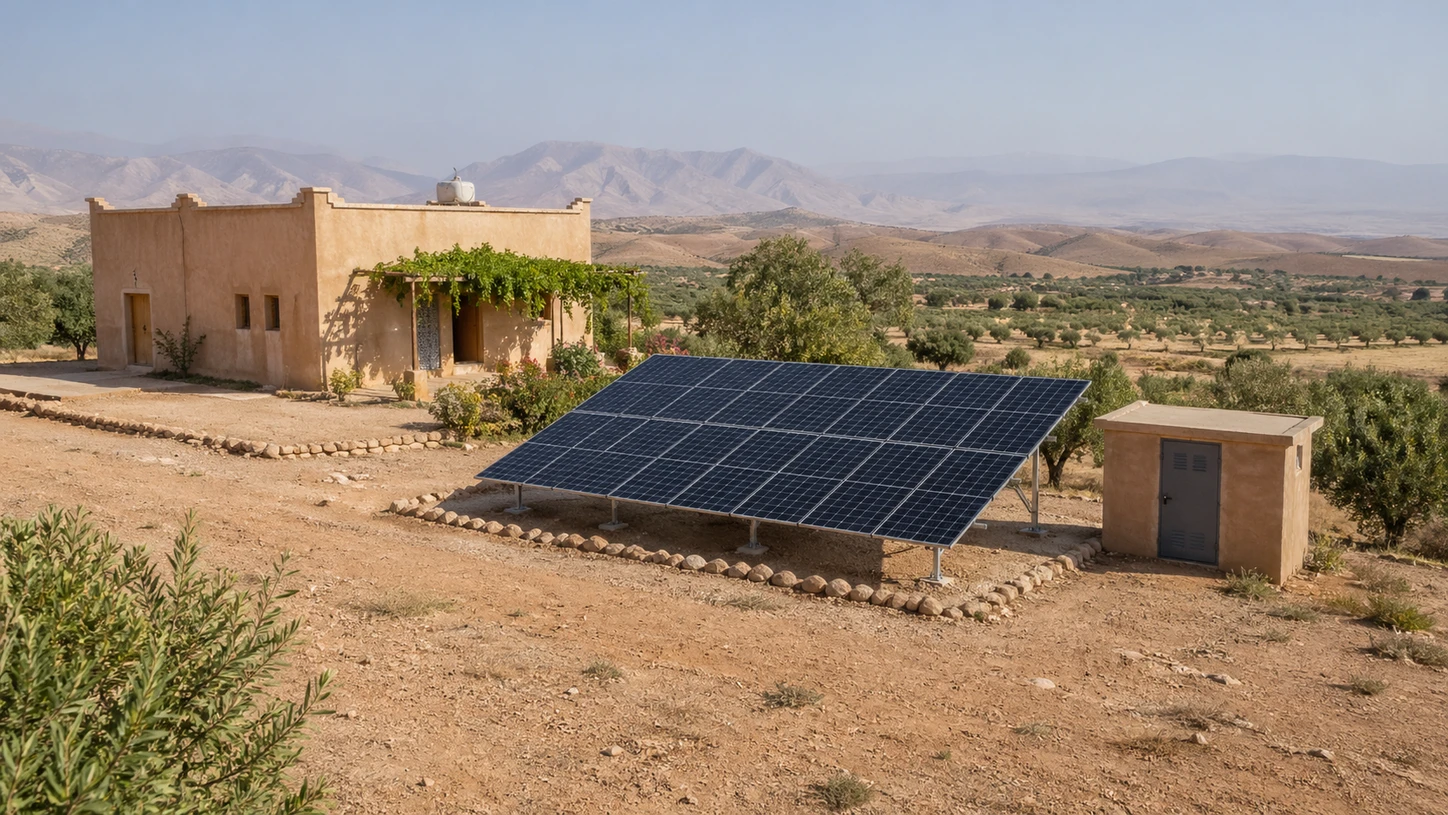
Solar pumping, irrigation scheduling, and remote-site autonomy.
Open the guide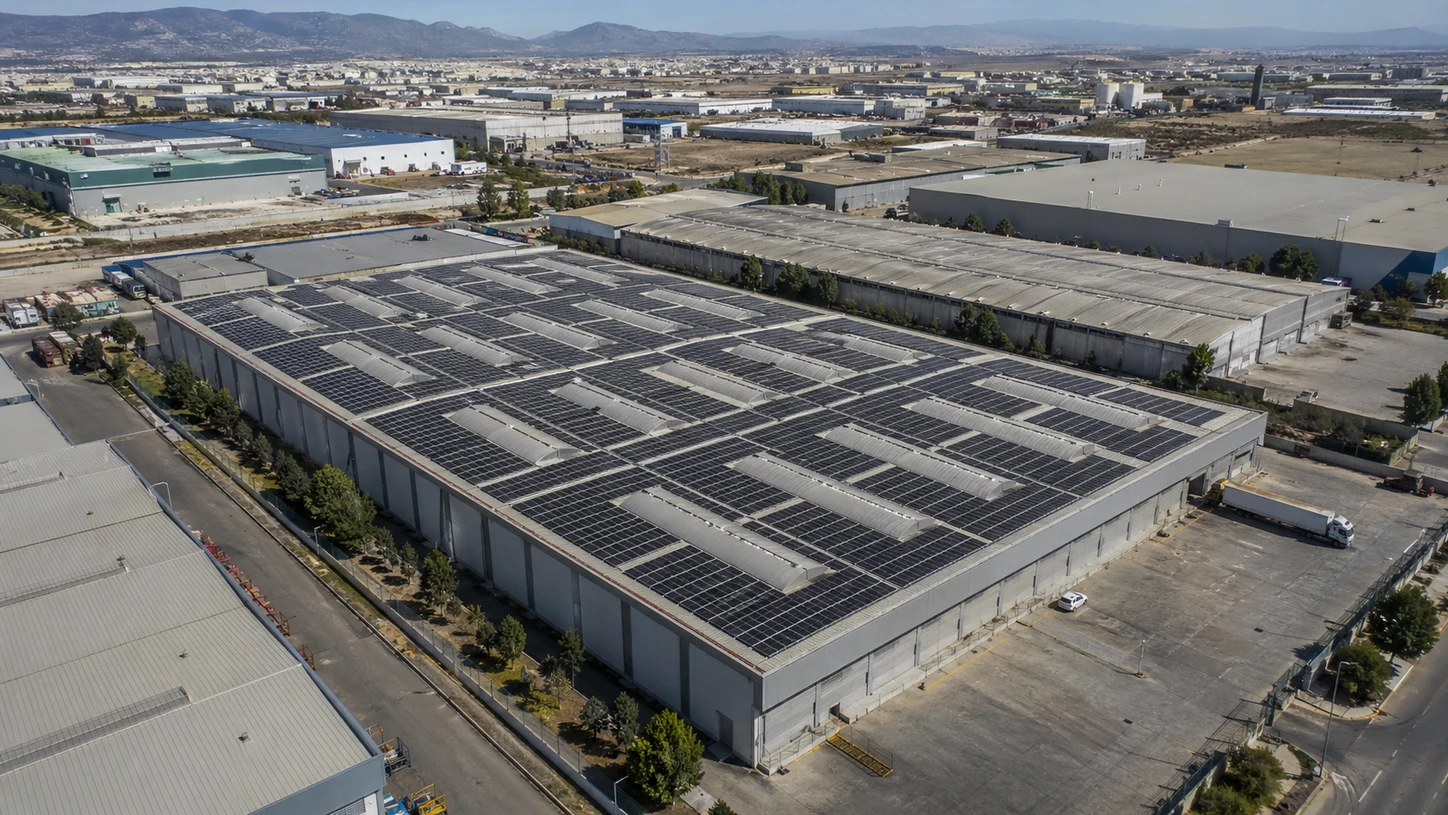
Load curves, power quality context, and roof or land capacity constraints.
Open the guide
Offices, retail, and tertiary buildings — tariff structure and operating hours.
Open the guide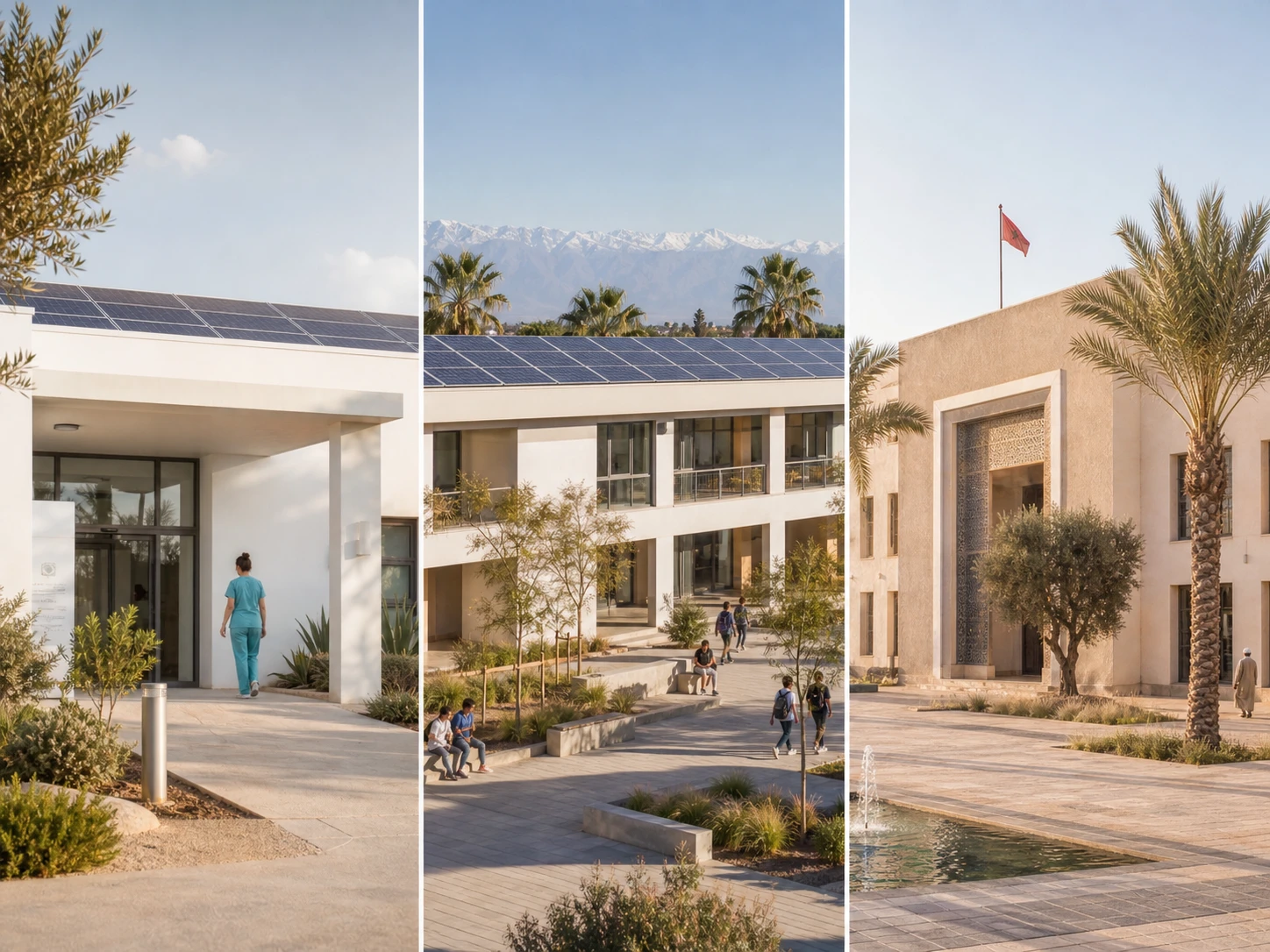
Continuity for institutional buildings and sensitive loads.
Open the guide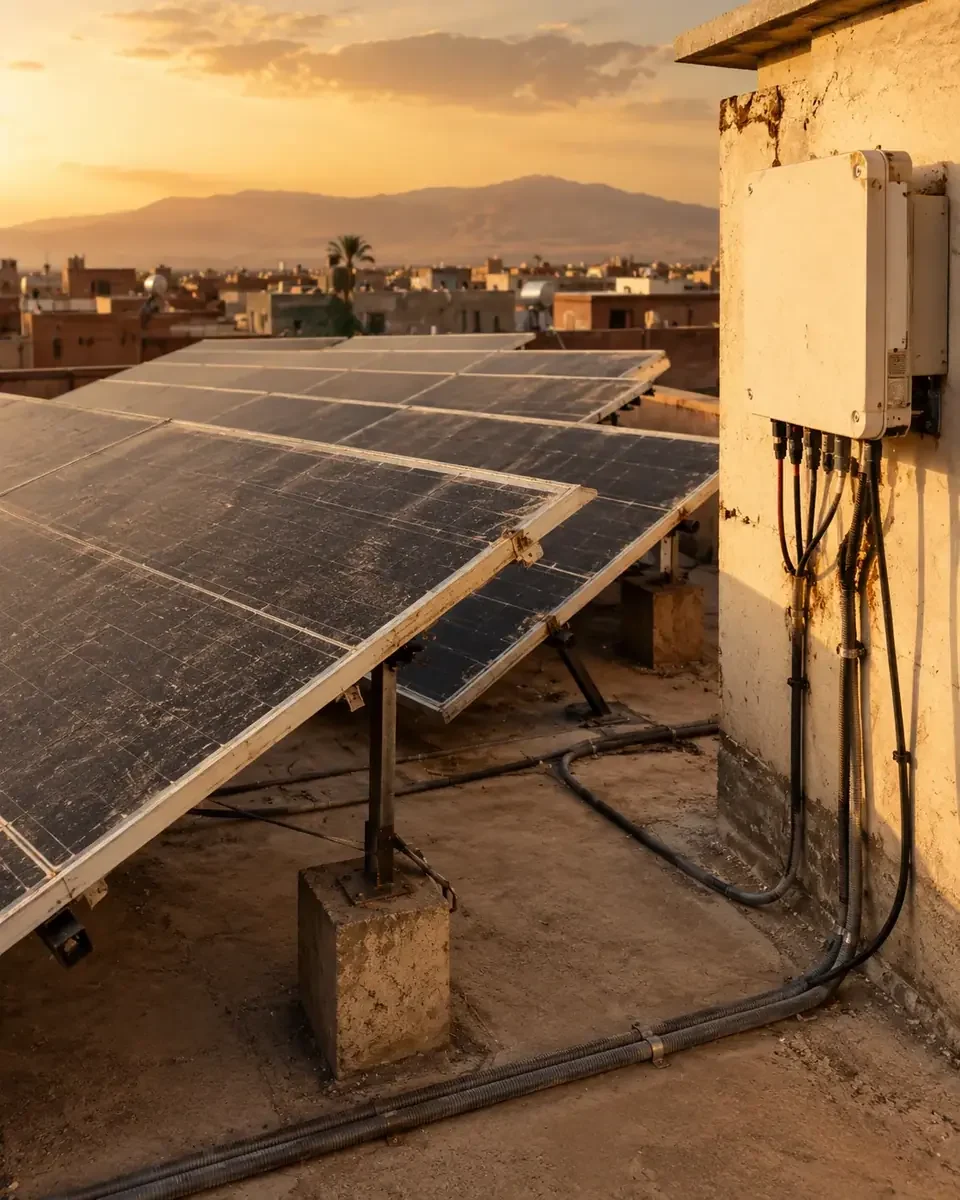
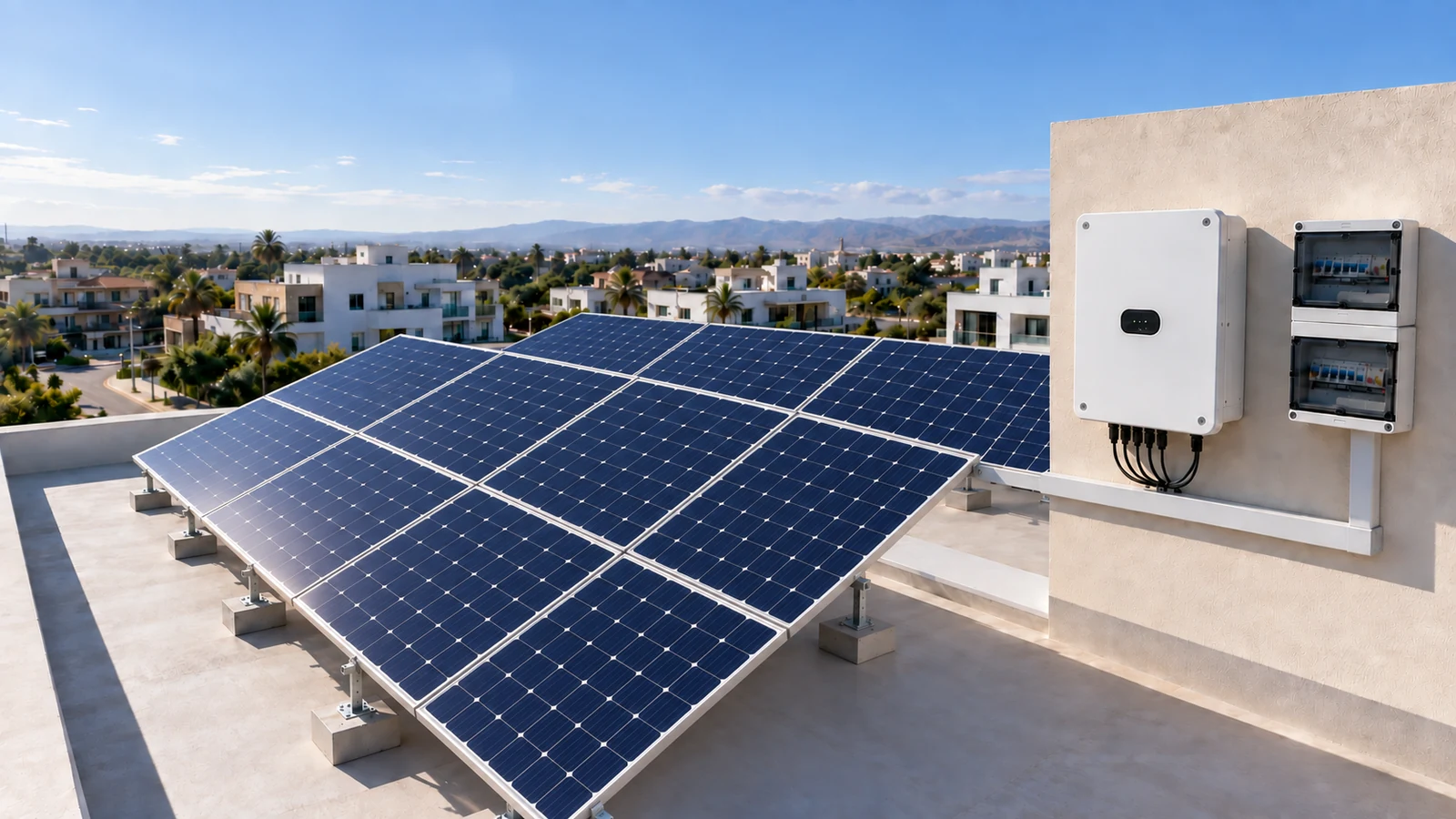
PV modules are expected to operate for decades, while inverters and batteries follow their own thermal, electrical and warranty conditions. The study fixes voltage windows, ventilation, DC/AC ratio, protections, mounting and monitoring before work reaches the roof.
Commissioning records then show how the installed system was tested and configured. That evidence supports diagnosis, handover and manufacturer warranty files throughout the system's life.
Equipment is sourced against the signed architecture and documented substitution rules.
Bill of materials frozen
The agreed equipment list is checked line by line before procurement starts.
Equipment selection
Panels, inverter, batteries and protections from qualified manufacturers.

Site delivery
Hardware procured and delivered to site under the signed scope.
Site work follows the engineered layout, electrical and physical constraints.

Mechanical install & cabling
Panels, inverter, DC and AC cabling installed from the engineered layout.

Protections & earthing
Breakers, surge protection, isolation and earthing checked to the study scope.
System is tested, configured and handed over with a written as-built pack.
Commissioning tests
Configuration, protection tests and operating status verified before release.

Monitoring setup
Monitoring account and operating visibility configured for the client.
As-built pack handed over
Final architecture, single-line, protections and settings delivered in writing.
ReneWave-authored operating documents and a technical line kept open after handover.

ReneWave operating documents
Panel cleaning guide, seasonal care guide, safety and shutdown procedure — authored by our engineering team for the installed system.

Manufacturer warranty support
ReneWave helps document and follow manufacturer warranty files, with a technical line for post-installation questions and settings.
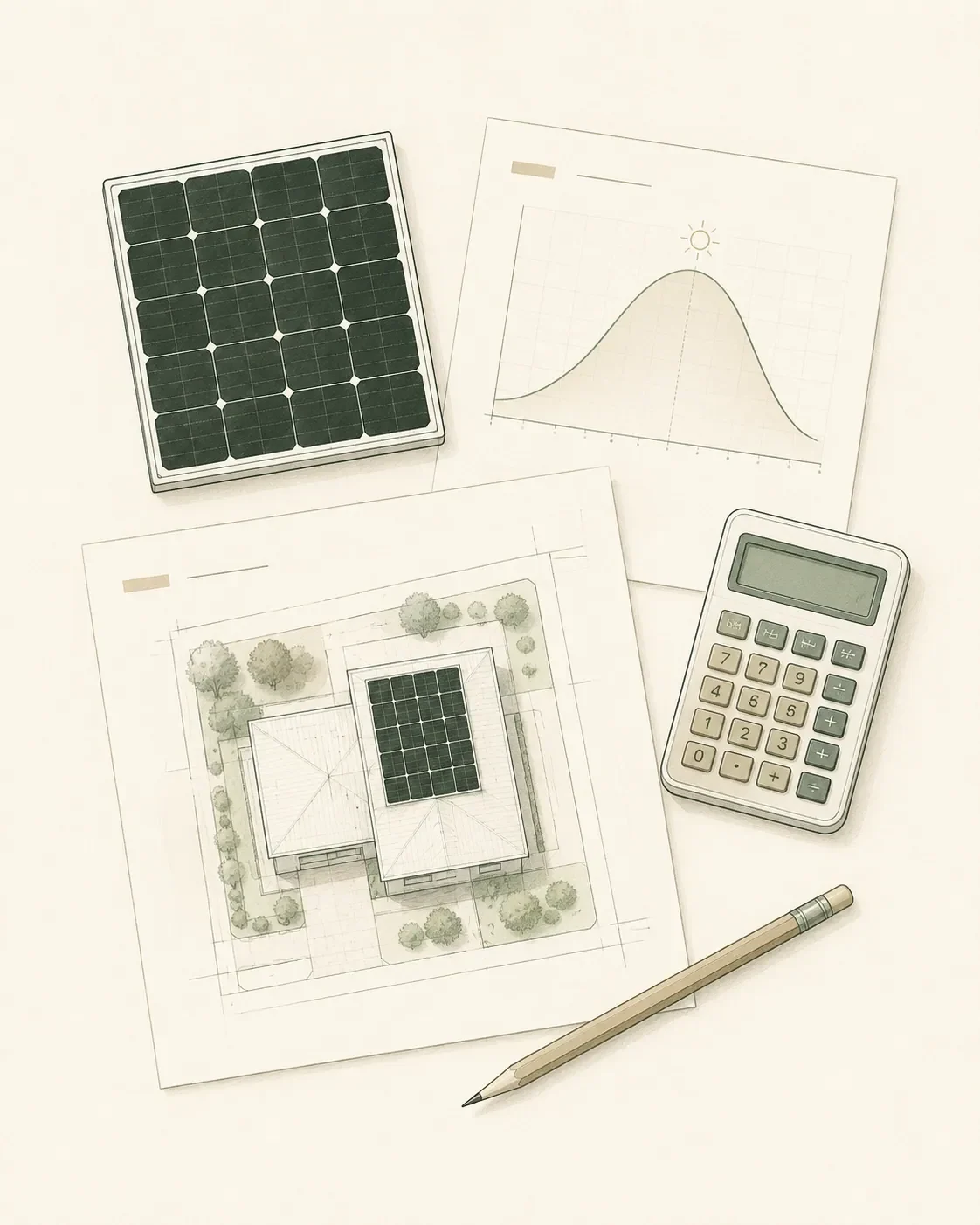
These tools prepare the first engineering conversation with stronger inputs, better questions and a clearer view of which scenario deserves a full study.
Bill in, scenario out.
First-order PV sizing from a monthly bill, city irradiance and target solar share.
Sharper study start.
Send the bill, site photos and roof or land context that let ReneWave read the project faster.

The full scratchpad.
Browse every ReneWave calculator and scorecard. Each one declares its inputs, output and scope.
The practical questions customers ask before trusting a solar study, quote review or installation scope.
Send us the data. ReneWave can help you understand what system makes sense, what should be simulated, and what investment scenario deserves a serious look.
 RENEWAVE
Energy systems, held to standard.