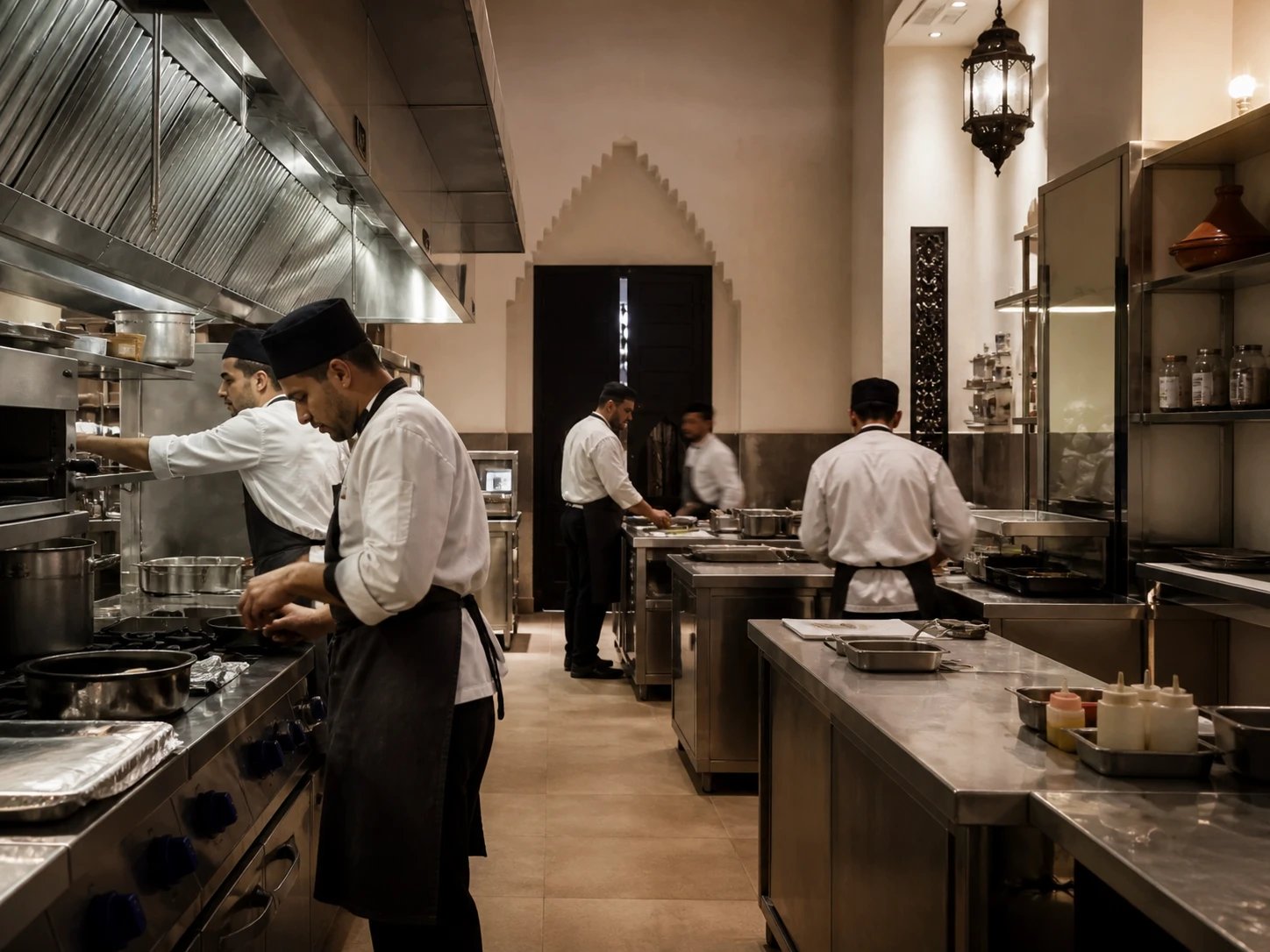
Restaurant problems usually arrive during service.
Restaurant owners rarely describe the first problem as a neat energy question. They describe a high bill, a hot kitchen, a cold room that makes staff nervous, refrigeration alarms, hot water that falls behind during cleaning, lights or POS that cannot go down, or a quote that makes equipment look simple while the kitchen reality remains unclear.
Those symptoms lead to different first actions. A high bill may need operating-hours and refrigeration review before solar sizing. A cold-room issue may need maintenance history and temperature behavior before replacement. A repeated trip during dinner service may need technical-room clarity before another repair is approved. The owner should care because the cost is rarely only the repair invoice: the same fault can hit service pace, stock confidence, staff pressure, customer experience and the next busy shift.
Restaurant loads follow prep, rush, recovery and closing.
Cafes, snacks, fast-food restaurants, hotel kitchens, catering kitchens and full restaurants can show similar bills while operating very differently. A cafe may be shaped by refrigeration, lighting and coffee equipment. A snack may carry tight rush peaks. A full kitchen may combine extraction, cooking, refrigeration, hot water, HVAC and POS. A catering kitchen may work in batches. A hotel kitchen may interact with occupancy, breakfast, events and guest expectations.
The useful review therefore reads the building by service rhythm. Prep, lunch, recovery, dinner, delivery, closing and overnight baseline each create different pressure. Solar, audit, maintenance and backup become clearer when those periods are named.
What the numbers mean for a restaurant operator.
Numbers are useful only when they change the next question. Morocco tourism figures point to seasonality, busy periods and maintenance timing. International restaurant energy benchmarks explain why kitchens deserve a different reading from ordinary offices. Food-safety regulation reminds the operator that refrigeration confidence and records are part of running the business. Each figure is screening context; the actual answer comes from the site.
Morocco reported 17.4 million tourists and 28.7 million overnight stays in 2024.
For a restaurant, busy seasons compress maintenance windows and make cold-room, hot-water and extraction issues more expensive to discover late. The number matters because service pressure turns small technical uncertainty into stock, staff and customer-experience pressure.
Map high-season service periods, closed days, stock peaks and the best maintenance window before approving work.
Office des Changes indicators show travel receipts at about 112.5 billion MAD in 2024.
Read this as national tourism demand context. Individual restaurant revenue depends on the site, but valuable service periods make stock loss, interrupted service and emergency repairs more painful when the kitchen is already under pressure.
Name the loads that protect revenue moments: cold room, POS, network, selected lighting, hot water and closing routines.
ENERGY STAR states that restaurants use about five to seven times more energy per square foot than other commercial buildings; high-volume quick-service sites can reach up to ten times.
This international benchmark explains why kitchen bills need a separate rhythm review. Refrigeration, extraction, hot water and rush-hour peaks can hide behind one monthly total, then push the owner toward a quote that misses the real driver.
Separate baseline refrigeration from service peaks before solar, batteries or equipment replacement are discussed.
Morocco has a dedicated food-safety framework under Law 28-07 and ONSSA regulation.
This reminds operators that refrigeration confidence, records and operating discipline are part of the business reality. A cold-room symptom deserves traceable history before it becomes a rushed equipment decision.
Keep cold-room symptoms, alarm history, maintenance visits and corrective actions traceable.
The rush explains what the bill hides.
A monthly bill compresses every rush, cleaning period and overnight baseline into one number. The service pass separates those moments. Refrigeration may run all day, extraction may dominate the rush, hot water may peak after service, and POS or lighting may become continuity loads. Once those periods are visible, the next question becomes practical: which loads are normal, which are stressed, and which need evidence before a quote can be trusted?
This rhythm changes the first answer. Daytime and continuous loads can support a solar discussion. Repeated rush-hour trips push toward audit and technical-room evidence. Cold-room uncertainty pushes toward maintenance history and stock-risk review. Closing and overnight loads explain why refrigeration and alarms deserve more attention than ordinary background consumption.
The first review collects operating evidence.
A restaurant can start without a perfect technical file. It needs enough context to avoid guessing. The most useful evidence is practical: when the kitchen operates, what equipment protects service, where symptoms appear, what has already been repaired and what the quote assumes.
Bills and service hours
Send recent bills with opening hours, prep time, rush periods, closed days and seasonal notes.
Refrigeration context
Cold rooms, display fridges, ice machines, alarms, temperature complaints and stock-risk notes.
Extraction and kitchen heat
Hood, fan, ventilation, kitchen heat, smoke, odor or comfort complaints during service.
Hot-water rhythm
Dishwashing, handwashing, kitchen cleaning, peak recovery and any shortage periods.
Technical-room evidence
Photos of panels, labels, meters, visible alarms, old interventions and access constraints.
Existing proposals
Attach solar, backup, refrigeration, extraction, audit, maintenance or repair quotes.
Staff observations matter here. A symptom that appears during lunch rush, after dishwashing, during summer heat or after closing is more useful than a generic note that something "trips sometimes." The first review turns those observations into a path for qualified work.
Restaurant solar follows service hours and self-consumption.
Solar can be a strong fit when the restaurant uses meaningful energy during daylight or carries continuous loads: refrigeration, prep, extraction, lighting, POS, HVAC, pumps or hot-water systems where relevant. The system size should follow bills, service rhythm, roof or access reality, equipment zones, self-consumption logic and what remains grid-supplied. The practical opportunity is to match production to energy the restaurant already needs during service and preparation. Generic panel count comes after that.
A serious restaurant quote treats a sunny roof as one input. It explains when the energy is expected to be used, how refrigeration and kitchen hours shape self-consumption, what happens to unused energy, what the roof can realistically accept and what maintenance or monitoring remains after commissioning. That protects the owner from approving a system that looks impressive while missing the actual operating rhythm.
Cold rooms and kitchen systems need technical memory.
Audit and maintenance should lead when the kitchen has recurring trips, weak labels, blocked technical-room access, cold-room alarms, extraction complaints, hot-water instability, repeated emergency calls or missing intervention history. A technical audit creates the baseline: what exists, what is unclear, what is risky and what should be corrected or monitored.
Preventive and corrective maintenance become valuable when they preserve that baseline. A serious follow-up path records inspections, corrective actions, open issues, repeated symptoms, temperature or alarm clues where relevant, and the owner of the next action. Without that memory, the same restaurant can pay for the same confusion each time service pressure returns. Good records reduce repeated explanations and help the next intervention begin from evidence.
The ladder keeps the cold-room discussion calm. A weak temperature note, a warm-stock complaint and a repeated alarm need evidence before replacement is considered. The first question is what evidence exists: temperature behavior, maintenance history, door routine, ventilation around equipment, service impact and prior corrective actions.
Backup protects selected continuity loads first.
Restaurant backup should begin with the loads that create real consequence during an outage: cold room or refrigeration controls, POS and network, security or access, selected lighting, alarms and sometimes selected pumps or controls. The load list should include expected runtime and what remains off. This gives the owner a useful continuity plan instead of a vague promise that everything will keep running.
Full cooking lines, full extraction, full HVAC, electric water heating or every circuit can change the scale of the project. Those loads need a separate technical and budget conversation before they are placed inside a backup promise. A restaurant owner should know whether the backup objective is stock protection, transaction continuity, safe closing, short service resilience or a wider operating strategy.
A serious quote shows the assumptions behind the price.
A restaurant quote should make the operating assumptions visible. For solar, check bills, service hours, refrigeration baseline, self-consumption, roof scope, monitoring and follow-up. For audit and maintenance, check the baseline scope, systems included, report output, open-action handling and visit records. For backup, check protected loads, runtime expectations and exclusions. A quote becomes safer when the owner can see what business moment it protects, what it leaves out and who owns follow-up after handover.
Two restaurant quotes can look comparable while answering different questions. One may include the cold room, another may ignore extraction, another may assume daytime self-consumption without checking service hours, and another may add batteries without a named backup load. Quote review should expose those differences before the owner approves the project.
The first path comes from the symptom plus evidence.
A restaurant may arrive with bill pressure, a cold-room concern, heat and extraction complaints, hot-water strain, repeated trips or an existing quote. The ticket rail keeps those symptoms from becoming the same generic answer. Each ticket asks for the evidence that makes the next action serious.
Bill pressure may lead to solar feasibility after bills and service hours are visible. Cold risk may lead to audit and maintenance. Kitchen heat may lead to extraction and operating review. Trips may require technical evidence before another corrective action. Quote confusion should become assumptions, exclusions and follow-up review.
Information that makes the first answer useful.
Send the evidence that helps avoid a generic restaurant answer. Approximate notes are useful. It is better to say when a symptom appears than to wait for a perfect technical file.
Avoid weak restaurant decisions.
Sizing solar from roof area only.
A kitchen may have strong daytime demand, but the useful system still depends on bills, service hours, roof access, refrigeration baseline and self-consumption logic.
Ignoring rush-hour peaks.
Prep, lunch, dinner, delivery and closing work can change the load pattern. A monthly bill alone cannot explain those moments.
Treating refrigeration like background consumption.
Cold rooms and fridges protect stock and food-service continuity. Their failure carries a different consequence from ordinary lighting.
Leaving backup vague.
Backup should name selected loads and runtime expectations. Full cooking, full extraction and full HVAC can change the project scale.
Approving work around unclear technical rooms.
Repeated trips, weak labels, blocked access or missing records can make a polished quote rest on an unstable baseline.
Using maintenance visits with no record trail.
A restaurant needs preventive checks, corrective-action records, repeated-fault notes and open actions so each recurring symptom starts from evidence.
Use value numbers to decide what deserves modeling.
Value numbers should help the restaurant decide whether detailed modeling is worth doing. The modeling still makes the financial decision. A stronger early solar case usually has daytime prep, refrigeration baseline, clear roof or access and high self-consumption. A slower case usually has evening-heavy service, shaded roof constraints, battery-led continuity scope or weak technical records that need a baseline first.
A strong self-consumption restaurant case without storage is usually worth detailed modeling when the early screen sits around this range. Use the range only as an early modeling screen. Bills, roof reality, service hours, refrigeration baseline and production modeling still decide the case.
Best early candidates use energy during the day: prep, refrigeration, lighting, POS, extraction, pumps, HVAC and selected hot-water loads where relevant.
When batteries lead the restaurant project, the first value is continuity: cold-room confidence, POS and network availability, selected lighting, alarms and safe closing. Financial payback is usually slower and depends on protected loads, runtime, battery size and how the restaurant behaves during outages.
Use battery scope after the protected-load list and runtime are named; storage should answer a restaurant continuity job.
Maintenance value should be counted from the restaurant’s own exposure: repeated fault cost, emergency callouts, stopped service, spoiled stock, staff pressure, delivery delays, refunds, repeated explanations and documentation loss.
The useful maintenance question is whether the next intervention starts from records or restarts from memory during service pressure.
How ReneWave reads a restaurant request.
ReneWave starts from the service job the restaurant needs to protect. The review clarifies bills, service rhythm, refrigeration behavior, extraction and kitchen heat, hot-water demand, technical-room condition, selected continuity loads and existing quotes before the scope becomes equipment.
The solar path becomes stronger when daytime and continuous loads are visible. The audit path becomes useful when technical rooms, refrigeration, extraction or recurring symptoms are unclear. The maintenance path keeps preventive and corrective actions documented. The backup path names selected loads and runtime. Quote review keeps assumptions, exclusions and follow-up responsibility visible before approval.
A restaurant needs a first path that respects service hours, stock risk and the systems that make the kitchen usable.
Restaurant application logic
Questions restaurant operators ask first.
Related guides & services.
Applications Hub
Choose the site type first, then move into the right service path.
Open Solar guideSolar for Commercial and Tertiary Buildings
Use broader commercial solar logic once the restaurant rhythm and major loads are visible.
Open Solar guideOn-Grid, Hybrid, or Off-Grid Solar
Choose the architecture after the site objective and operating reality are clear.
Open Solar guideDo You Really Need Batteries for Solar?
Understand storage purpose before batteries are added to a restaurant proposal.
Open Backup guideBackup Power and Critical Loads
Define cold-room, POS, network, lighting and alarm priorities before backup is sized.
Open Buyer guideHow to Read a Solar Quote
Check assumptions, exclusions, architecture, support and financial claims before approval.
Open Solar guideReading a Solar Production Estimate
Separate production, self-consumption, losses and savings assumptions.
Open Audit guideWhat Is a Technical & Energy Audit?
Understand how energy, technical condition, documentation and operating risk connect.
Open Audit guideWhat Should Be Checked During a Technical Audit?
Review visible condition, panels, protections, access, documentation and recurring symptoms.
Open Maintenance guideElectrical Maintenance Checklist for Hotels, Riads & Business Sites
A buyer-level checklist for electrical inspections, reports and follow-up.
Open Maintenance guideHow to Build a Preventive Maintenance Plan
Critical systems, frequency, open actions, documentation and technical memory.
Open ServiceReneWcare Max
Structured technical follow-up for business sites with critical systems and recurring needs.
Open ServiceTechnical Audit
Create a baseline before decisions become expensive or technically unclear.
Open ServiceSolar Systems
Solar design, installation and follow-up for hospitality, commercial, agricultural and residential sites.
Open Talk to usContact ReneWave
Send bills, photos, quotes, symptoms or operating context for review.
Open