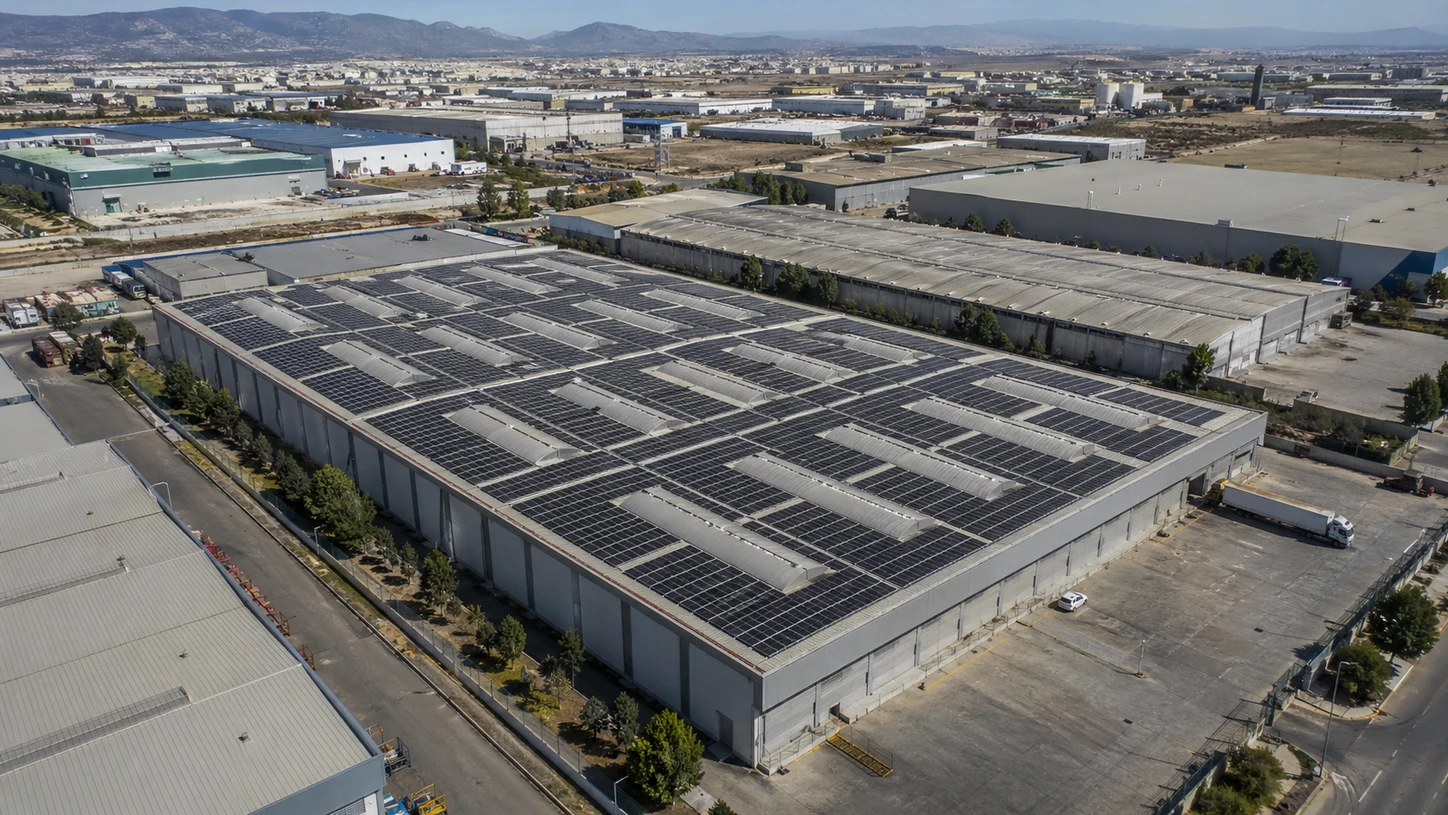
Industrial pain points usually reach production before they reach a spreadsheet.
An industrial request often starts with a sentence that sounds simple: the bill is high, the compressor keeps creating stress, a drive trips during production, a pump is unreliable, motors overheat, the site received a solar quote, or the team wants backup because a stoppage is too expensive. Each symptom can point to a different first action.
The useful review reads the site as a production system. It checks what the site makes, when production runs, which loads are critical, what symptoms repeat, what records exist, which diagrams are missing and what the owner can measure. The cost conversation then becomes concrete: stopped line hours multiplied by output per hour and margin, plus overtime, scrap, urgent parts and delayed-delivery exposure.
Industrial improvement depends on measurement. Bills, diagrams, asset lists, symptoms, measurements and maintenance history are part of the technical decision.
Industrial application logic
Factories are measured by uptime, output, quality, delivery and safety.
Industrial sites carry a different kind of pressure from ordinary commercial buildings. A technical fault can stop production, affect product quality, delay delivery, damage equipment or create staff stress. Corrective maintenance may solve the immediate problem while leaving the cause, measurement and follow-up undocumented. After a few months, the same symptom returns and the next team starts from memory again.
Verified public data gives useful context when it changes the next check. Outage figures point to continuity exposure, energy-audit benchmarks point to measured baselines, and maintenance benchmarks point to the value of records. None of these numbers replaces site-specific diagnosis; they help the operator decide what to collect before price or equipment choice dominates.
World Bank Enterprise Surveys reported that 10.9% of Moroccan firms experienced electrical outages in the 2023 survey. Grid outages matter, but industrial reliability also depends on internal systems and records.
For an industrial site, outage context is useful because stoppage exposure has two sides: external supply and internal readiness. A plant can have stable grid supply and still lose production through weak controls, missing records, recurring trips or unclear restart procedures.
Name the loads and processes that stop production or delay restart: controls, compressors, pumps, drives, IT/access, safety systems and selected lighting.
The Industrial Energy Accelerator Morocco case study cites more than 15% baseline energy-saving potential from industrial energy audits, with case examples showing 5%, 3% and 9% energy or electricity savings.
This points to the value of measured baselines before large spending. Motors, compressed air, pumps, HVAC, production rhythm and controls can each carry waste or stress that a quote will miss if the site begins only with equipment size.
Collect bills, production rhythm, major equipment, operating hours, shutdown days and any previous audit or measurement records.
A 2026 maintenance-strategy model/case study reports that moving from corrective to preventive maintenance improved MTBF by 15%, reduced MTTR by 10% and lowered life-cycle cost by 8-10%. Treat this as benchmark evidence; site results still need modeling.
The useful lesson is technical memory. Preventive and corrective work becomes more valuable when repeated faults, measurements, open actions and owners are documented instead of rediscovered during the next stoppage.
Build a maintenance register with intervention history, alarm notes, repeated symptoms, measurements, open actions and the owner of each follow-up item.
The production spine explains the bill and the risk.
A monthly bill hides which production loads created the consumption, which loads are intermittent, which loads are sensitive, and which systems become painful during a stop. A practical industrial review builds the load spine before recommending solar, backup or maintenance scope.
The spine organizes the industrial site into the technical room, production loads, support loads, roof or yard constraints and records. That order matters because each part changes the first path. Stable daytime production loads can support solar feasibility. Missing records, unclear rooms or repeated symptoms point toward audit and maintenance first. Selected controls or service loads can create a backup discussion before anyone talks about whole-site continuity.
The first useful inputs are evidence before perfect files.
Industrial operators rarely have every document ready. The first review can still be serious when the team sends bills, production notes, honest photos, repeated symptoms and existing proposals. Unknowns should be named instead of guessed.
Industrial solar is strongest when self-consumption is visible.
Solar can be a good industrial solution when the site has meaningful daytime production or support loads: motors, compressors, pumps, HVAC, chillers, controls, common areas or process equipment that consumes energy while solar production is available. The first question is how much of the generated energy the site can use directly during real operating hours.
Moroccan industrial energy context supports a disciplined solar conversation. The UNIDO Industrial Energy Accelerator case study states that Morocco's industrial sector uses 21% of the country's overall energy and that industrial energy demand had grown at an average 4.38% per year in the cited period. The same source also points to efficiency and energy-management gains before any site assumes a fixed saving.
The baseline protects production decisions.
Technical audit should lead when the site has recurring trips, unclear panels, incomplete single-line diagrams, missing equipment lists, undocumented corrective repairs, overheating, alarms, damaged drives or repeated production interruptions. Maintenance becomes more valuable after the baseline is known because open actions, recurring symptoms and responsibilities can be tracked.
Many sites have holes in diagrams and system information. Evidence means the items that let maintenance improve instead of restart: a single-line diagram, an equipment list, intervention history, alarm notes, open actions, a preventive schedule, useful measurements and a named owner for follow-up. A good preventive and corrective maintenance contract should keep those records alive after each visit, so recurring faults become a tracked pattern instead of a new emergency every time.
Power quality should follow symptoms and measurement questions.
Power quality is useful when symptoms justify measurement. Trips, voltage dips, flicker, motor-start events, overheating, alarms, damaged drives or unexplained stoppages can point toward a power-quality investigation. A useful review turns those symptoms into an event log: what happened, when it happened, which equipment was running, whether an alarm or damage record exists and what qualified measurement question should be answered.
The board keeps the conversation disciplined. The left side is what the operator notices. The middle is the context that makes the symptom useful: time, load, line, event rhythm and the likely measurement question. The right side is the evidence a qualified review may need, such as alarm logs, recorded measurements or damage history. The owner describes the event; qualified technical work handles the measurement.
Backup begins with selected continuity loads.
Backup should begin with the loads that protect production continuity, safety or recovery: controls, monitoring, network, access, selected lighting, safety systems, small pumps or compressed air where the justification is clear. Heavy production loads, full HVAC, full compressed air or every line in the factory can change the scale of the project and should be treated as a separate technical and economic decision.
A clear boundary protects the quote. The selected continuity loads sit inside the boundary because they can be named, measured and given runtime expectations. Heavy production loads sit outside the default boundary until the site justifies a wider project with production risk, budget and operating consequences.
Industrial quotes should expose assumptions and responsibility.
Industrial quotes should be compared by assumptions before price. For solar, check production rhythm, self-consumption, shutdown days, roof or yard scope, monitoring, commissioning and maintenance. For audit and maintenance, check baseline scope, report output, open-action handling and recurring-fault follow-up. For backup, check protected loads, runtime and exclusions. For power quality, check the symptoms and measurement questions that justify the work.
Two solar quotes can look close in price while one assumes normal weekday production and the other ignores weekend shutdowns. One maintenance proposal may list visits while another names open actions, records and responsible owners. The review should make those differences visible before approval.
The first path comes from the missing evidence.
If the bill is high and production rhythm is visible, start with solar and energy-use feasibility. If repeated faults or documentation gaps exist, start with technical audit and maintenance baseline. If trips, voltage complaints or damaged drives repeat, define the power-quality evidence needed. If stoppage exposure is painful, name selected continuity loads. If a proposal already exists, review assumptions before approval.
Information that makes the first answer useful.
Send enough context for the first response to be specific. Approximate notes are better than waiting for a perfect technical file.
Avoid weak industrial decisions.
Replacing equipment before diagnosis.
A noisy compressor, tripping drive or overheated motor may need measurement, maintenance records or corrective action before replacement becomes the right decision.
Approving solar while production rhythm is unclear.
Industrial solar value depends on self-consumption, shift schedules, shutdown days, roof or yard constraints and the stability of the receiving site.
Using power quality as a vague label.
Power-quality work should follow symptoms and measurement questions. It needs a defined event pattern before it becomes project scope.
Leaving diagrams and equipment lists incomplete.
Missing single-line diagrams, asset lists, labels and intervention records make repeat faults harder to measure and easier to forget.
Sizing backup around the whole factory by default.
Whole-site backup can change the scale of the project. Selected continuity loads should be named first.
Treating corrective visits as technical memory.
A repair invoice without symptoms, measurements, cause, action and follow-up leaves the next intervention exposed.
Use value numbers to decide what deserves modeling.
Industrial value should be screened before it is promised. A strong solar case usually has visible daytime production or support loads, a stable technical baseline and clear shutdown assumptions. A continuity-led case should be read first through protected loads and runtime. Maintenance value should be counted from the site’s own production exposure instead of a generic ROI average.
A strong industrial self-consumption project without storage is usually worth detailed modeling when the early screen sits around this range. Use the range only as a first modeling filter. The decision still depends on production rhythm, shutdown days, roof or yard reality, monitoring and the receiving site’s technical baseline.
Best early candidates have daytime production or support loads, stable technical rooms, clear shutdown assumptions and useful monitoring after commissioning.
When batteries or backup lead the industrial project, the first value is resilience: controls, IT/access, selected lighting, monitoring, safety systems, small pumps or other named continuity loads. Financial payback is usually slower and depends on runtime, protected loads, restart sequence and production exposure.
Use battery or backup scope after the protected-load list, runtime and restart objective are named.
Maintenance value should be counted from the site’s own exposure: repeated fault cost, emergency callouts, stopped line hours, scrap, urgent parts, overtime, delayed deliveries, equipment stress and documentation loss.
The useful maintenance question is whether the next stoppage starts from a measured record or from scattered verbal history.
How ReneWave reads an industrial site request.
ReneWave starts by reading the site as a production system. The review clarifies bills, production rhythm, major loads, technical rooms, symptoms, records, maintenance gaps, power-quality evidence, continuity loads and quote assumptions. Solar feasibility becomes stronger when self-consumption is visible. Maintenance becomes stronger when the baseline is documented. Power-quality work becomes stronger when symptoms point to measurement. Follow-up becomes stronger when open actions and owners are written down.
Questions industrial operators ask first.
Related guides & services.
Applications Hub
Choose the site type first, then move into the right service path.
Open Solar guideOn-Grid, Hybrid, or Off-Grid Solar
Choose the architecture after the site objective and operating reality are clear.
Open Solar guideDo You Really Need Batteries for Solar?
Understand storage purpose before batteries are added to an industrial proposal.
Open Backup guideBackup Power and Critical Loads
Define selected continuity loads before backup architecture is priced.
Open Buyer guideHow to Read a Solar Quote
Check assumptions, exclusions, architecture, support and financial claims before approval.
Open Solar guideReading a Solar Production Estimate
Separate production, self-consumption, losses and savings assumptions.
Open Audit guideWhat Is a Technical & Energy Audit?
Understand how energy, technical condition, documentation and operating risk connect.
Open Audit guideWhat Should Be Checked During a Technical Audit?
Review visible condition, panels, protections, access, documentation and recurring symptoms.
Open Power qualityHow to Understand Power Quality Problems Without Being an Engineer
Use symptoms and measurement questions before power quality becomes a label.
Open Audit guideFrom Audit Findings to Action Plan
Turn findings into priorities, owners, corrective actions and follow-up.
Open Maintenance guideWhy Maintenance Matters After Technical Audit
Keep the baseline alive through records, open actions and recurring-fault tracking.
Open Maintenance guideHow to Build a Preventive Maintenance Plan
Critical systems, frequency, open actions, documentation and technical memory.
Open ServiceReneWcare Max
Structured technical follow-up for business sites with critical systems and recurring needs.
Open ServiceTechnical Audit
Create a baseline before decisions become expensive or technically unclear.
Open ServiceSolar Systems
Solar design, installation and follow-up for industrial, commercial, agricultural and residential sites.
Open Talk to usContact ReneWave
Send bills, photos, quotes, symptoms or operating context for review.
Open