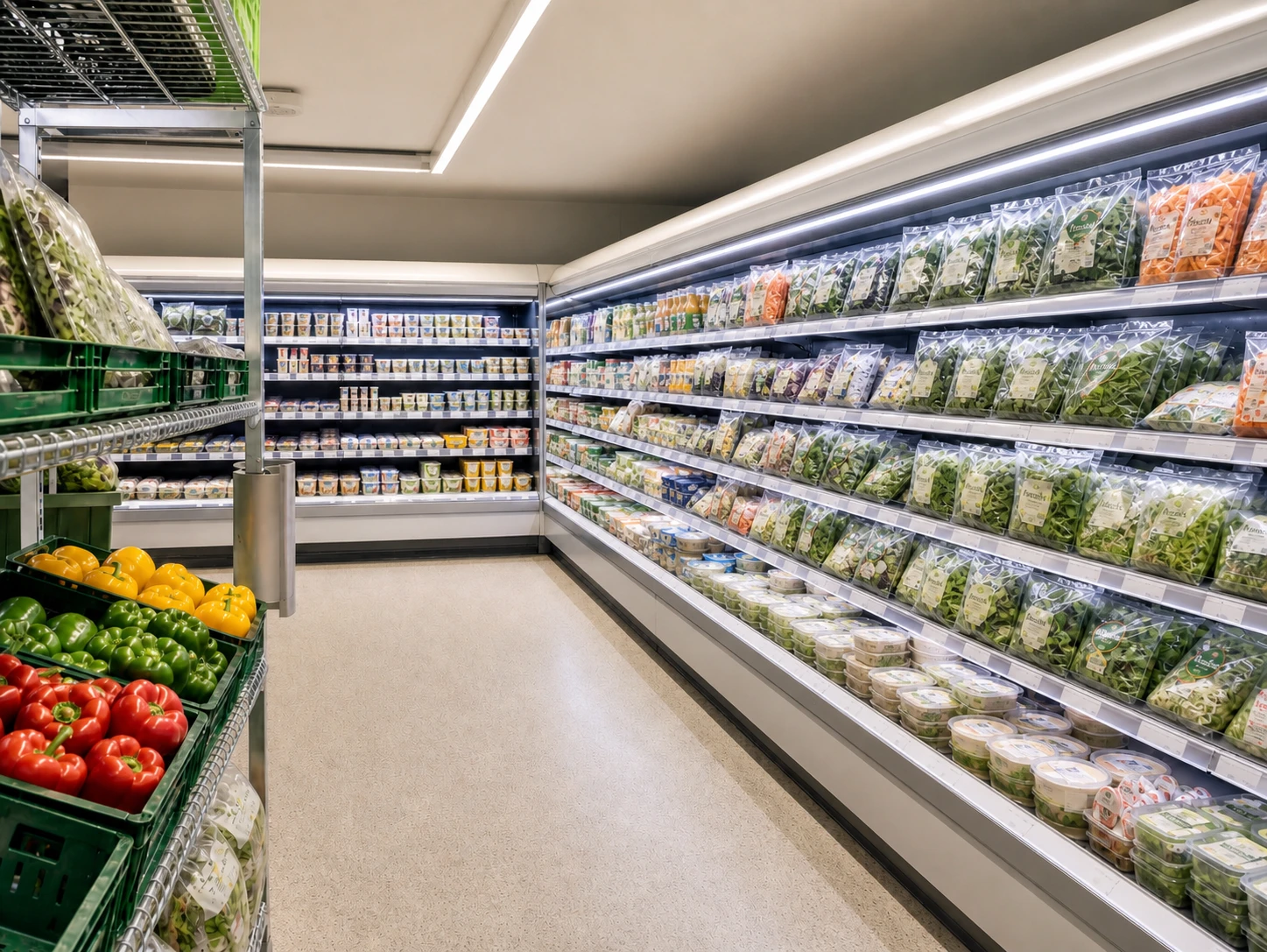
Cold-chain problems show up as stock anxiety and service pressure.
A supermarket, mini-market or cold-room site may arrive with a high bill, warm display complaints, cold-room alarms, repeated trips, unclear technical rooms, door traffic, emergency refrigeration calls, lighting and HVAC strain, or a solar or backup quote that treats refrigeration like background consumption. The owner often feels the problem through uncertainty: will stock stay cold, will the alarm return, will staff know what to do after closing, and will the next quote protect the right loads?
Those symptoms point to different first paths. A high bill may need refrigeration rhythm and self-consumption review before solar sizing. A warm display may need door behavior, condenser condition, controls and maintenance records before replacement. A backup request should name which cold loads, alarms, POS, lighting and access loads create consequence. If the site skips that context, the owner can approve a neat-looking scope that fails during the exact moment the business cares about.
Cold-chain sites carry different refrigeration rhythms.
A mini-market may depend on display fridges, lighting, POS and a small back-room freezer. A supermarket may combine display cases, walk-in rooms, freezers, HVAC, lighting, controls and night operation. A butcher, fish counter or bakery with cold storage may have stock value and delivery timing that change the consequence of a warm event. A storage site may have fewer customers but more concentrated stock exposure.
A monthly bill hides those differences. It compresses door openings, deliveries, defrost cycles, night baseline, customer peaks, lighting and HVAC into one number. A serious first answer reads the site by what must stay cold, what runs continuously, what changes during opening hours and what records exist after each alarm or intervention.
Useful numbers should sharpen the refrigeration question.
Cold-chain statistics are useful when they change the next check. Refrigeration share explains why the cold load deserves its own baseline. Equipment-category guidance explains why a quote should name what type of refrigeration it touches. Food-safety context reminds operators that refrigeration confidence and records are part of running the business, while keeping the article away from legal advice.
ENERGY STAR grocery-store guidance says refrigeration may use up to 40% of a supermarket or grocery store property’s total energy.
For a cold-chain operator, the first energy question should include refrigeration condition, controls, door rhythm and display behavior. A solar or savings discussion will be weak if the cold load is treated as background consumption.
List every cold load: walk-in cold room, freezer, display cases, under-counter units, compressors, condensers, controls and alarms.
DOE Better Buildings refrigeration guidance says refrigeration can account for up to half of building energy use in supermarkets, grocery stores and convenience stores.
This supports a refrigeration-first baseline. Continuous and daytime cold loads can make self-consumption attractive, but equipment condition and store rhythm still decide whether the case deserves detailed modeling.
Compare daytime refrigeration, lighting, HVAC and controls with bills, opening hours, night baseline and roof or equipment-space reality.
EPA retail food refrigeration guidance describes stand-alone equipment, remote condensing units and supermarket systems used to store or display chilled and frozen goods for commercial sale.
A quote should name the refrigeration type it is touching. A display case, walk-in room and remote condenser do not create the same maintenance, monitoring, access or energy question.
Separate display cases, walk-ins, freezers, remote units, condensers, controls, alarms and technical-room equipment before comparing proposals.
ONSSA lists Law 28-07 and its implementing decree as part of Morocco’s food-safety framework for food products.
This reminds operators that refrigeration confidence, records and operating discipline are part of the business reality. The useful energy conversation should respect stock condition and traceable interventions.
Keep cold-room symptoms, alarm history, maintenance visits, corrective actions and stock-risk notes traceable.
The site should be read by stock exposure and load rhythm.
A cold-chain review becomes useful when the operator can see how the retail floor, cold room, freezer, controls, alarms, lighting, HVAC and night baseline interact. The map does not solve the technical problem. It organizes the first conversation so each symptom leads to the right evidence.
Read the map from consequence outward. If stock exposure is high, maintenance records and alarms matter. If the bill is high, refrigeration, lighting and daylight loads matter. If backup is requested, controls and alarms need the same attention as the cold equipment itself.
The first review collects operating evidence.
The operator does not need a perfect refrigeration file before asking for help. Bills, operating hours, photos, symptom notes and existing proposals are enough to reveal whether the first path is solar feasibility, technical audit, preventive and corrective maintenance, selected backup or quote review. Missing evidence creates expensive ambiguity: a supplier may size solar without night baseline, price backup without critical loads, or replace equipment while the door rhythm and alarm history remain invisible.
Practical notes matter. A warm complaint after delivery, an alarm after closing, a display issue during a heat wave or a trip when several loads start together gives the review a sharper direction than a generic note that refrigeration is unreliable.
Solar follows daytime cold load and self-consumption.
Solar can be a strong fit when refrigeration, lighting, HVAC, POS, controls and other daytime loads can use production while the site is open. Cold-chain sites can be promising because some refrigeration runs continuously and often overlaps with daylight. The financial case still depends on bills, operating hours, roof or equipment access, shade, maintenance condition, monitoring and how unused energy is treated in the proposal.
The strip separates the useful solar question from the panel-count question. If cold load and lighting are strong during daylight, detailed modeling may be worth doing. If most exposure sits in night baseline, or if maintenance condition is unclear, the first step may be refrigeration records, audit or quote review before savings claims are trusted.
Refrigeration needs technical memory.
Audit and maintenance should lead when the site has warm complaints, alarms, weak records, repeated trips, condenser access issues, old interventions, unclear controls or a quote that ignores refrigeration condition. A useful baseline clarifies what equipment exists, which loads protect stock, what symptoms repeat, what was already corrected and what remains open.
The loop shows why records matter. A door-opening spike, defrost cycle, delivery period and slow recovery can look similar to staff unless the event is recorded. Preventive and corrective maintenance become more useful when the next technician can see the pattern instead of restarting from a verbal story.
Backup protects selected continuity loads first.
Backup for cold-chain sites should begin with the loads that create real consequence during an outage: critical cold rooms, freezers, refrigeration controls, alarms, selected lighting, POS and network, access or security and safe closing loads. Each load needs expected runtime and a clear statement of what remains grid-supplied.
The selector keeps backup from becoming a vague promise. Full HVAC, every display case, every circuit and long runtime can change the project scale. A selected-load list protects the owner from paying for a large scope that still misses alarms, controls or the safe-closing moment.
A serious quote names refrigeration assumptions.
A cold-chain quote should show the bill basis, refrigeration scope, protected loads, runtime expectations, controls, monitoring, technical-room access, maintenance exclusions, commissioning, handover records and follow-up responsibility. A solar quote should explain how refrigeration and lighting shape self-consumption. A backup quote should name the loads and runtime. A maintenance quote should explain what record remains after each visit.
Two quotes can look comparable while answering different questions. One may include cold-room controls and alarms. Another may price panels from roof area while ignoring night baseline. Another may promise backup without naming what stays cold. Quote review turns those differences into visible assumptions before approval.
A cold-chain quote is easier to trust when the operator can see what stock moment it protects, what assumptions drive the price and who owns follow-up after handover.
The first path comes from the symptom plus evidence.
A supermarket or cold-storage site may arrive with bill pressure, stock anxiety, warm displays, repeated alarms, a backup request, a technical-room concern or an existing quote. Each symptom needs different evidence before the scope becomes technical. Bill pressure usually starts with bills, daylight loads and refrigeration rhythm. Warm complaints start with temperature behavior, doors, stocking and maintenance history. Backup starts with selected continuity loads. Quote confusion starts with assumptions and exclusions.
Use value numbers to decide what deserves modeling.
Value numbers should help the operator decide whether detailed modeling is worth doing. Cold-chain sites can be strong solar candidates when daytime refrigeration and lighting are steady, but the final value case still depends on bills, roof reality, maintenance condition, protected loads, runtime and monitoring. Maintenance value should be counted from the site’s own stock exposure and repeat-fault history.
A strong self-consumption case without storage is usually worth detailed modeling when the early screen sits around this range. Cold-chain sites can be strong candidates when refrigeration, lighting and daytime retail loads are steady, but detailed modeling still depends on bills, operating hours, roof reality, maintenance condition and monitoring.
Best early candidates have daytime refrigeration, lighting, clear roof or equipment access, stable controls and no battery-first design.
When batteries or generators lead the scope, the first value is resilience: critical cold loads, controls, alarms, selected lighting, POS or network, access and safe closing. Financial payback is usually slower and depends on runtime, protected loads and stock exposure.
Use backup scope after protected loads, runtime, restart expectations and what remains grid-supplied are named.
Maintenance value should be counted from the site’s own exposure: spoiled stock risk, emergency callouts, repeated faults, staff disruption, delayed deliveries, equipment stress, customer disruption and documentation loss.
The useful maintenance question is whether the next alarm starts from records or from memory.
Information that makes the first answer useful.
Use this checklist to prepare a useful first conversation. Approximate notes are enough when they honestly show how the cold chain operates, where symptoms appear and what has already been tried.
Avoid weak cold-chain decisions.
Reading the bill without the cold load.
Refrigeration, lighting, doors, stocking and night baseline should be separated before the bill becomes a solar or savings discussion.
Approving solar before refrigeration context.
A roof can look promising while controls, maintenance condition, open displays or night loads change the self-consumption case.
Treating every cold load as critical.
Backup should name the refrigeration, controls, alarms, lighting and operating loads that create real consequence.
Letting alarms disappear.
An alarm without date, duration, load, response and corrective action makes the next event harder to classify.
Ignoring door and stocking behavior.
Frequent openings, deliveries, open displays and poor closing routines can turn a normal system into a stressed one.
Comparing quotes by equipment names.
Cold-chain quotes should compare assumptions: scope, protected loads, runtime, monitoring, maintenance exclusions and handover.
How ReneWave reads a cold-chain request.
ReneWave starts from the stock and service moment the site needs to protect. The review clarifies bills, refrigeration rhythm, cold equipment, door and stocking behavior, temperature symptoms, controls, technical-room condition, maintenance records, selected continuity loads and existing quotes before the scope becomes equipment.
The solar path becomes stronger when daytime cold load and self-consumption are visible. The audit path becomes useful when refrigeration condition, controls or records are unclear. Maintenance keeps preventive and corrective actions documented. Backup names selected loads and runtime. Quote review keeps refrigeration assumptions, exclusions and follow-up responsibility visible before approval.
Questions cold-chain operators ask first.
Related guides & services.
Applications Hub
Choose the site type first, then move into the right service path.
Open ApplicationsRestaurants and Kitchens
Use food-service logic when kitchen service, extraction and hot water also shape the cold load.
Open Solar guideSolar for Commercial and Tertiary Buildings
Use broader commercial solar logic after refrigeration rhythm and self-consumption are visible.
Open Backup guideBackup Power and Critical Loads
Define selected continuity loads before backup architecture is priced.
Open Buyer guideHow to Read a Solar Quote
Check assumptions, exclusions, architecture, support and financial claims before approval.
Open Solar guideReading a Solar Production Estimate
Separate production, self-consumption, losses and savings assumptions.
Open Audit guideWhat Should Be Checked During a Technical Audit?
Review visible condition, panels, protections, access, documentation and recurring symptoms.
Open Maintenance guideHow to Build a Preventive Maintenance Plan
Critical systems, frequency, open actions, documentation and technical memory.
Open ServiceTechnical Audit
Create a baseline before decisions become expensive or technically unclear.
Open ServiceReneWcare Max
Structured technical follow-up for business sites with critical systems and recurring needs.
Open Talk to usContact ReneWave
Send bills, photos, quotes, symptoms or operating context for review.
Open