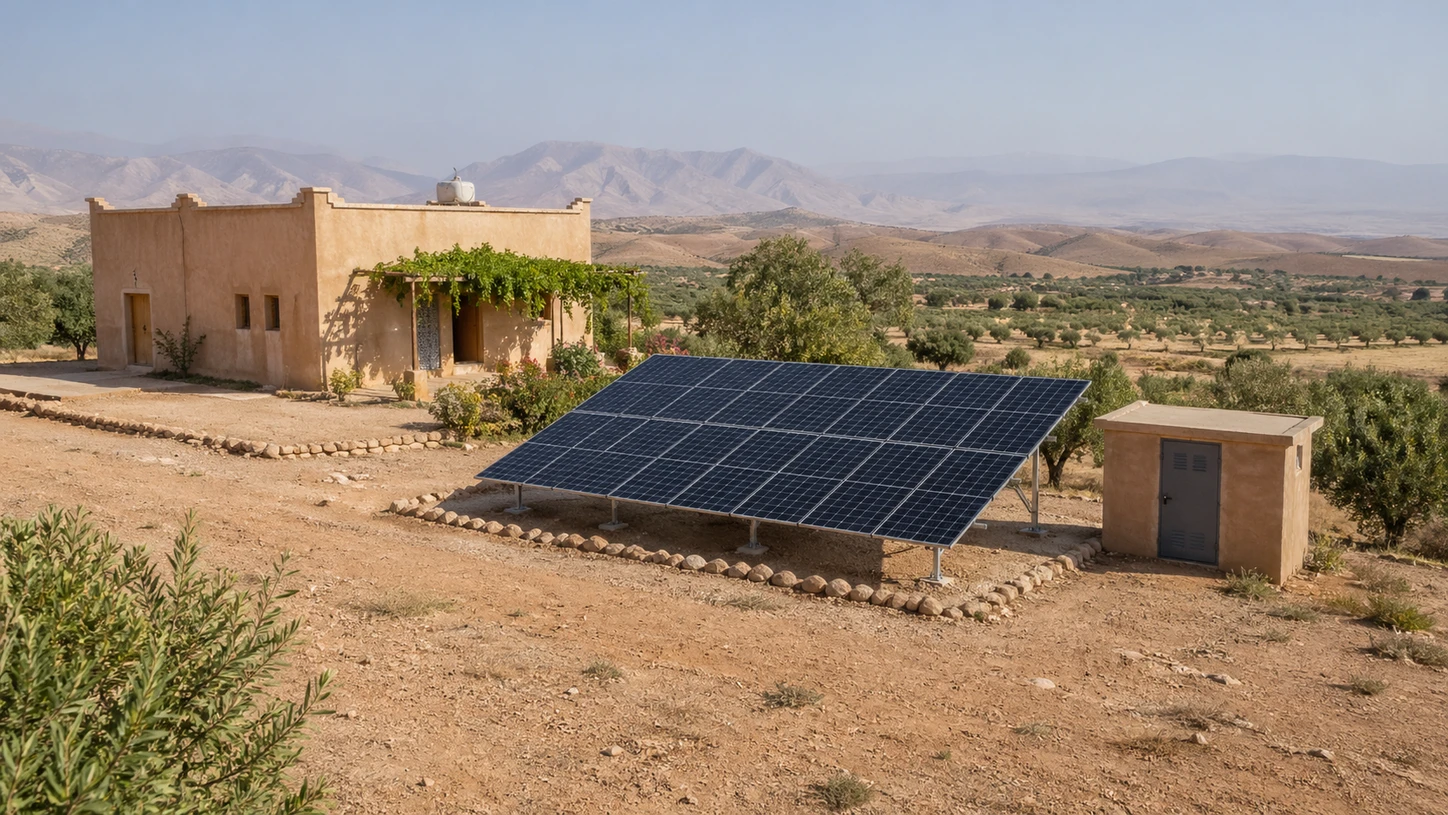
The farm question begins with water and reliability.
Agricultural operators often arrive with a practical problem: the water requirement is unclear, the pump stops during irrigation season, fuel or grid cost is high, a solar pumping quote is hard to judge, or the farm needs enough water in storage to reduce stress during dry periods.
Those problems point to different first actions. A farm with unknown liters/day needs water-demand review. A farm with repeated pump failures needs a technical baseline. A farm with a stable pump and clear irrigation rhythm may be ready for solar pumping feasibility. A farm with crop exposure needs storage, fallback and maintenance logic before equipment names become useful.
The agricultural application article starts from the work the site needs to protect: crops, livestock, irrigation zones, water source, pumping depth, storage, seasonal peak and response time after a fault. Solar matters because it supports water delivery, which is the real outcome.
Agricultural sites depend on season, water and access.
A farm rarely behaves like a normal building load. Irrigation demand changes by season. Crops can be more sensitive during certain periods. Livestock water may have a different priority than field irrigation. Greenhouses, monitoring, fertigation, cold storage, small buildings or remote sensors can add separate electrical loads.
The physical context also matters. A pump room may be far from the field. Solar modules may sit near dust, heat, animals, theft risk or difficult access. Pipe distance, slope and pressure can change the duty. A well or borehole may have a water level that drops while pumping, and that dynamic level can matter more than the simple depth written in a quote.
A farmer wants solar pumping but cannot state daily water volume. The useful review starts with pump runtime, tank refill frequency, irrigation zones, crop dependence, well depth and storage reserve. The result may be solar pumping, a pump baseline, a tank strategy, a fallback plan or a combined scope.
Official Moroccan programs have treated solar pumping and irrigation efficiency as relevant agricultural topics. AMEE describes solar pumping work around photovoltaic pumping for localized irrigation, and the energy ministry describes a national effort to encourage solar water pumping in irrigation. These references support the importance of disciplined project framing; they do not replace site-specific sizing or water-use responsibilities: AMEE solar pumping energy ministry solar pumping program.
Panel count comes after the water chain is understood.
A farm solar pumping project should be read as a water-delivery chain. Each link changes the next one: crop or livestock need, daily volume, source capacity, head, flow, storage, reserve days and irrigation delivery. When one link is missing, the proposal becomes fragile.
The chain makes the sequence visible. Liters/day or m3/day comes before pump duty. Source recovery and dynamic water level come before confidence. Head, pressure and pipe route come before pump selection. Tank or basin strategy comes before resilience claims. Solar size follows that chain.
Useful farm inputs are practical and observable.
Farmers can start before the technical file is perfect. The practical facts prevent guessing. If an input is unknown, say it is unknown and send the closest observation.
Static water level and dynamic water level are useful when available. Static level is the water level at rest. Dynamic level is the level while pumping. If those values are not known, the first review can still start with depth, pump runtime, pump details, photos and observed water behavior.
When water volume is unclear, start from observable clues.
Many farmers know the pain point but cannot immediately state daily liters or m3. That is normal. The review can work from clues: how long the pump runs, how often the tank refills, how many irrigation zones are served, how many days per week the system operates, and which crops or livestock depend on it.
Crop water requirement belongs outside a quote until the agronomic basis is clear. When the farm needs agronomic precision, use a qualified agronomist or irrigation specialist and official/local references. ReneWave can structure the energy and pumping decision around the water basis once that basis is clear.
For pumping, water storage often carries the resilience logic.
Water storage deserves early attention. A farm may need a tank or bassin to smooth daily pumping, cover short weak-production periods, serve irrigation zones at the right time, or hold reserve for drought stress. Batteries may still matter, but they need a defined electrical reason.
The loop separates water buffering from electrical buffering. If the farm can pump during solar hours and store water, the tank may become the main buffer. Batteries become more serious when night pumping, controls, monitoring, remote loads or selected backup need electricity outside solar hours.
The storage conversation should name the job of each buffer. A tank or bassin protects water delivery when irrigation can be supplied later. A battery protects electrical loads when electricity is needed outside the solar window. Mixing those two roles too early can make the quote more expensive without making the farm more reliable.
Solar pumping works when the water duty and storage logic fit.
Solar pumping can be a strong answer when pumping can align with daylight or when water can be stored for later use. The system size should follow daily water volume, lift/head, required flow, pressure, pipe route, source capacity, pump condition and storage strategy.
A clean proposal should explain what happens during weak sunlight, how storage covers the gap, whether grid or generator support remains part of the logic, and whether batteries are included for a specific reason. It should also state what still needs site verification.
Solar power changes how the pump is supplied; source capacity still decides available water. If the well, borehole or basin cannot supply the required flow, water-source reality remains part of the decision.
Pump reliability is an agricultural risk.
A technical audit should lead when the pump trips, controls are unclear, panels or protections are not documented, sensors fail, tank filling is unreliable, or repairs leave no useful record. Solar attached to an unstable pumping system inherits that uncertainty.
Maintenance matters because delayed irrigation can damage crops quickly. The farm needs seasonal readiness, clear open actions, a response path for repeated symptoms, and technical memory. For business agricultural sites with critical water systems, ReneWcare can provide structured follow-up after the baseline is known.
A farm should carry pump memory across every irrigation peak. The baseline, open actions and fault history should survive the season.
Agricultural technical memory
Maintenance should follow the irrigation season.
A farm maintenance plan should respect the agricultural calendar. The highest-risk period is usually when water demand is active, heat and dust are high, and response delays can hurt crops or livestock.
The calendar shows why pre-season baseline work matters. Pump condition, tank sensors, controls, mounting, monitoring and records should be ready before the peak. During the season, quick fault response and symptom tracking matter. After the season, the record should feed the next baseline.
Fallback should protect water continuity and selected controls.
Backup or fallback planning should start with the load list. Controls, sensors, communication equipment, small pumps or selected critical loads may justify batteries or backup power. Heavy irrigation pumping needs a separate technical and economic review before it is treated as a backup load.
Some farms may use grid support, generator support, water storage, operational scheduling or a mixed approach. The right fallback depends on crop exposure, reserve days, access, fault-response time and the cost of water interruption.
A farm quote should prove the water basis.
A serious farm quote should show the daily water basis, source assumption, lift/head, pump duty, storage strategy, fallback logic, mounting, controller or inverter scope, monitoring, commissioning, exclusions and maintenance responsibility.
Two quotes with different water assumptions answer different questions. One may assume more pumping hours, another may ignore tank reserve, and another may add batteries without a clear role. The review should expose those differences before the farmer approves the project.
The first path depends on what is missing.
The first useful action comes from the missing evidence. Water uncertainty, pump unreliability, solar interest, crop exposure and quote confusion each point to a different first step.
The matrix keeps the conversation practical. If water volume is unclear, estimate demand. If the pump is unreliable, create a baseline. If solar is the interest, check pumping and storage feasibility. If crops are exposed, define reserve and fallback. If a quote exists, review assumptions before approval.
The first row should drive the next action, not the final purchase. Unknown liters per day means the farm needs demand evidence. Repeated trips mean pump and control history matter. Crop exposure means reserve days and response time deserve attention before panels, batteries or controllers become the main discussion.
Information that makes the first answer useful.
Send the evidence that helps avoid a generic farm answer. It is better to send approximate water clues than to wait for a perfect technical file.
Water and irrigation policy context should be handled carefully. Official Moroccan agriculture and water sources are useful starting points for context, but site sizing still depends on verified farm inputs:agriculture ministry water and irrigation Maroc.ma water resilience context.
Avoid weak agricultural decisions.
Sizing solar before water demand.
The farm needs water delivered at the right time and pressure. Panel count follows liters/day, head, pump duty and storage logic.
Ignoring well depth and dynamic level.
A borehole can look simple until lift, recovery and dynamic water level are checked. Those inputs affect pump duty and reliability.
Leaving storage undefined.
A farm may need elevated tanks, basin storage, reserve days or fallback support. Storage should be visible in the decision.
Depending on a faulty pump.
Solar can expose existing pump or control weaknesses. A recurring fault should be reviewed before the system depends on it.
Skipping seasonal maintenance.
Dust, heat, filters, sensors, pump-room condition and loose records can create failures during the period when water matters most.
Treating solar as water permission.
Solar changes the energy source used to move water. Water rights, source capacity, extraction limits and owner responsibilities still shape the project.
Use value numbers to decide what deserves modeling.
Farm value begins with water delivery. A stronger solar pumping screen usually has verified water demand, daylight pumping, useful storage, stable source recovery and a pump system that can be trusted. A fallback-led case should be read through reserve days, protected controls and crop or livestock exposure. Maintenance value comes from avoiding repeated peak-season uncertainty.
A strong daylight pumping project without battery-heavy scope is usually worth detailed modeling when the early screen sits around this range. Use the range only as an early modeling screen. The real case depends on water duty, pump condition, source recovery, storage, grid or fuel context and seasonal irrigation demand.
Best early candidates can pump during solar hours, store water, verify head/flow and keep the pump system stable.
When batteries or backup lead the project, the first value is water continuity: controls, sensors, communication, selected small loads or justified pumping support. Financial payback is usually slower and depends on reserve days, runtime, crop exposure and response time.
Use battery scope after water storage, protected electrical loads and reserve logic are named.
Maintenance value should be counted from the farm’s own exposure: pump failure, delayed irrigation, emergency visits, crop or livestock stress, fuel or generator fallback, spare-part delays, repeated explanations and documentation loss.
The useful maintenance question is whether the next irrigation peak starts from a pump record or from memory.
How ReneWave reads a farm request.
ReneWave starts from the agricultural job to protect. The review clarifies water demand, source reality, pump duty, storage, fallback and technical condition before the scope becomes equipment.
The solar path becomes stronger when liters/day, head, storage and pump condition are visible. The audit path becomes useful when repeated faults, missing records or unclear controls threaten water continuity. The maintenance path keeps the farm ready across the season through open actions, records and follow-up.
Questions farmers ask first.
Related guides & services.
Applications Hub
Choose the site type first, then move into the right service path.
Open Solar guideSolar Pumping for Farms and Irrigation
When solar pumping makes sense for wells, boreholes, irrigation, farms, gardens and remote sites.
Open Solar guideOn-Grid, Hybrid, or Off-Grid Solar
Choose the architecture after the operating reality is clear.
Open Solar guideDo You Really Need Batteries for Solar?
Understand storage purpose before batteries become part of a proposal.
Open Buyer guideHow to Read a Solar Quote
Check assumptions, exclusions, architecture, support and financial claims.
Open Audit guideWhat Is a Technical & Energy Audit?
Understand how energy, technical condition and documentation connect.
Open Audit guideWhat Should Be Checked During a Technical Audit?
Review visible condition, panels, protections, access, documentation and recurring symptoms.
Open Maintenance guideHow to Build a Preventive Maintenance Plan
Critical systems, frequency, open actions, documentation and technical memory.
Open ServiceReneWcare Max
Structured technical follow-up for business sites with critical systems and recurring needs.
Open ServiceTechnical Audit
Create a technical baseline before a farm depends on unclear equipment.
Open ServiceSolar Systems
Solar design, installation and follow-up for agricultural, business and residential sites.
Open Talk to usContact ReneWave
Send water demand, pump details, photos, quotes or recurring symptoms for review.
Open