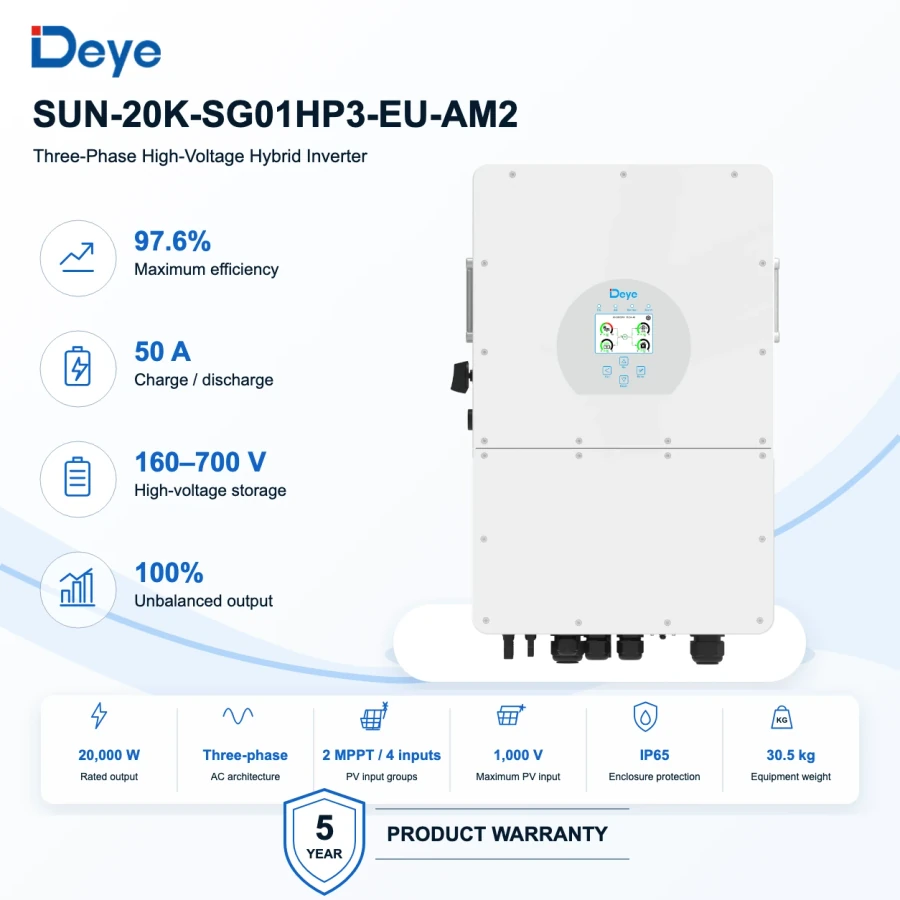
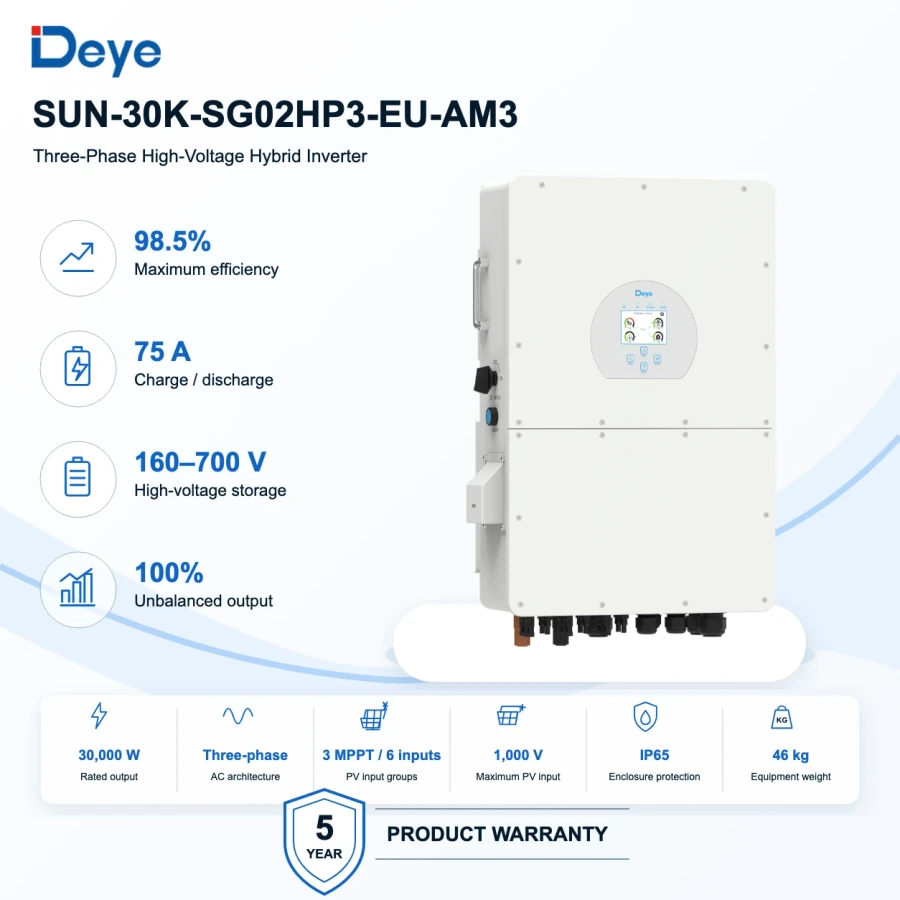
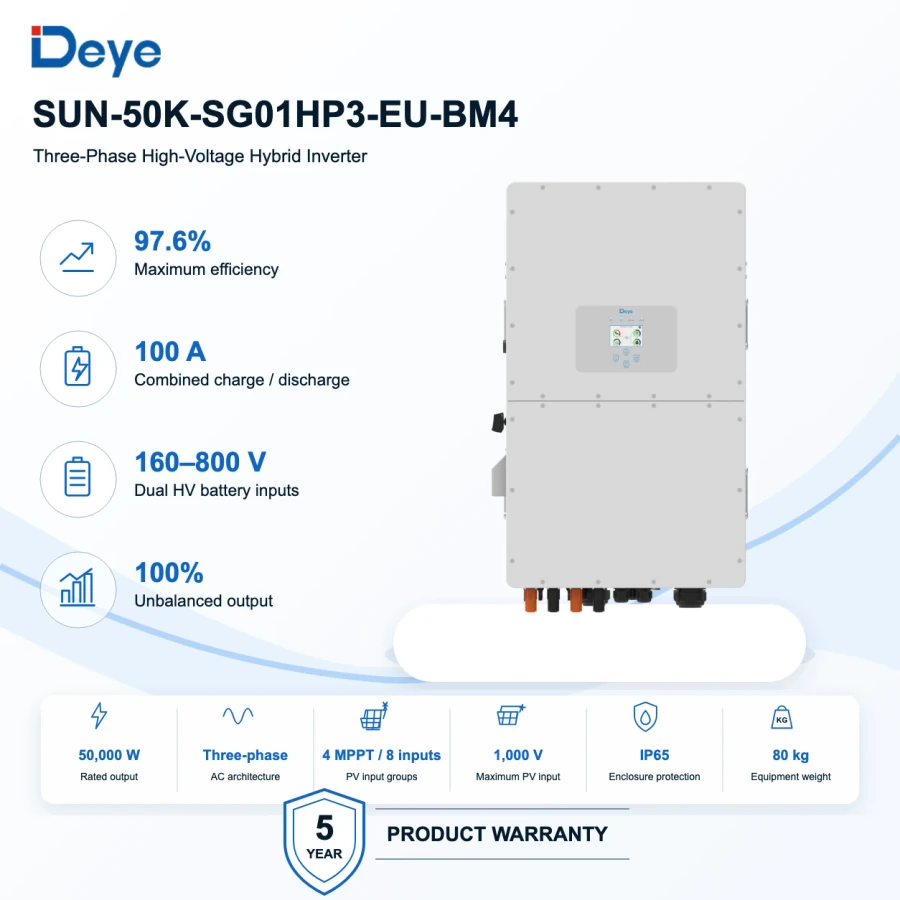
Deye is known here for hybrid inverters with distinct low- and high-voltage battery architectures. Its broad offer is useful only when the suffixes and operating functions remain clear.
Hybrid conversion; architecture depends on suffixes.
Authenticated manufacturer example. The selected product reference determines appearance and ratings.
01 / Who they are
An inverter business inside a wider group.
Ningbo Deye’s inverter business dates to 2007, within a wider industrial group. Its own history records the first hybrid inverter generation in 2017. That is the relevant solar progression: grid conversion expanded into equipment coordinating PV, batteries and loads. Today’s SUN families include low-voltage and high-voltage hybrids, as well as separate grid-connected and microinverter branches. The 2007 business date and the 2017 hybrid milestone do not establish the release date or compatibility of a current SUN reference.
Corporate origin is not the factory of every unit. The exact label, reference and supply documents remain the identity record.
Business development and revenue
Consolidated Deye revenue rose from 2023 through 2025 as its inverter and storage businesses expanded. The listed Ningbo Deye Technology group also sells environmental appliances, so these figures are broader than inverter sales. The growth history explains the company’s scale; choosing a system still requires the exact phase arrangement, battery-voltage window and permitted operating modes.
Revenue trend · USD billion
Annual revenue · USD billion
Year
Revenue
2023
$1.06
2024
$1.56
2025
$1.70
Ningbo Deye Technology consolidated revenue includes inverters, storage and appliances. Amounts shown in USD billion. EUR and CNY amounts are converted using Federal Reserve annual-average rates; rounding and exchange rates affect comparisons.
Business milestones
An inverter business is established
The specialist inverter company is established inside the Deye group. This business date is separate from the group’s older industrial origins.
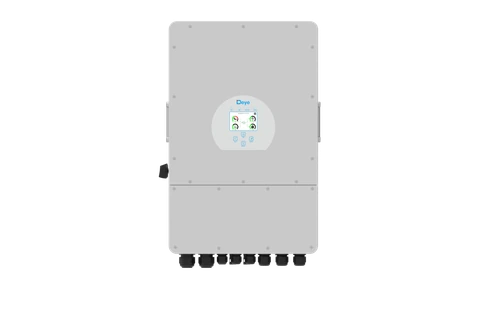
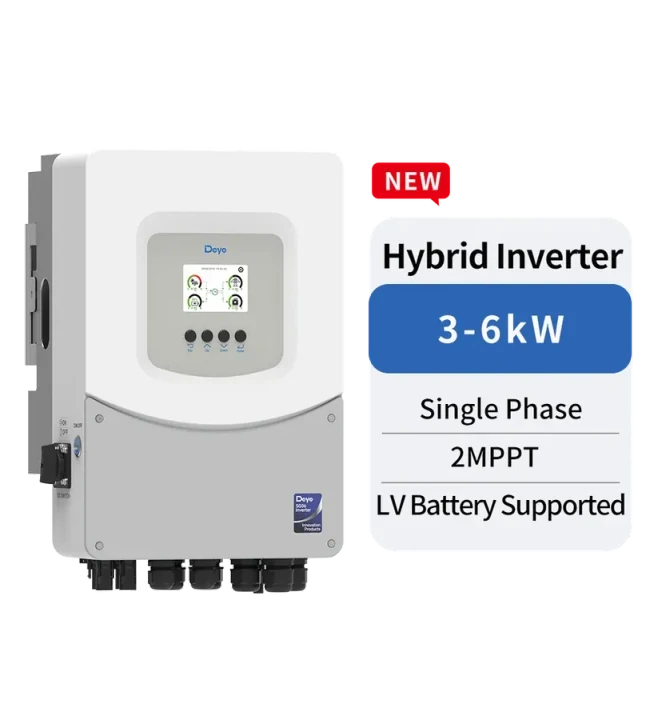
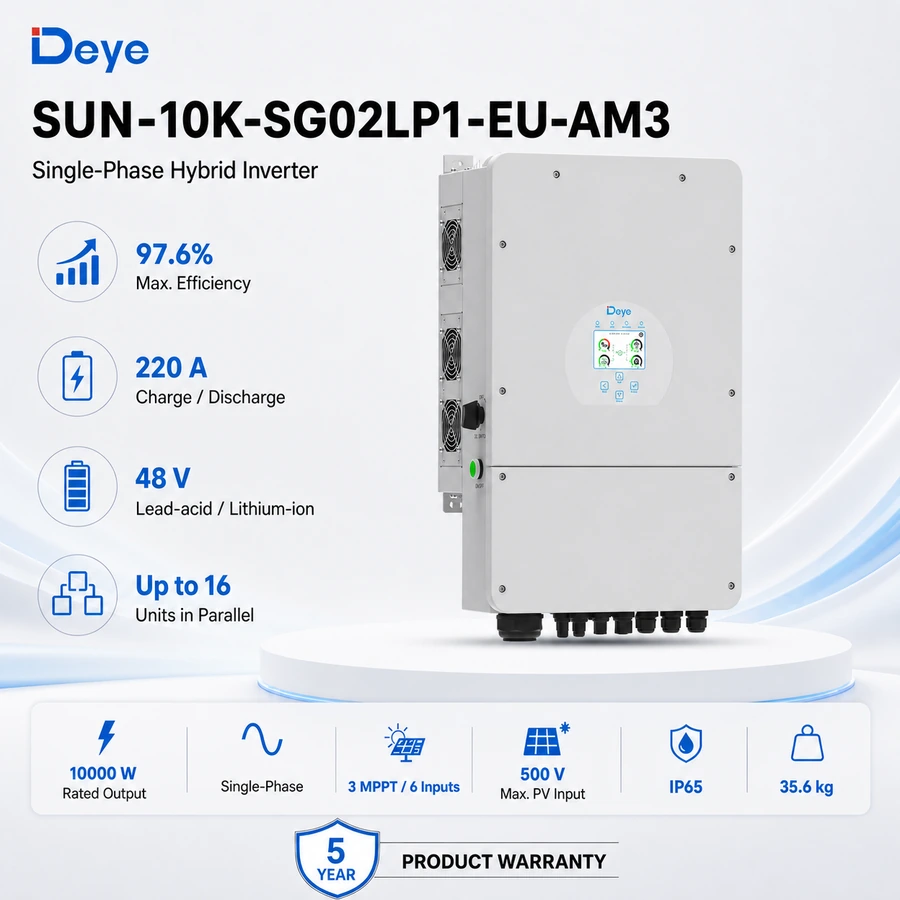
Single-phase LP hybrid · illustrative example, not a photograph of this milestone.
The first hybrid generation
Deye records the introduction of its first hybrid inverter. Storage coordination becomes a distinct product capability alongside solar-to-grid conversion.
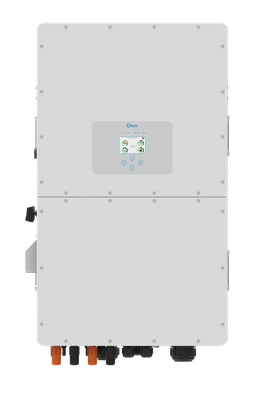
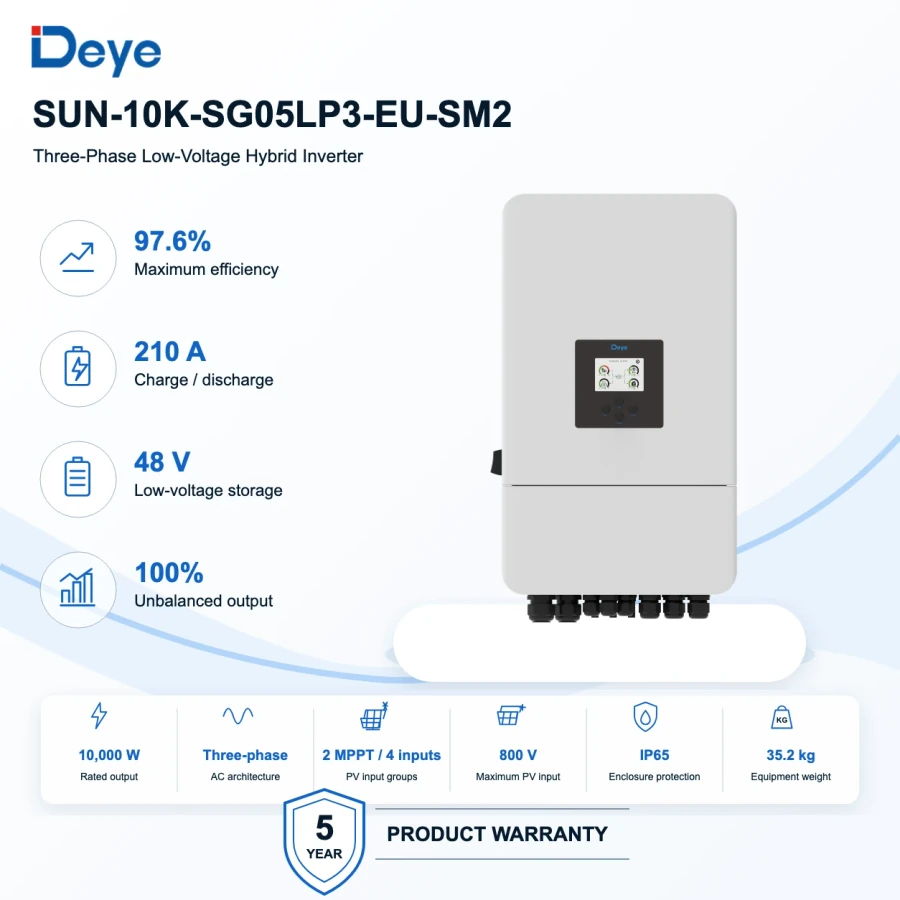
Three-phase LP hybrid · illustrative example, not a photograph of this milestone.
The wider group lists in Shanghai
Ningbo Deye Technology lists in April. Its public financial reports combine inverter, storage and appliance activities; they are not a standalone SUN sales series.
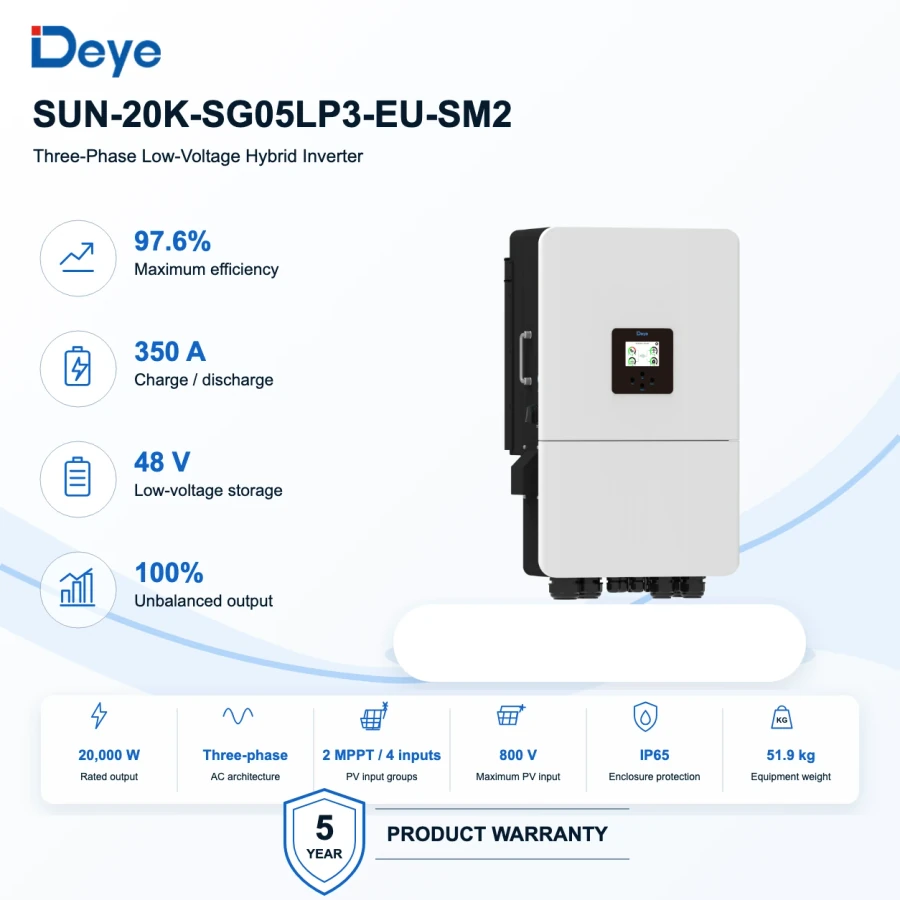
HP commercial hybrid · illustrative example, not a photograph of this milestone.
02 / Technology
Selected technology advances
Selected developments in the brand’s specialty, not a complete history or catalog.
Understand the differences between the relevant families. Broader manufacturer offerings and the products ReneWave lists are kept separate below.
SUN · LP hybrid example; not every variant
01
SUN · LP hybrid
Low-voltage battery architecture
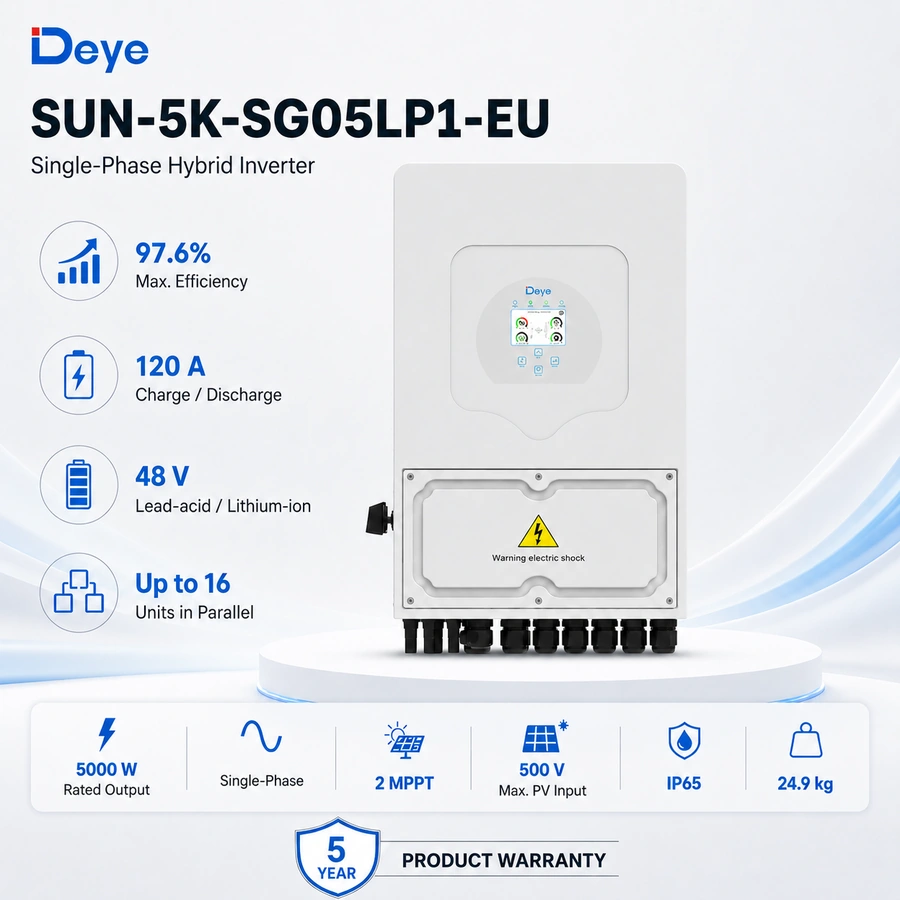
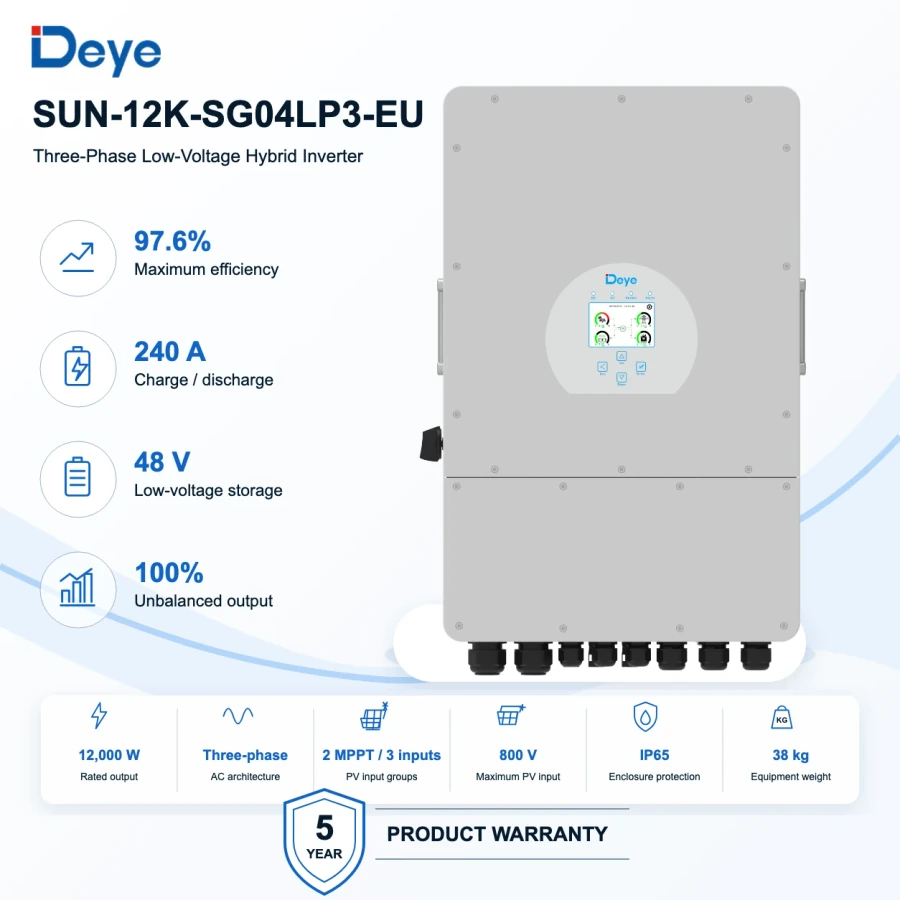
LP hybrid branches use the documented low-voltage battery window. Single- and three-phase models remain separate references. For example, SUN-12K-SG04LP3-EU is a three-phase 12 kW low-voltage hybrid. Its battery and PV connections are different circuits: a nominal 48 V battery does not determine permissible PV-string voltage. The exact battery-current limit also controls how much of that AC rating is available from storage.
Battery current and permitted power matter alongside inverter watts.
Do not use this branch’s ratings for HP models.
Manufacturer family example; the selected reference determines the supplied hardware.
02
SUN · HP hybrid
High-voltage battery architecture
HP hybrids use a different battery-voltage architecture, suited to their documented stack and power arrangements. The listed SUN-50K-SG01HP3-EU-BM4 moves to a 50 kW commercial high-voltage architecture with four MPPTs and two battery connections. SUN-80K-SG02HP3-EU-EM6 has six MPPTs. More inputs and battery terminals require a matched BMS, voltage window and commissioned operating limits, rather than parallel 48 V batteries.
It changes the battery system, not just the inverter’s badge.
A compatible BMS and exact voltage window remain essential identities.
03
String / microinverters
Other conversion branches
The wider manufacturer portfolio includes grid-tied string and microinverters. These do not automatically provide the battery functions of a hybrid. Grid-tied string and module-level microinverters convert PV into AC. Battery charging, grid isolation and backup loads need their own supported architecture; the word SUN on the label does not add those functions.
Product role comes before brand name.
Only actual catalog references are offered below.
Key terms
Short definitions for the names used in this guide.
LP / HP
Battery-voltage architecture, not quality levels.
Exact suffixes preserve phase, battery and connection identity.
03 / What stands behind the brand
Best Value
A practical Best Value offer.
Useful functions, assessed at the reference level.
Our positioning applies to the selected range. The documented differences above explain the choice.
A dated hybrid development
The 2017 milestone gives context without assigning that age to current hardware.
Architecture-specific documentation
The manufacturer brochure separates inverter roles and storage arrangements.
Power and battery architecture scale together
Deye’s low- and high-voltage hybrids offer different storage arrangements. Their practical value comes from a matched inverter, battery voltage and current path; we do not treat a larger commercial hybrid as a drop-in replacement for a 48 V home system.
Published characteristics are useful evidence, not a promise of trouble-free operation or fast local warranty handling. Newer models do not inherit decades of field history from the company’s age.
The exact reference, market and supplied terms govern coverage. A datasheet or compliance certificate is not itself a warranty.
Coverage follows the exact unit
Manufacturer terms vary by model, market and supply route. Keep the serial, invoice and applicable statement; commissioning records can be relevant to a claim.
Compatibility is not warranty coverage
A compatible battery or monitoring device is not automatically covered by the inverter’s warranty. Each product has its own terms.
Questions before you buy
No. LP and HP architectures differ, and the exact BMS pairing must be documented.
No. It is owner-selected commercial positioning. Price and availability stay unconfirmed until a written quote.
No. Conversion type and the documented backup function of the exact model matter.