ReneWave perspective · Batteries

    Dyness

    Dyness specializes in lithium energy storage, with low-voltage and high-voltage families serving different inverter architectures. Capacity, power and BMS compatibility are the useful distinctions.

    Explore our Dyness products
    Dyness logo
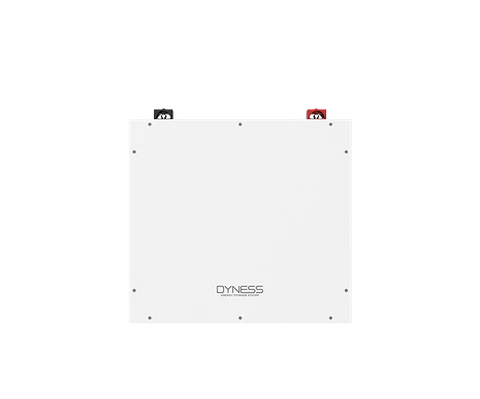
    Powerbox Pro

    Stationary lithium storage.

    Authentic Dyness Powerbox Pro hardware
    Authenticated manufacturer example. The selected product reference determines appearance and ratings.

    01 / Who they are

    Storage as the core business.

    Dyness was founded in 2017 as an energy-storage business, rather than an older solar-panel company later relabelled as a battery brand. Its growth has centred on lithium-iron-phosphate storage for homes and larger installations, with an Australian subsidiary established in 2019. Powerbox Pro, DL5.0C, Tower and STACK100 use different enclosures and electrical arrangements. Company age does not establish the launch date of each battery, and an outdoor low-voltage cabinet is not interchangeable with a high-voltage modular stack.

    The exact unit’s label and supply documents establish its manufacturing origin; the corporate home does not identify every factory.

    Business development and revenue

    The documented expansion combines overseas operations and a wider range of low- and high-voltage storage systems. STACK100’s presentation in 2024 illustrates the move into larger modular systems. No verified public series of annual company revenue through 2025 was identified, so product launches and industrial expansion are described without estimating sales.

    No verified public annual revenue series through 2025 was identified. Milestones describe business development, not a measured revenue trend.

    Business milestones

    1. Storage is the starting business

      Dyness starts as an energy-storage specialist. Later lithium battery platforms build on this focus rather than decades of unrelated panel production.

      Powerbox Pro — manufacturer illustration
      Powerbox Pro · illustrative example, not a photograph of this milestone.
    2. An Australian operation

      The company establishes its Australian subsidiary, widening local market and support operations. This does not automatically determine Morocco’s supplied warranty route.

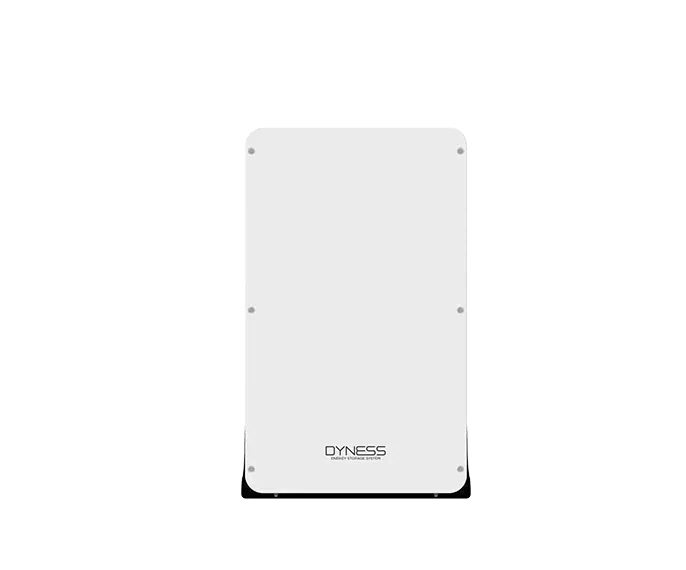
      DL5.0C — manufacturer illustration
      DL5.0C · illustrative example, not a photograph of this milestone.
    3. STACK100 adds a larger modular branch

      The German exhibition introduces STACK100 alongside established residential systems. Series-connected modules change the voltage architecture, controller requirements and expansion rules.

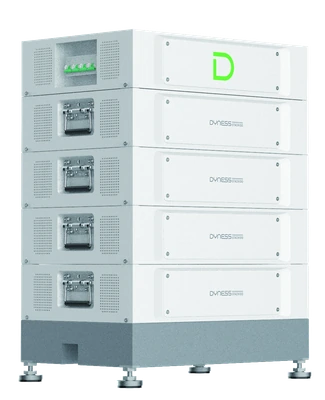
      STACK100 — manufacturer illustration
      STACK100 · illustrative example, not a photograph of this milestone.

    02 / Technology

    Selected technology advances

    Selected developments in the brand’s specialty, not a complete history or catalog.

    Understand the differences between the relevant families. Broader manufacturer offerings and the products ReneWave lists are kept separate below.

    Authenticated Powerbox Pro manufacturer example
    Powerbox Pro example; not every variant

    Powerbox Pro

    Low-voltage stationary battery

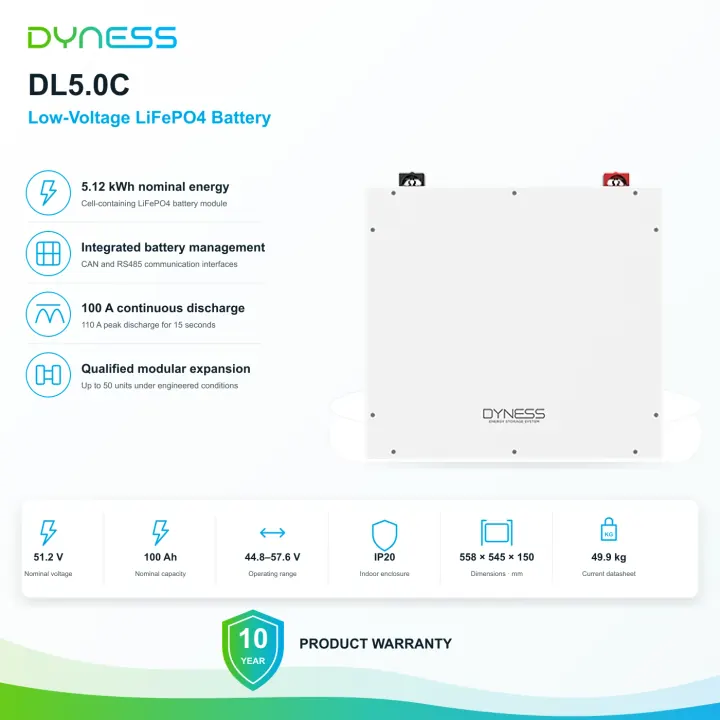
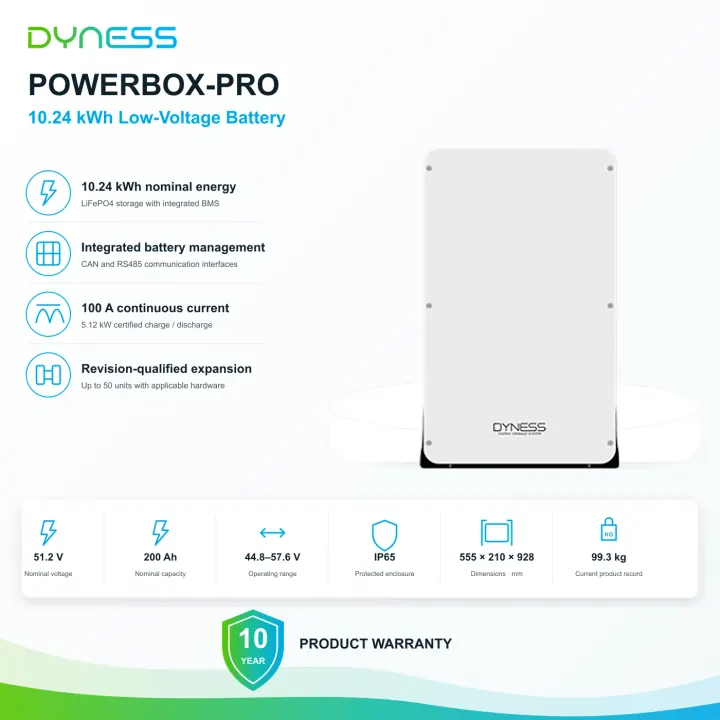
    A packaged low-voltage battery family for documented compatible inverter systems. Powerbox Pro is a 51.2 V, 200 Ah LFP battery: 10.24 kWh nominal energy. Its retained certification identifies 5.12 kW continuous charge/discharge, so 10.24 kWh is not a 10.24 kW output rating. DL5.0C is a separate 51.2 V, 100 Ah / 5.12 kWh module.

    It provides energy storage, not AC conversion on its own.

    Parallel and BMS limits belong to the exact product.
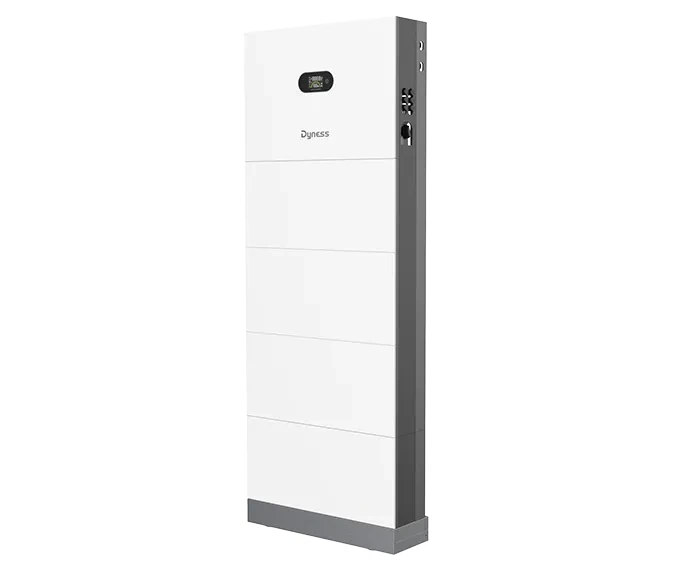
    Authenticated manufacturer family hardware
    Manufacturer family example; the selected reference determines the supplied hardware.

    STACK100 / control units

    High-voltage modular stack

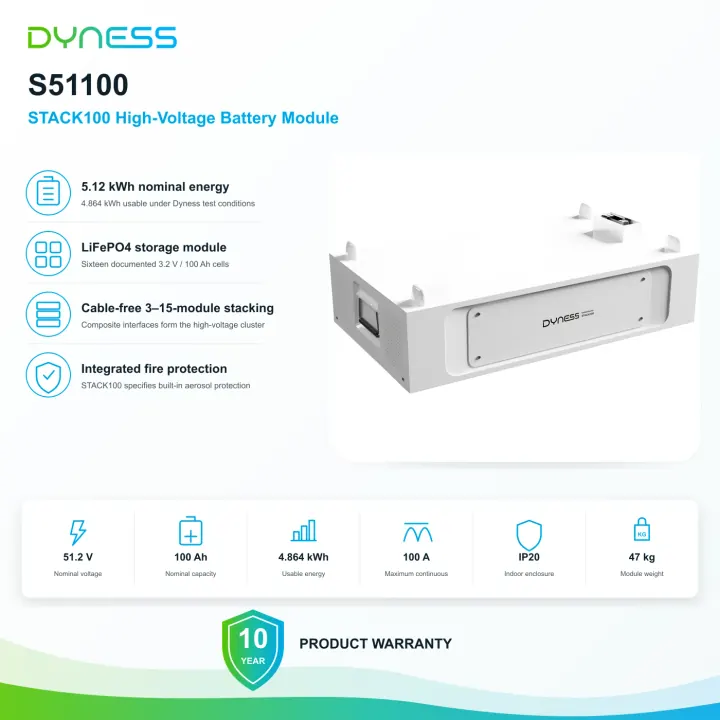
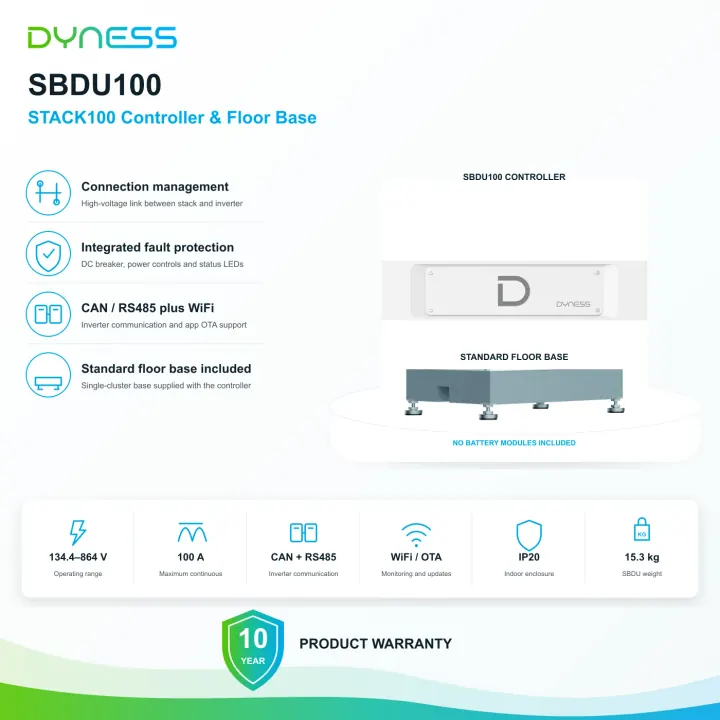
    Battery modules and their defined control units form a high-voltage system. A control unit is not extra energy capacity. STACK100’s S51100 battery modules connect in series to raise stack voltage. The SBDU100 control unit coordinates the stack and contains no additional battery energy. Module count, the supported inverter voltage window and BMS configuration must be designed together.

    A stack’s total energy and power depend on its documented arrangement.

    Not a direct substitute for a low-voltage battery.

    Authenticated Cygni manufacturer example
    Cygni example; not every variant

    Cygni

    Broader integrated system

    Cygni combines battery storage and conversion inside an integrated architecture. It is different from buying a standalone battery. An all-in-one combines conversion and storage within a defined package. Backup output, phase arrangement and usable battery capacity follow that package’s documentation; a larger battery alone does not increase its inverter output.

    It shows the difference between a battery and a complete ESS.

    This broader family is not currently listed in our catalog.

    Key terms

    Short definitions for the names used in this guide.

    kWh / kW / BMS
    Energy, output power and battery management are different roles.

    More nominal energy does not alone establish more usable power or longer coverage.

    03 / What stands behind the brand

    Best Value

    Why Best Value, with compatibility kept exact.

    A battery specialist’s range, judged on its documented products.

    Our positioning applies to the selected range. The documented differences above explain the choice.

    A storage-focused history

    The official company record dates the business to 2017 and distinguishes its storage markets.

    Separate system architectures

    The portfolio distinguishes low-voltage batteries, high-voltage stacks and integrated ESS.

    Stored energy and delivered power differ

    The Powerbox Pro capacity and continuous-power figures show why autonomy and peak demand need separate checks. STACK100 adds a different voltage architecture; its controller should never be counted as another battery module.

    Published characteristics are useful evidence, not a promise of trouble-free operation or fast local warranty handling. Newer models do not inherit decades of field history from the company’s age.

    05 / Warranty & buyer questions

    Warranty coverage

    The exact reference, market and supplied terms govern coverage. A datasheet or compliance certificate is not itself a warranty.

    Model and market terms

    Use the applicable manufacturer statement, serial and invoice. No universal warranty period or local response time is inferred from the brand.

    Product cover and system performance

    Manufacturer product cover concerns qualifying defects in the supplied equipment. It does not establish the complete installation’s performance, an energy-yield guarantee or a fixed local claim-response time.

    Questions before you buy

    No. Voltage architecture and the exact manufacturer BMS/inverter pairing govern compatibility.

    No. It performs control functions and does not add battery energy.

    No. Operating conditions and exact warranty limits remain separate from a cycle test figure.

    Understand the brand. Choose the exact reference.

    Sources · Reviewed 8 October 2026

    ReneWave is independent of Dyness. Manufacturer names and marks belong to their owners; this guide implies no authorization or endorsement.

    ReneWave markRENEWAVE

    Energy systems, held to standard.