


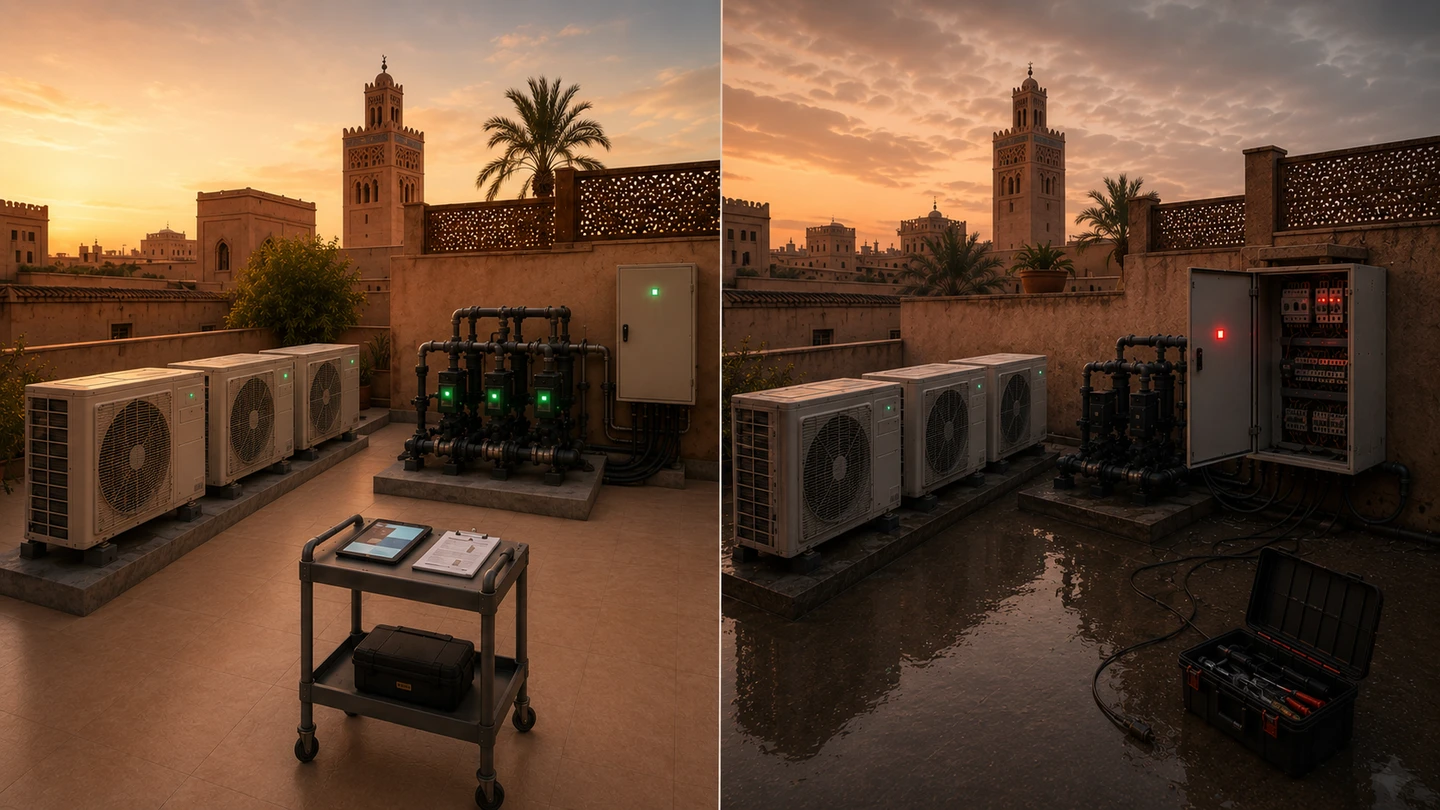
Preventive vs Corrective Maintenance: A Practical Guide for Businesses
Understand the difference between preventive and corrective maintenance, when each one is useful, and how to reduce downtime, repeated failures and hidden technical costs.
Practical guides for keeping electrical, energy, and building systems reliable, efficient, and under control.
Maintenance gives businesses, hotels, riads, factories, and commercial buildings a way to reduce downtime, control technical risk, avoid repeated failures, protect comfort, and keep energy systems performing over time.
Many technical problems begin before visible failure. A pump may still run while consuming more energy than it should. An electrical panel may still operate while overheating. A hotel may still receive guests while comfort complaints increase. A business may continue operating while small faults become expensive future repairs.
Maintenance helps make hidden problems visible before they become downtime, urgent repairs, safety risks, abnormal bills, repeated failures, or undocumented technical changes.

Equipment runs while quietly losing efficiency.

Energy use creeps up without an obvious fault.

Past repairs leave no record for the next intervention.

Small recurring repairs hide a deeper root cause.
Eight reading angles, from preventive planning to post-renovation continuity — written for owners, operators, and technical decision-makers.

Structure preventive visits, corrective interventions, inspection frequency, and follow-up actions.

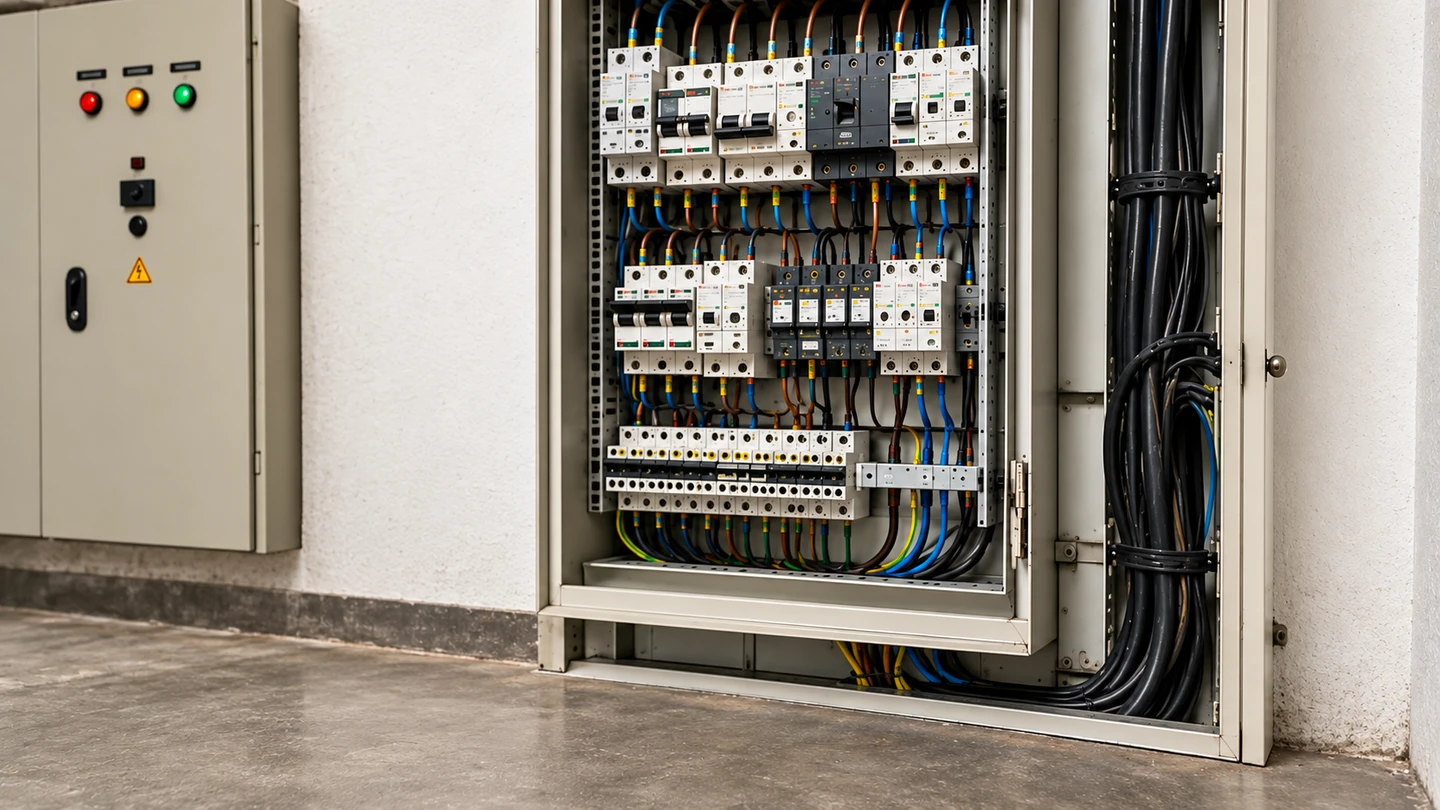
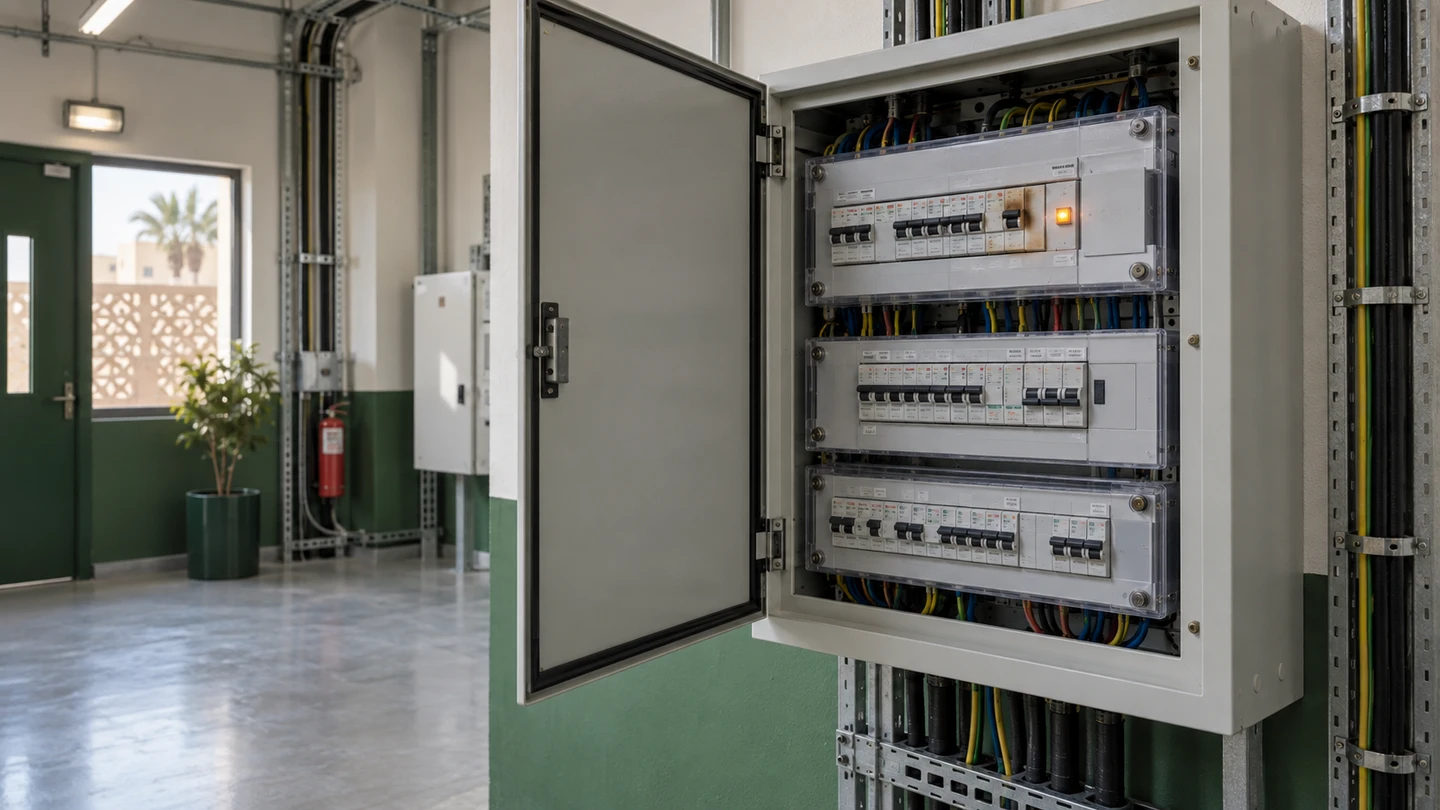
What should be checked in panels, protection devices, loads, grounding, overheating risks, and power quality.

How maintenance reduces downtime, comfort complaints, repeated failures, and operational stress.

Read maintenance contracts, compare scope, track interventions, and preserve technical improvements over time.

How repeated small failures, emergency repairs, comfort complaints, and interruptions can cost more than planned maintenance.

What should actually be checked, measured, photographed, reported, and followed up during a serious maintenance visit.

How maintenance protects the value of audits, upgrades, and electrical renovations after the initial work is completed.

How maintenance affects daily operation of guest-facing and business-critical buildings: comfort, lighting, pumps, HVAC, reliability, energy, safety, and continuity.
Understand the difference between preventive and corrective maintenance, when each one is useful, and how to reduce downtime, repeated failures and hidden technical costs.
How a serious visit should prepare context, inspect systems, capture evidence, classify findings, and leave useful follow-up.
A practical checklist for panels, protection devices, overheating signs, repeated faults, grounding, technical room conditions, documentation, and follow-up.
Build a plan around critical systems, operating risk, visit rhythm, evidence, open actions, and technical memory.
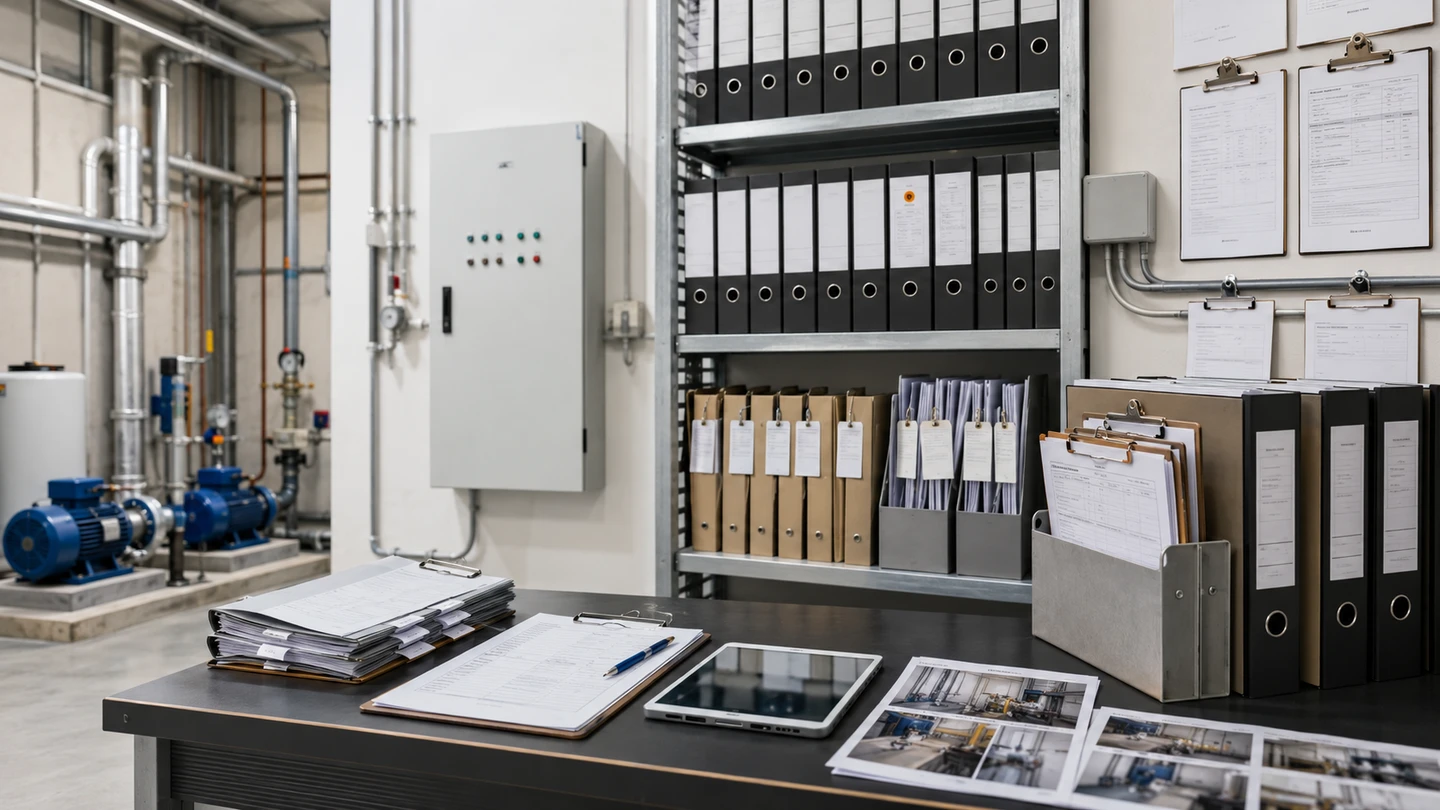
Maintenance documentation turns visits into technical memory. Learn what every business should track after inspections, interventions, recurring faults, and follow-up.
A guide to reviewing scope, exclusions, response times, spare parts, preventive visits, corrective interventions, reporting, and responsibilities.
Choose visit rhythm from criticality, operating hours, environment, seasonality, failure history, and the quality of site records.
A guide to warning signs such as repeated trips, hot panels, flickering lights, abnormal smells, noise, and unexplained equipment failures.
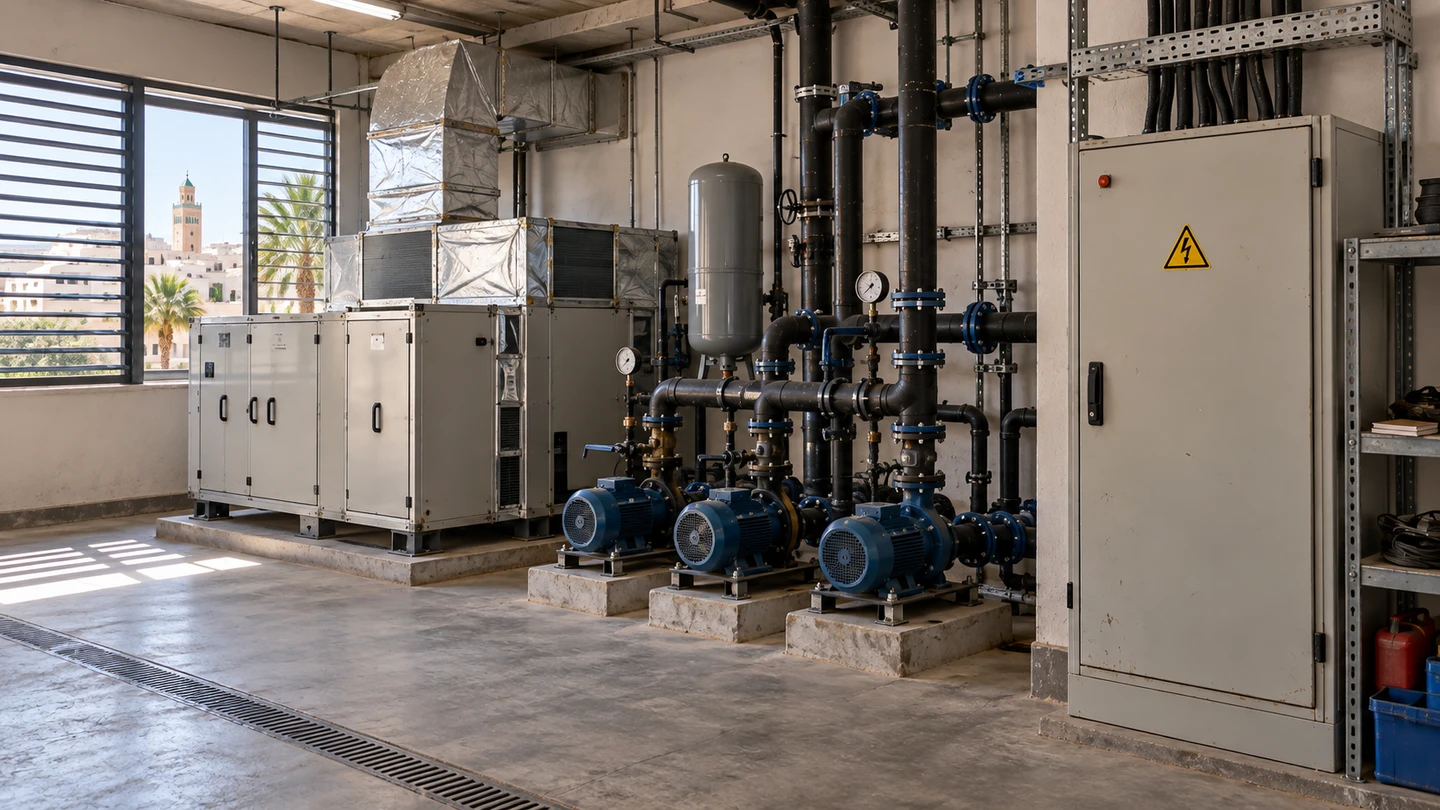
A practical guide to the systems that affect guest comfort, hot water, lighting, pumps, HVAC, electrical reliability, and operational continuity.
A guide for hotel and riad owners on reducing comfort complaints through planned inspections and documented follow-up.
A practical guide to using maintenance planning, inspection history, and recurring-fault tracking to reduce urgent interventions.
A practical checklist for understanding whether a maintenance proposal is structured, measurable, realistic, and clear.
Simple definitions of the terms that often appear in maintenance offers, so buyers understand what they are actually paying for.
A practical guide to comparing total operating cost, documentation, follow-up, emergency response, recurring faults, and accountability.
A guide to deciding when a simple repair is enough and when a business-critical site needs continuity, documentation, measurement, and follow-up.
A guide to identifying when repeated emergency repairs are hiding deeper technical problems and increasing long-term cost.
A guide to preserving the quality of upgrades through inspections, documentation, measurement, and follow-up.
A guide explaining why every technical change should be traceable, updated, and understandable for future maintenance.
A guide to preventing audited or renovated systems from slowly degrading through undocumented changes and unmeasured performance drift.
ReneWave's maintenance philosophy is based on inspection, measurement, documentation, preventive planning, and clear corrective intervention scope. The goal is to keep technical systems visible, traceable, and under control before and after corrective work.
Send your site type, equipment list, recurring issues, or current contract. ReneWave can help you understand what a structured maintenance approach should include.
RENEWAVEEnergy systems, held to standard.