ReneWave perspective · Inverters

    MUST Energy

    MUST’s relevant offer brings inverter, solar charging and AC charging into practical off-grid equipment. Its PV family names distinguish functions and voltage architectures, not one interchangeable box.

    Explore our MUST products
    MUST Energy logo
    PV1800 example

    Off-grid conversion and charging.

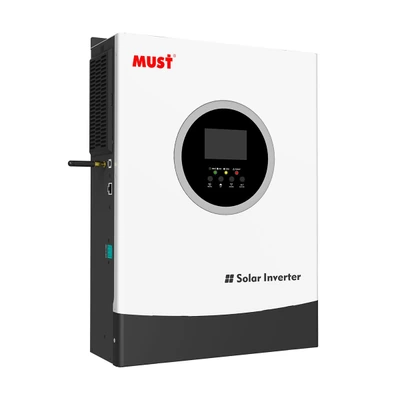
    Authentic MUST PV1800 example hardware
    Authenticated manufacturer example. The selected product reference determines appearance and ratings.

    01 / Who they are

    Power conversion focused on practical systems.

    MUST’s current corporate site dates the company to 2010 and identifies solar inverters and energy storage as its core business. Its documented offer includes high-frequency off-grid inverter/chargers, low-frequency transformer models and battery systems. The corporate date does not establish a first-production date for the present PV18, PV19 or PV30 references. Here those families are explained through their actual conversion architecture, charging limits and documented ratings.

    Corporate origin is not the factory of every unit. The exact label, reference and supply documents remain the identity record.

    Business development and revenue

    The business has expanded from inverter/chargers into a broader storage offer, with manufacturing and overseas distribution described on its current corporate site. No dated, reliable series of completed annual revenue through 2025 is available in the reviewed manufacturer records. Undated turnover claims are excluded; individual family documents remain the basis for comparing products.

    No verified public annual revenue series through 2025 was identified. Milestones describe business development, not a measured revenue trend.

    Business milestones

    1. A solar-inverter and storage business

      The current manufacturer dates its founding to 2010. That corporate date does not resolve the introduction date of each later product family.

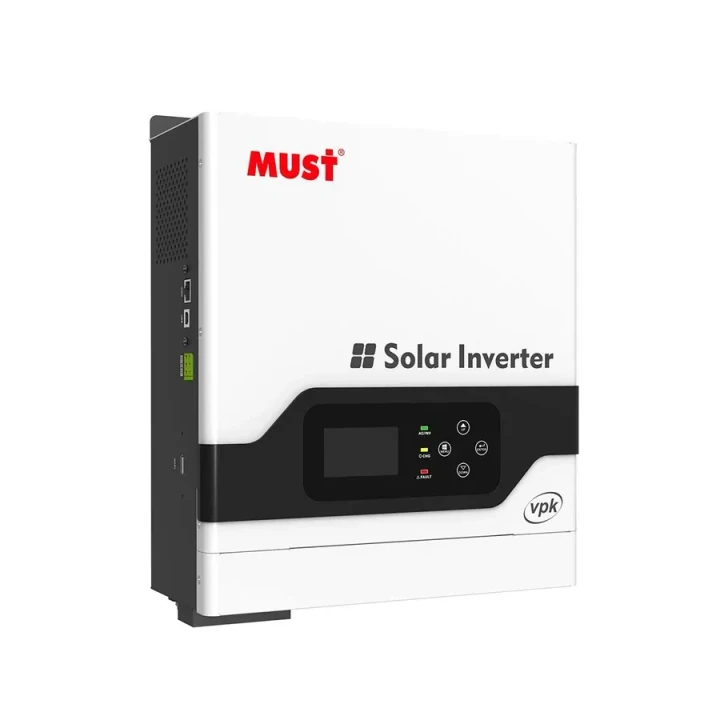
      PV1800 — manufacturer illustration
      PV1800 · illustrative example, not a photograph of this milestone.
    2. Factory and independent development

      The manufacturer history records a factory and independent research-and-development activity in 2014, moving beyond a distribution-only business.

      PREM — manufacturer illustration
      PREM · illustrative example, not a photograph of this milestone.
    3. Foshan manufacturing and research base

      The recorded 28,000 m² Foshan factory combines research, automated production and assembly. This industrial milestone does not change the distinct ratings of later PREM, EXP and VHM references.

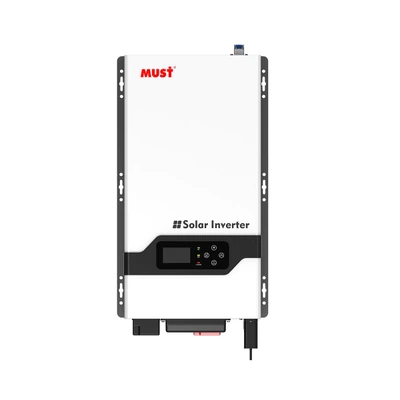
      PV3000 VHM — manufacturer illustration
      PV3000 VHM · illustrative example, not a photograph of this milestone.

    02 / Technology

    Selected technology advances

    Selected developments in the brand’s specialty, not a complete history or catalog.

    Understand the differences between the relevant families. Broader manufacturer offerings and the products ReneWave lists are kept separate below.

    Authenticated PV18 / PV1800 manufacturer example
    PV18 / PV1800 example; not every variant

    PV18 / PV1800

    Off-grid inverter/charger branches

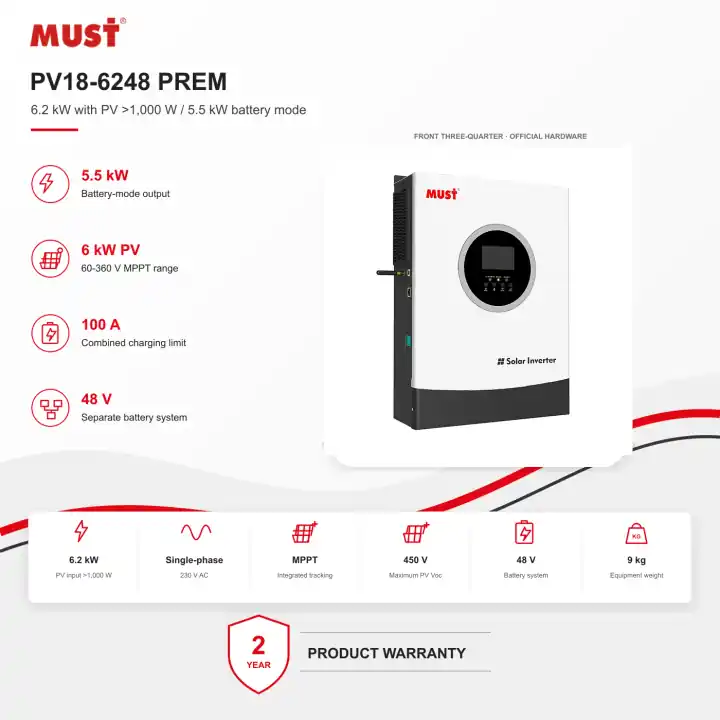
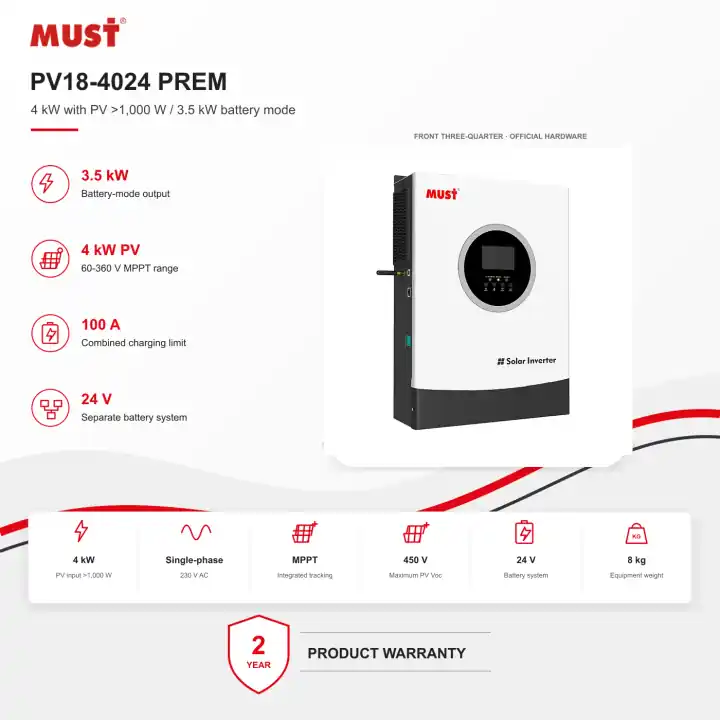
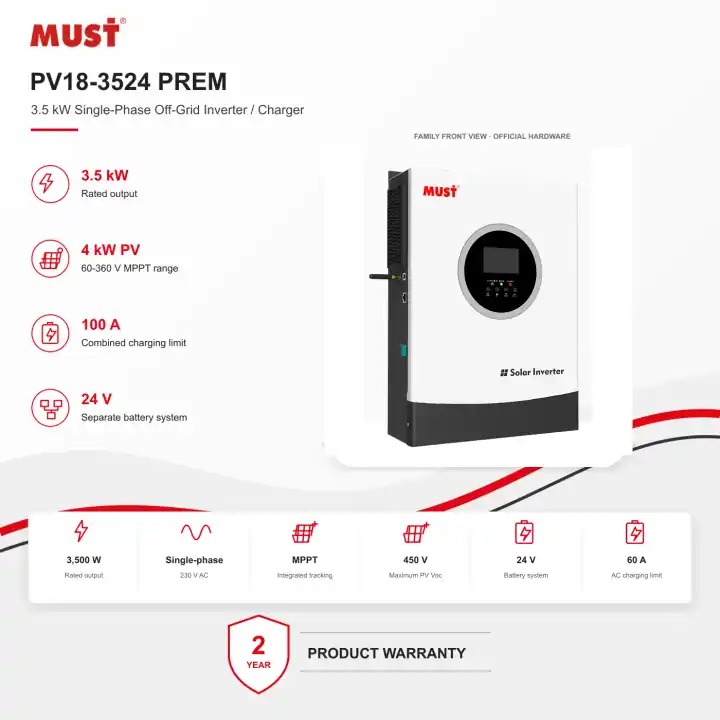
    PV1800 variants combine inversion, solar charging and AC charging. PREM and other suffixes remain distinct configurations. The PV18-6248 PREM example advertises 6.2 kW with PV input above 1000 W, but 5.5 kW in battery mode. Its 48 V system has 60–360 V MPPT tracking and 450 V maximum PV Voc. Solar and AC charging share a 100 A combined ceiling; the two charger ratings cannot be added.

    One enclosure can perform several power roles.

    This does not imply grid-export approval.

    Authenticated manufacturer family hardware
    Manufacturer family example; the selected reference determines the supplied hardware.

    PV19 / PV30

    Other inverter architectures

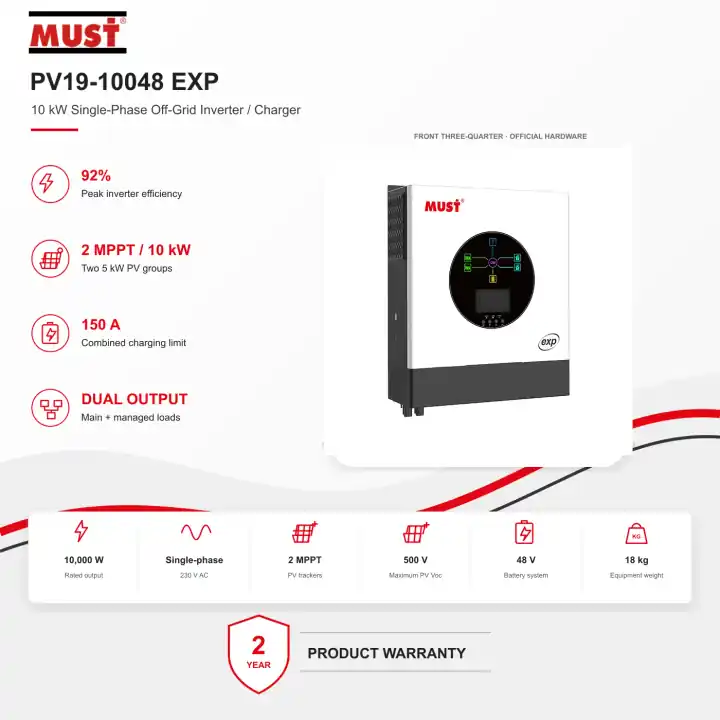
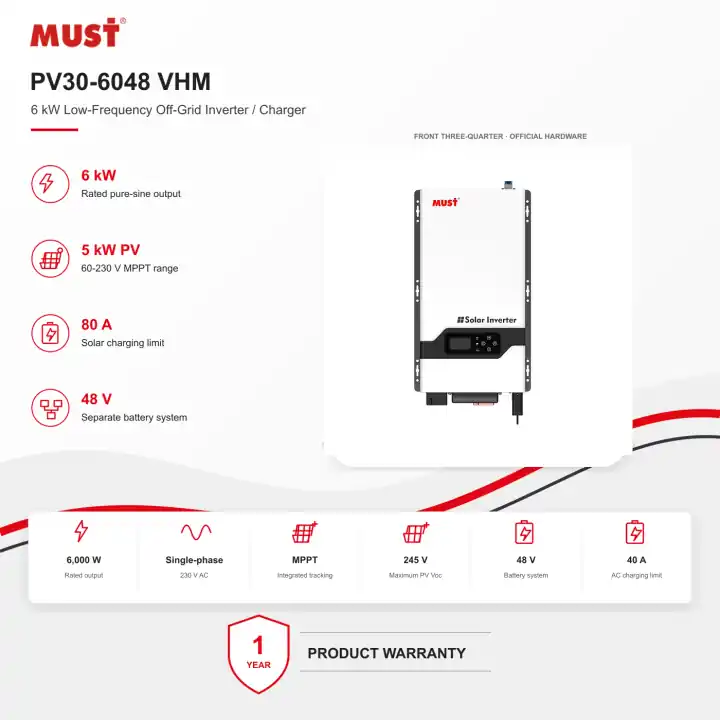
    PV1900 EXP and PV3000 VHM are separate listed families with their own operating modes and electrical windows. A higher number is not a universal upgrade. PV30-6048 VHM instead uses a low-frequency transformer, with 6 kW output and a 48 V battery. Its PV tracking window is 60–230 V and maximum Voc 245 V, versus 450 V on the cited PREM. Those arrays are not interchangeable. PV1900 EXP is a separate family with its own sheet and operating modes.

    It helps distinguish the actual role of each reference.

    The pictured PV3000 VHM illustrates that branch; PV1900 EXP uses its own hardware and documentation.

    Key terms

    Short definitions for the names used in this guide.

    24 V / 48 V
    Battery architecture, not output AC voltage.

    Power, MPPT limits and operating modes belong to the full suffix.

    03 / What stands behind the brand

    Budget

    What supports our Budget selection.

    Commercial positioning does not erase the need for precise product identity.

    Our positioning applies to the selected range. The documented differences above explain the choice.

    An identifiable product offer

    Current company and product records describe conversion and storage roles.

    Separate release milestones

    The March 2024 Johannesburg presentation covered particular ranges; it is not proof of their first global production date.

    Battery-mode sizing is decisive

    The PREM example has a lower output rating when PV assistance is absent. We size essential loads to that battery-mode limit and compare the VHM transformer branch separately, avoiding a purchase based only on the headline wattage.

    Published characteristics are useful evidence, not a promise of trouble-free operation or fast local warranty handling. Newer models do not inherit decades of field history from the company’s age.

    05 / Warranty & buyer questions

    Warranty coverage

    The exact reference, market and supplied terms govern coverage. A datasheet or compliance certificate is not itself a warranty.

    2 years

    PREM documented product term

    The retained PV18 PREM family sheets state a two-year product term. The accepted order, exact hardware revision and delivered warranty conditions determine eligibility; this term is not copied to PV30.

    1 year

    PV30 VHM has a different term

    The retained PV30-6048 VHM sheet states one year. Product coverage and system installation are separate, and inverter coverage does not become a warranty for the connected battery.

    Questions before you buy

    No. The names distinguish different architectures; compare the exact operating function and ratings.

    No. Tiers are commercial positioning, not technical equivalence.

    No blanket claim applies. Use the exact product’s documented operating mode and applicable approval.

    Understand the brand. Choose the exact reference.

    Sources · Reviewed 8 October 2026

    ReneWave is independent of MUST Energy. Manufacturer names and marks belong to their owners; this guide implies no authorization or endorsement.

    ReneWave markRENEWAVE

    Energy systems, held to standard.