ReneWave perspective · Solar, storage & energy control

    Huawei FusionSolar

    Huawei brings solar conversion, batteries and energy management into one FusionSolar ecosystem. Its product names hide important differences: MAP0 is not simply a smaller MB0, and a newer LUNA battery changes more than storage capacity. Here is what those generations actually brought.

    Explore our Huawei FusionSolar products
    Huawei FusionSolar logo
    SUN2000 · MAP0

    Three-phase conversion. A distinct residential generation.

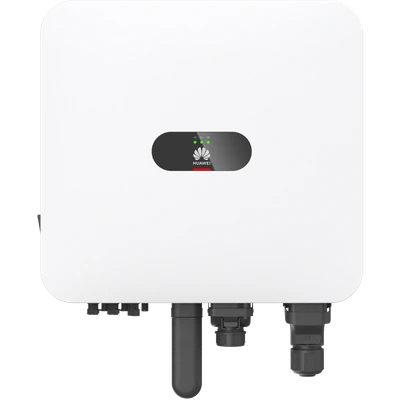
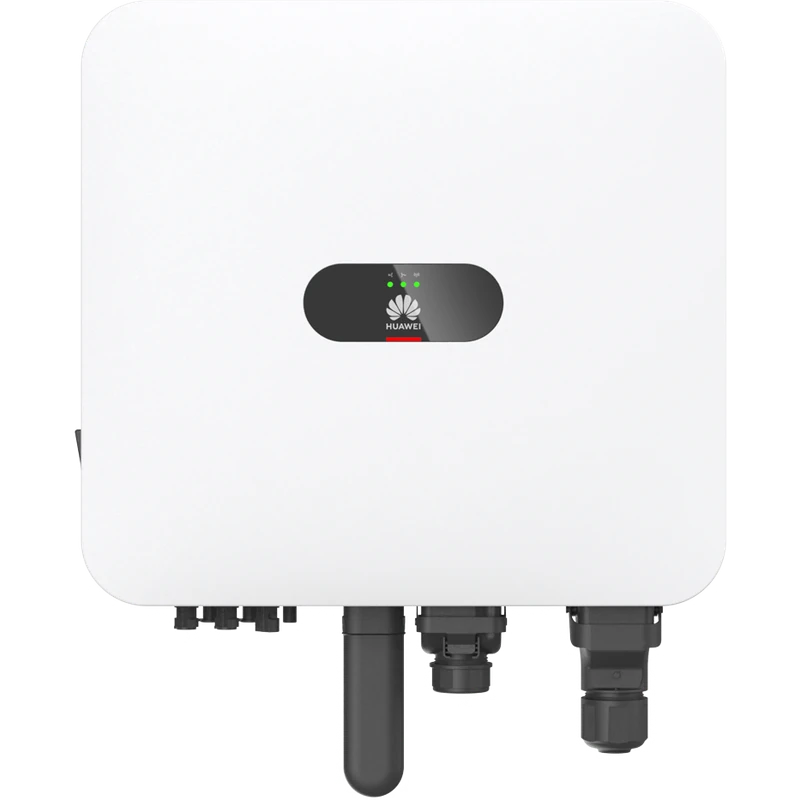
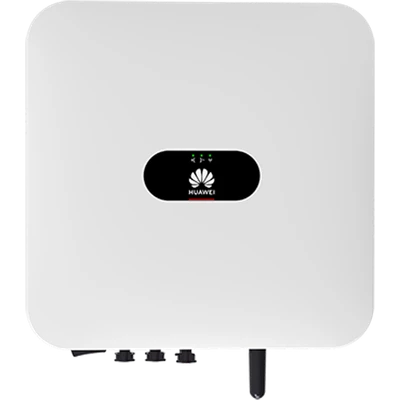
    Official Huawei SUN2000 MAP0 three-phase inverter, front view
    Official MAP0 family visual. L1, M1, MB0 and commercial models have different hardware and functions.

    01 / Who they are

    Solar inverters first. Storage followed.

    Huawei entered solar through inverters, the equipment that converts a PV array’s DC electricity into AC. SgurrEnergy’s 2016 technical review dates inverter development to 2009 and a production line to 2012; Huawei’s own history dates its commercial inverter launch to 2013. Its early business included central inverters for large Chinese solar plants and string inverters for Europe. It then concentrated on string inverters, developing SUN2000 and the connected Smart PV platform introduced in 2014.

    The parent company was founded in Shenzhen in 1987. Its solar activity later expanded from conversion and plant monitoring into home storage: the modular LUNA2000 battery launched in 2020. FusionSolar now brings inverters, batteries and energy management together within Huawei Digital Power, established as a dedicated company in 2021.

    The business, in numbers · Full year 2025

    Digital Power revenue
    $11.06USD billion
    Huawei group revenue
    $126.02USD billion
    Group R&D spending
    21.8%of group revenue

    Digital Power includes solar, data-center power and other energy activities. Group revenue and R&D cover all Huawei businesses. USD revenue uses the report’s 2025 year-end exchange rate.

    Business growth

    Huawei’s group revenue recovered after 2022, reaching USD 126.02 billion in 2025. Its energy business is one part of that wider company: Digital Power generated USD 11.06 billion in 2025, including solar, data-center power and other energy activities. The annual report does not disclose FusionSolar revenue separately.

    Revenue trend · USD billion
    Annual revenue trend, 2021–20252021: $99.89; 2022: $92.38; 2023: $99.45; 2024: $118.16; 2025: $126.02. Values in USD billion; vertical axis starts at zero.$0$50$100$150$2002021$99.892022202320242025$126.02
    Annual revenue · USD billion
    YearRevenue
    2021$99.89
    2022$92.38
    2023$99.45
    2024$118.16
    2025$126.02

    Consolidated group revenue, rounded to two decimals. USD uses each reporting year’s published closing exchange rate; the 2021 value is converted on that basis. Exchange-rate changes also affect the USD trend.

    Business milestones

    1. A solar inverter production line

      SgurrEnergy’s later technical review dates the production line to 2012, following inverter development begun in 2009. This manufacturing milestone precedes Huawei’s stated commercial launch.

      Huawei inverter assembly line shown in the 2016 technical review
      Production · 2016 photo
    2. Commercial entry with PV inverters

      Huawei’s early offering included central inverters for Chinese utility plants and string inverters for Europe. Site experience with maintenance and fault tracing led it to concentrate on string inverters.

      SUN2000 string inverter from the 2016 range, a later example
      SUN2000 · 2016 range
    3. Smart PV combines conversion and monitoring

      Smart PV Solution 1.0 pairs string inverters with remote plant management: operators can locate faults and follow generation by array. The business expands from selling conversion hardware to managing the solar plant around it.

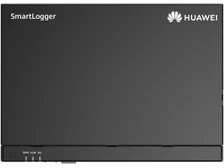
      SmartLogger3000 plant monitoring hardware, a later example
      Monitoring · later hardware
    4. LUNA2000 adds residential storage

      The modular LUNA2000 home battery launches with 5 kWh lithium-iron-phosphate modules. Pairing storage with a compatible inverter lets households keep daytime solar energy for later use; backup requires the appropriate switching equipment.

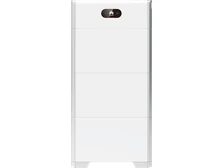
      Huawei LUNA2000 S0 modular home battery
      LUNA2000 · S0 generation
    5. Digital Power becomes a dedicated company

      Established in June, Huawei Digital Power brings existing energy activities into a dedicated business covering solar, storage, data-center power and electric mobility.

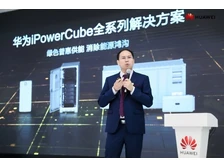
      Huawei Digital Power presenting its energy solutions at SNEC 2021
      Digital Power · SNEC 2021

    02 / Technology

    Selected technology advances

    Selected developments in the brand’s specialty, not a complete history or catalog.

    These are parallel residential and commercial branches, not one ladder from L1 to MG0. Dates below identify a verified launch, regional presentation or documented availability; they are not all worldwide first-sale dates. Family explanations include broader Huawei offerings; our actual catalog is listed separately in section 04.

    Official Huawei SUN2000 · L1 family hardware
    Manufacturer family example; not launch-day hardware.

    SUN2000 · L1

    Single-phase homes · 2–6 kW

    2020Global announcement · June

    L1 brought Huawei’s compact single-phase residential inverter into the 2020 release. Two MPPT trackers manage two PV inputs, and the inverter supports specified LUNA storage. This is the small-home branch: one AC phase, solar conversion and a documented route to storage rather than an all-in-one battery system.

    The 2020 addition was single-phase solar plus a supported battery interface in a compact 2–6 kW inverter. Choose it for single-phase supply; M1 serves three phases.

    Battery and backup devices are separate; grid-connected operation alone does not keep the home powered during an outage.
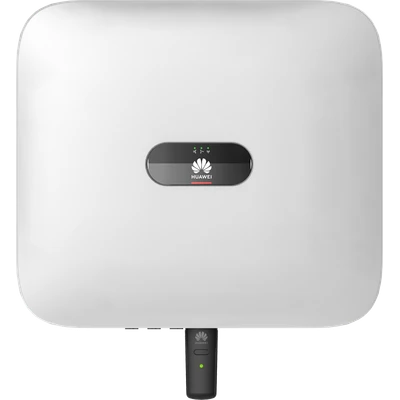
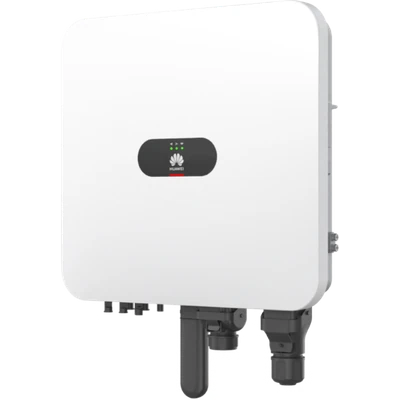
    Official Huawei SUN2000 · M1 family hardware
    Current high-current M1 visual; not the 2021 launch hardware.

    SUN2000 · M1

    Established residential three-phase branch

    2021Documented regional presentation · January

    M1 took the compact residential architecture to three-phase supply, with two MPPTs and a dedicated Huawei battery connection. The 5–10 kW range was already presented in Huawei’s Vietnam launch in January 2021. Later high-current versions address higher-current modules; the M1 name by itself does not identify every hardware revision.

    Compared with L1, M1 brings three-phase supply while retaining two MPPTs and a battery connection. MAP0 later adds different phase-load control and faster SmartGuard switching.

    The January 2021 event establishes regional availability, not a verified worldwide first launch. Input-current limits follow the exact version.

    Official Huawei SUN2000 · MB0 family hardware
    Manufacturer family example; not launch-day hardware.

    SUN2000 · MB0

    Larger three-phase PV & storage · 12–25 kW

    2023Commercial rollout announced · September

    MB0 extends residential/light-commercial conversion to 12–25 kW. It has two MPPTs but four PV inputs, versus two on MAP0, and two battery terminals. Huawei specifies 30 A per MPPT with two strings, or 20 A for one string. This is extra connection and power capacity, not four independently tracked roof areas.

    Compared with MAP0, MB0 raises the range to 12–25 kW and doubles PV inputs from two to four, while keeping two MPPTs. Two battery terminals give larger compatible storage configurations more connection capacity.

    Huawei’s September 2023 webinar planned availability for 30 September. That announcement is not proof of the first shipment in Morocco.

    Official Huawei SUN2000 · MAP0 family hardware
    Manufacturer family example; not launch-day hardware.

    SUN2000 · MAP0

    Residential three-phase control · 5–12 kW

    2024Presented in East Africa · August

    MAP0’s important step is control, not simply higher wattage: Huawei documents unbalanced three-phase output and a faster SmartGuard backup transition. The 5–12 kW range has two MPPTs, one PV input per tracker and a 16 A operating-current limit per MPPT. It supports listed S0 and S1 batteries.

    Compared with M1, MAP0 handles unequal phase loads and supports SmartGuard switching in ≤20 ms, versus ≤100 ms with M1/MB0. This is a control and backup improvement, within its 5–12 kW range.

    Backup timing belongs to the complete SmartGuard architecture and enabled function, not the inverter alone. MAP0 is not a universal replacement for MB0’s larger PV inputs.

    Official Huawei SUN2000 · M3 family hardware
    Manufacturer family example; not launch-day hardware.

    SUN2000 · M3

    Commercial rooftops · 30–50 kW branches

    202030/36/40KTL-M3 announced · June

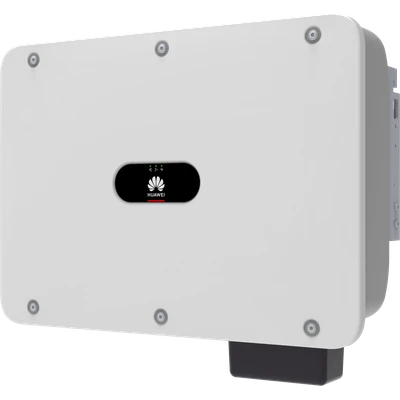
    The 30/36/40KTL-M3 launch in June 2020 brought a compact commercial inverter with IP66 protection and arc-fault detection. Its four MPPTs and eight PV inputs suit larger arrays with several string groups. The 50KTL-M3 is a separately specified commercial reference, not a residential battery inverter scaled up.

    The 30/36/40KTL-M3 branch increases segmentation to four MPPTs and eight PV inputs, versus two MPPTs in the residential branches. It is designed for larger commercial arrays, with a different storage architecture.

    The June 2020 announcement covers 30/36/40KTL-M3, not the introduction date of every later M3 model. No residential LUNA connection is implied.

    Official Huawei SUN2000 · M2 family hardware
    Manufacturer family example; not launch-day hardware.

    SUN2000 · M2

    Large commercial strings · 100/115 kW references

    2023Documented in the Swiss product portfolio

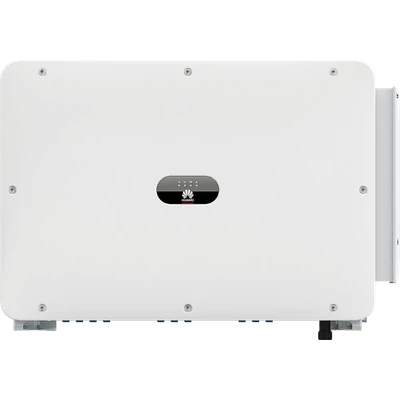
    The 100KTL-M2 architecture offers ten MPPTs and twenty PV inputs. The step up from a smaller M3 is array segmentation and commercial power capacity, not additional household battery functions. Huawei’s French-language Swiss portfolio dated April 2023 lists both 100 and 115 kW references; that documents their place in the range, not an exact first-launch date.

    For 100KTL-M2, the step from 30/36/40KTL-M3 is ten MPPTs and twenty PV inputs, versus four and eight. This gives a larger commercial array more independent tracking groups.

    The catalog’s 100/115KTL-M2 must not inherit the battery claims of similarly named residential products.

    Official Huawei SUN2000 · MG0 family hardware
    Manufacturer family example; not launch-day hardware.

    SUN2000 · MG0

    150 kW commercial platform

    2024East African launch · 16 August

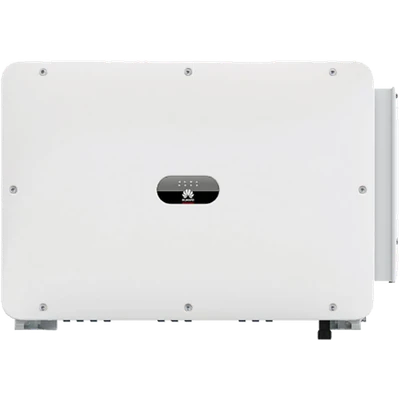
    Huawei introduced the 150K-MG0 platform in East Africa in August 2024. Its seven MPPTs each accept up to three inputs: twenty-one string inputs, but fewer independent trackers than 100KTL-M2. Its commercial protection includes string-level disconnection and connector-temperature monitoring; string disconnection is also documented on 100KTL-M2, so it is not an MG0-only advance.

    Compared with 100KTL-M2, 150K-MG0 increases rated power to 150 kW and inputs to twenty-one, but uses seven MPPTs instead of ten. The MPPT current limit rises from 30 A to 48 A, and MG0 documents connector-temperature detection.

    SUN2000-150K-MG0 is not SUN5000-150K-MG0. Optimizer requirements and storage architecture must not be copied between them.

    Official Huawei LUNA2000 · S0 family hardware
    Manufacturer family example; not launch-day hardware.

    LUNA2000 · S0

    The first modular residential storage generation

    2020Global storage announcement · June

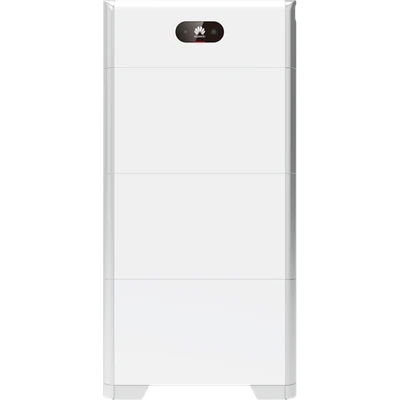
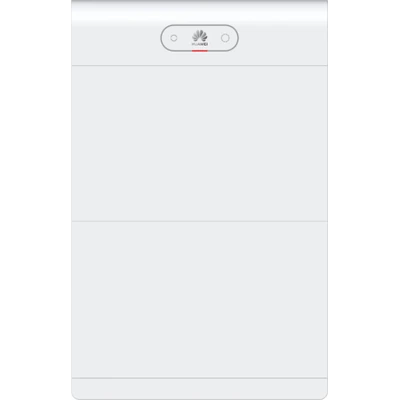
    Announced alongside L1 in June 2020, S0 uses 5 kWh LFP battery modules and a separate 5KW-C0 power controller. One tower provides 5, 10 or 15 kWh usable capacity. Its maximum continuous output is 2.5 kW with one module and 5 kW with two or three: adding energy capacity does not indefinitely increase discharge power.

    S0 made residential storage modular: each 5-E0 adds 5 kWh. The third module extends runtime from 10 to 15 kWh but leaves maximum sustained power at 5 kW.

    S0 and S1 use different controllers and battery modules. New-generation modules are not a direct expansion of an S0 tower.

    Official Huawei LUNA2000 · S1 family hardware
    Manufacturer family example; not launch-day hardware.

    LUNA2000 · S1

    Higher power and a new controller

    2024Worldwide shipments from April

    Huawei records worldwide S1 shipments from April 2024. The original 7/14/21-S1 branch uses 6.9 kWh usable modules, giving 6.9, 13.8 or 20.7 kWh per tower with a 10KW-C1 controller. Maximum charge/discharge power scales to 3.5, 7 or 10.5 kW. Later 5 kWh S1 modules expand the family; they are not the original launch configuration.

    With the original 7-E1, each module gains 38% usable energy and one-module output rises 40%. A three-module tower reaches 20.7 kWh and 10.5 kW, versus S0’s 15 kWh and 5 kW, subject to the inverter and conditions.

    Broader manufacturer family, not an implied stocked ReneWave product. Warranty differs by region; Europe’s “up to 15 years” must not be presented as Morocco’s automatic coverage.

    Official Huawei SmartGuard · T0 family hardware
    Manufacturer family example; not launch-day hardware.

    SmartGuard · T0

    The backup interface, not another inverter

    2024Three-phase platform presented · August

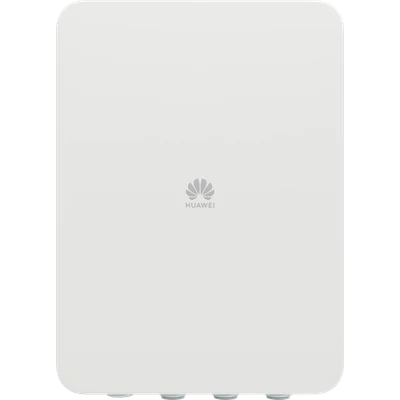
    SmartGuard isolates a supported system from the grid and manages backup and non-backup loads. Its three-phase T0 specifications make the family differences visible: ≤20 ms switching with MAP0, ≤100 ms with M1/MB0, and up to three MAP0 inverters versus one M1/MB0. Seamless switching is an enabled function, not the default promise of a bare inverter.

    The T0 adds grid isolation and whole-home backup control: ≤20 ms switching with MAP0 or ≤100 ms with M1/MB0, when seamless switching is enabled. It can coordinate up to three MAP0 inverters, versus one M1/MB0.

    The 63 A switching rating is not battery output power or a guarantee that every connected load can run indefinitely.

    Huawei Smart Dongle WLAN-FE
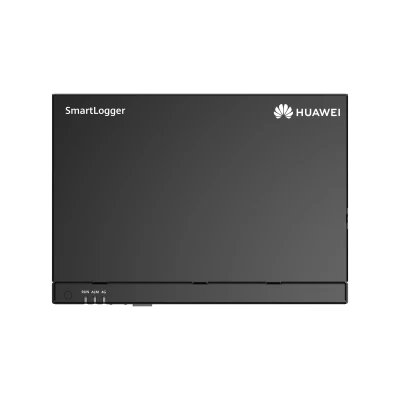
    Huawei SmartLogger3000A communications controller
    WLAN-FE Dongle and SmartLogger3000A examples; exact suffixes vary.

    FusionSolar · Dongle / SmartLogger

    Communication, supervision and alarms

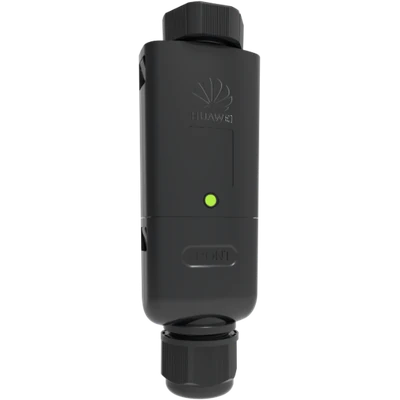
    A WLAN/Ethernet or 4G dongle provides a communication route. SmartLogger coordinates a larger supported plant; FusionSolar is the monitoring interface. These are distinct roles, not interchangeable boxes and not sources of backup power.

    A dongle connects a supported inverter to monitoring; SmartLogger coordinates a larger plant. Neither adds stored energy, electrical output or grid isolation for backup.

    An online service needs connectivity; local power-conversion functions must not be confused with cloud access.

    S0 and S1: what actually changes

    The comparison below uses S0’s 5-E0 and the original S1 7-E1 module. S1 stores 38% more energy per module and supplies 40% more power with one module; with three modules, its 10.5 kW ceiling is 2.1 times S0’s 5 kW. That means longer runtime and more simultaneous demand, within the inverter’s limits.

    S0 and S1: what actually changes
    SpecificationLUNA2000 · S0LUNA2000 · S1 (7-E1)
    Battery module SKULUNA2000-5-E0LUNA2000-7-E1
    Required controllerLUNA2000-5KW-C0LUNA2000-10KW-C1
    Usable energy · 1 / 2 / 3 modules5 / 10 / 15 kWh6.9 / 13.8 / 20.7 kWh
    Maximum sustained output · 1 / 2 / 3 modules2.5 / 5 / 5 kW3.5 / 7 / 10.5 kW
    Module energy managementBuilt-in energy optimizerBuilt-in energy optimizer; new Module+ architecture
    Chemistry / enclosureLFP / IP66LFP / IP66
    Protection architectureLFP cells, electrical protection and module managementFive documented layers, including four temperature sensors per eight cells, pressure release and an emergency fire-suppression kit

    E0/E1 are the supplier’s module codes; S0/S1 are system families, so both names are valid. C0/C1 identify the separate controllers and contain no battery cells. Parts cannot be swapped between generations. The newer LUNA2000-5-E1 is a 5 kWh S1 module: E1 alone does not tell you its capacity. The policy’s 5-E1 warranty row lists Europe only; its 80% capacity terms cannot be assumed for Morocco. Both generations already optimize modules; that feature is not exclusive to S1. Ratings are manufacturer test values, and delivered AC power also depends on the inverter and conditions.

    Key terms

    Short definitions for the names used in this guide.

    L1 / M1 / MAP0 / MB0
    Architecture names, not a universal quality ladder. Phase handling, PV inputs, battery interfaces and backup behavior change between branches.
    kW / kWh
    kW is power at a moment; kWh is stored or produced energy. A bigger battery can run a load longer without supplying more instantaneous power.
    MPPT / PV inputs
    MPPT trackers control independent solar operating points. Two inputs on one tracker do not become two independent trackers.
    S0 / S1 · E0 / E1 · C0 / C1
    S0/S1 name the system generations. E0/E1 are battery modules; C0/C1 are separate power controllers. A supplier listing 5-E0 or 7-E1 is identifying a component, not contradicting the system name. The full SKU matters: 5-E1 and 7-E1 have different capacities.

    A later suffix can add a valuable function without making every older or higher-power reference the wrong choice. Compare the role and documented capability before treating the names as a ranking.

    03 / What stands behind the brand

    Premium

    Why we place Huawei in Premium.

    We place both the relevant Huawei inverter and battery ranges in Premium, for different reasons. We value their control architecture, useful power and protection features—not simply company size or warranty length. These are documented capabilities, not a claim that every competing brand lacks them.

    ReneWave’s commercial assessment, not a certification, a confirmed price or a universal technical ranking.

    Inverters

    Conversion, phase control and a defined backup ecosystem.

    Phase management · MAP0

    MAP0 adjusts its output to uneven loads across three phases, useful when a home's appliances are not evenly distributed. Huawei specifies 100% three-phase asymmetric load support, not the full inverter rating on any single phase. Per-phase current, battery power and operating mode still limit what it can supply. For 10K-MAP0, published conversion efficiency is 98.6% maximum and 98.1% European-weighted, not an annual energy-yield guarantee.

    Coordinated backup · SmartGuard

    SmartGuard-63A-T0 is separate transfer and control hardware, with manual bypass and coordination of supported chargers, heat pumps and switching devices. Huawei specifies transfer within 20 ms with MAP0 or 100 ms with M1/MB0; seamless switching must be enabled. This is a complete-system benefit, not a built-in function of every SUN2000. Supported firmware, battery power and circuit limits determine which loads stay powered.

    Fault detection at the relevant circuit

    MAP0 combines arc-fault protection with PV and battery connector-temperature detection. Rapid shutdown requires compatible optimizers; the inverter alone does not provide that complete function. Commercial MG0 has its own string and connector diagnostics. These layers can interrupt or help locate a fault rather than leave an unexplained loss of output. We value the detection architecture without extending every feature to every model or promising fire immunity.

    Batteries

    Module-level management, output power and layered protection.

    Energy management for each module

    Each LUNA S1 module has an energy optimizer. Huawei documents compatible expansion without preliminary charge-state matching, making added capacity less dependent on manually equalizing every module beforehand. This architecture is distinct from ordinary cell balancing. Approved modules and controllers are still required, and the manual's health checks and charge-state correction still apply. We do not present balancing as exclusive to Huawei.

    Power as well as capacity

    With the original S1 7-E1 modules, one, two or three modules provide 3.5, 7 or 10.5 kW respectively, alongside 6.9, 13.8 or 20.7 kWh usable energy. Relevant S0 configurations provide 2.5 kW with one module and up to 5 kW with two or three. S1 can support higher simultaneous demand, not simply longer runtime. The inverter and conditions still limit output; newer 5-E1 configurations have their own ratings.

    Protection at several levels · S1

    S1 combines overcurrent control, short-circuit isolation at string and module level, and four temperature sensors per eight cells. Huawei also documents pressure release and a fire-suppression kit as emergency layers. We value faults being monitored and isolated at several levels rather than relying only on a cabinet rating. These manufacturer-described S1 safeguards do not promise fire immunity or establish that other brands lack comparable protection.

    Our Premium positioning reflects the integration of conversion, storage and backup in the relevant Huawei range. The exact model and local support remain part of the choice.

    04 / In our catalog

    Huawei FusionSolar in our catalog.

    Browse Huawei FusionSolar products

    Exact catalog references, with their own specifications and documents. Prices and availability are confirmed in your written quote.

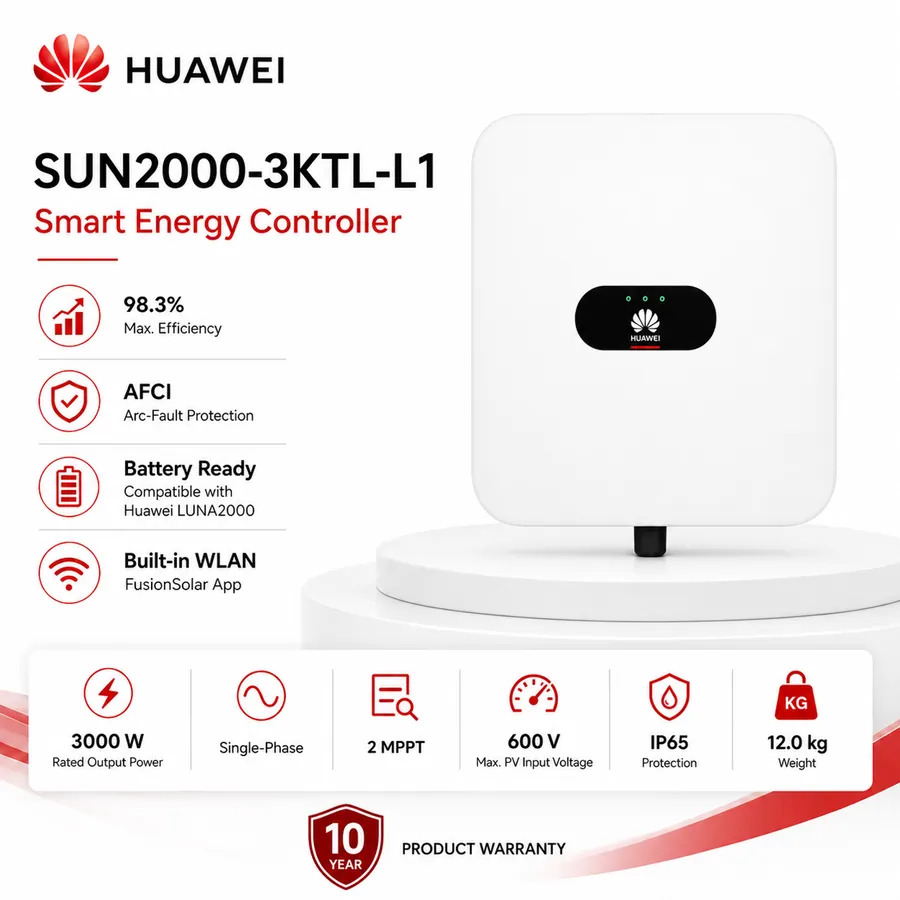
    Huawei SUN2000 3 kW Single-Phase Solar Inverter
    Huawei FusionSolar

    Huawei SUN2000 3 kW Single-Phase Solar Inverter

    A compact two-MPPT solar inverter for single-phase systems, with optional Huawei storage and backup equipment confirmed separately.

    View product
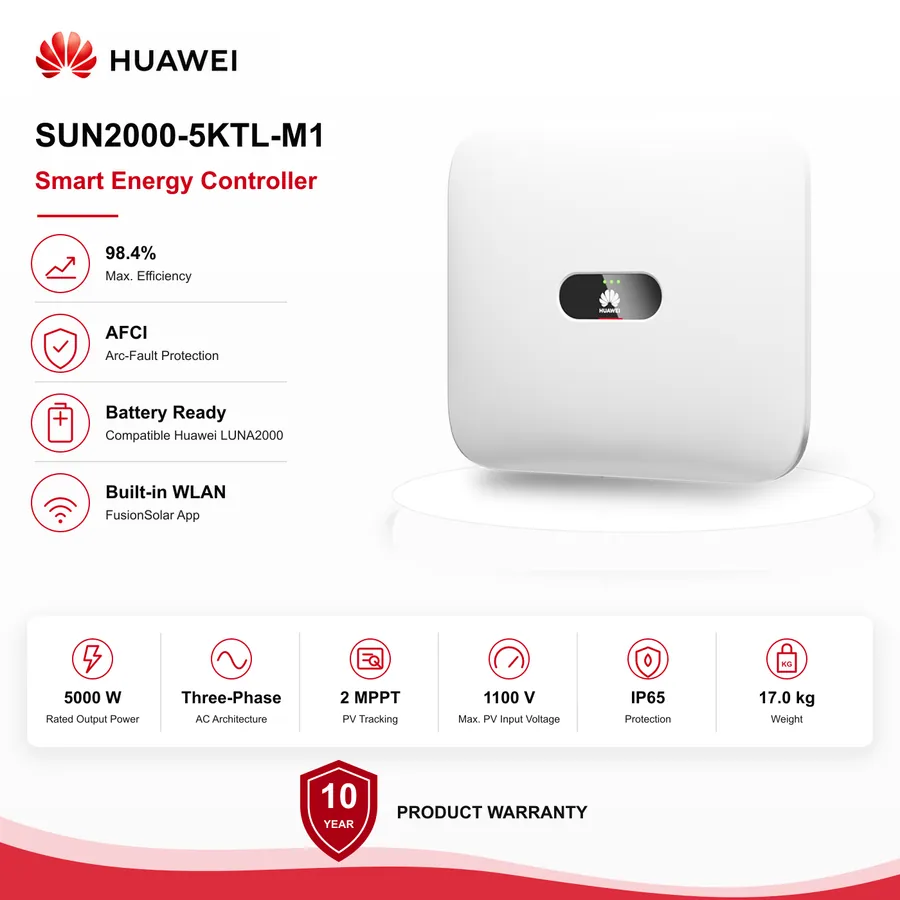
    Huawei SUN2000 5 kW Three-Phase Solar Inverter
    Huawei FusionSolar

    Huawei SUN2000 5 kW Three-Phase Solar Inverter

    A two-MPPT three-phase solar inverter with a separately validated Huawei storage and selected-load backup path.

    View product
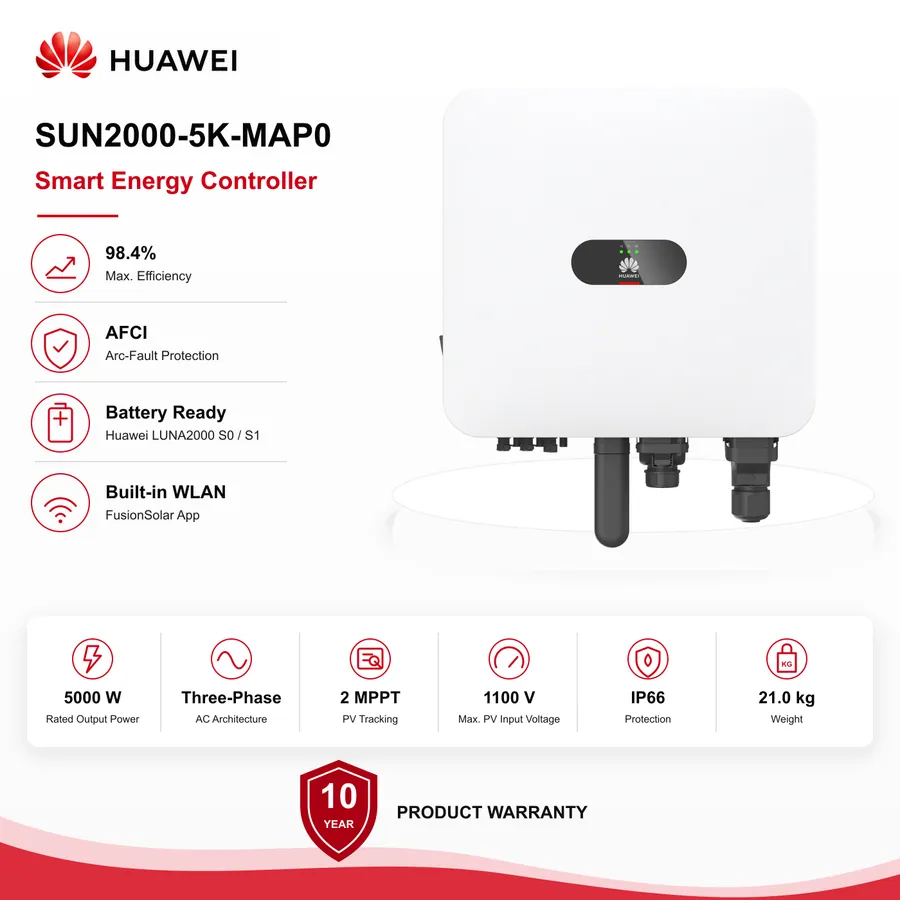
    Huawei SUN2000 5 kW Three-Phase Hybrid Solar Inverter
    Huawei FusionSolar

    Huawei SUN2000 5 kW Three-Phase Hybrid Solar Inverter

    A three-phase hybrid inverter with two MPPTs and separately validated Huawei storage and SmartGuard backup paths.

    View product
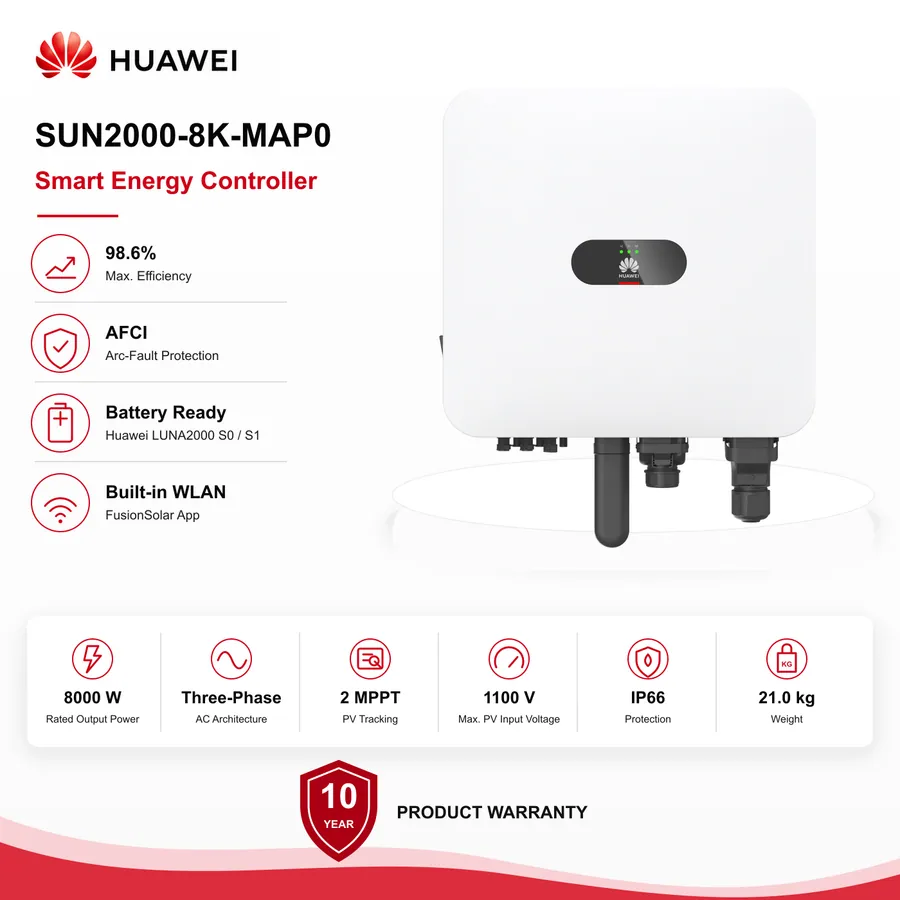
    Huawei SUN2000 8 kW Three-Phase Hybrid Solar Inverter
    Huawei FusionSolar

    Huawei SUN2000 8 kW Three-Phase Hybrid Solar Inverter

    A three-phase hybrid inverter with two MPPTs and separately validated Huawei storage and SmartGuard backup paths.

    View product
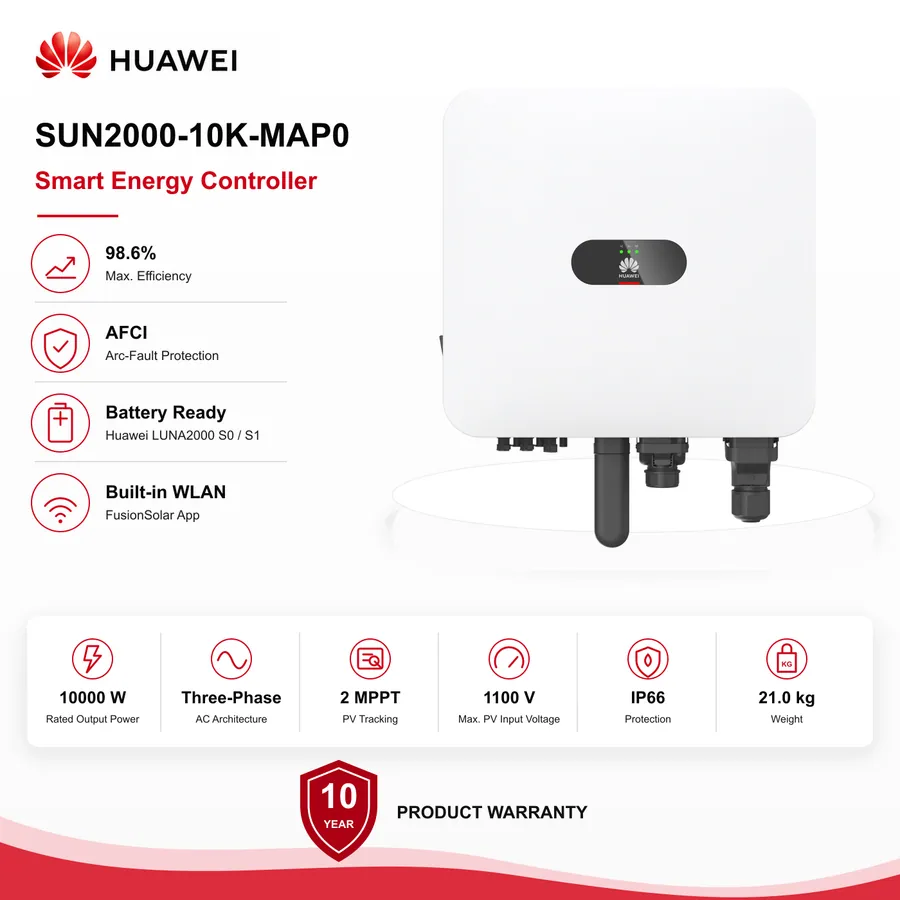
    Huawei SUN2000 10 kW Three-Phase Hybrid Solar Inverter
    Huawei FusionSolar

    Huawei SUN2000 10 kW Three-Phase Hybrid Solar Inverter

    A three-phase hybrid inverter with two MPPTs and separately validated Huawei storage and SmartGuard backup paths.

    View product
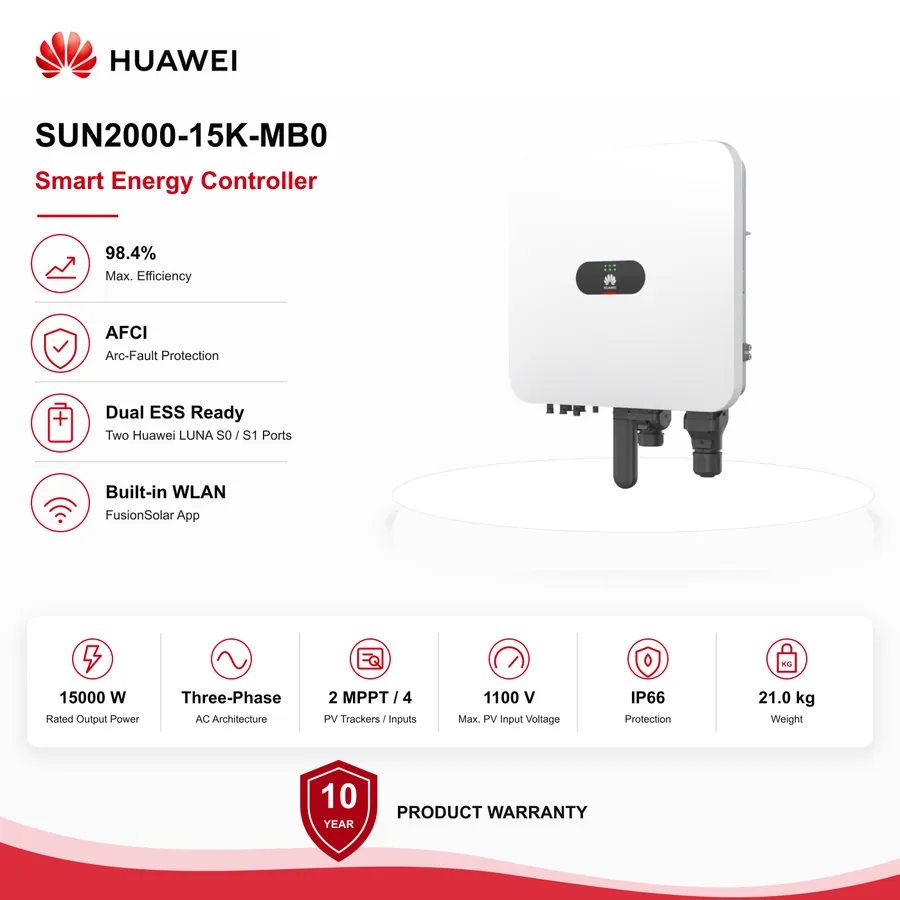
    Huawei SUN2000 15 kW Three-Phase Hybrid Solar Inverter
    Huawei FusionSolar

    Huawei SUN2000 15 kW Three-Phase Hybrid Solar Inverter

    A higher-capacity three-phase hybrid inverter with four designed PV inputs, two storage terminals and separately engineered SmartGuard backup.

    View product
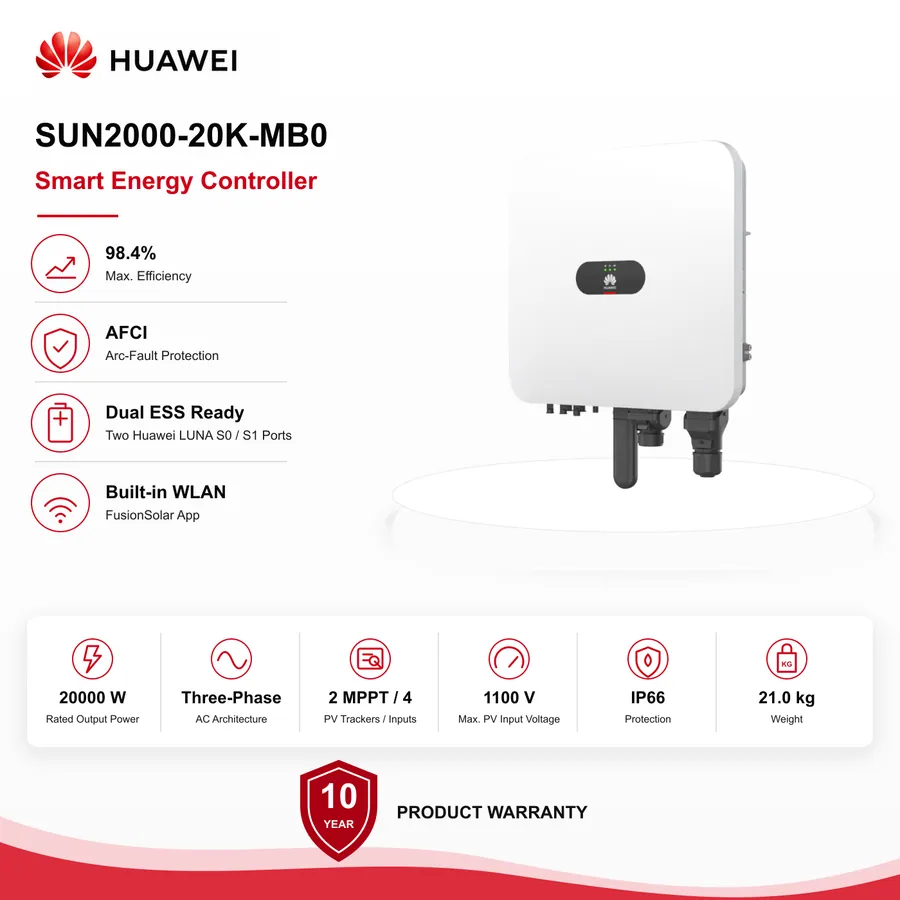
    Huawei SUN2000 20 kW Three-Phase Hybrid Solar Inverter
    Huawei FusionSolar

    Huawei SUN2000 20 kW Three-Phase Hybrid Solar Inverter

    A 20 kW three-phase hybrid inverter with four designed PV inputs, two storage terminals and a separately engineered SmartGuard path for selected single-phase backup loads.

    View product
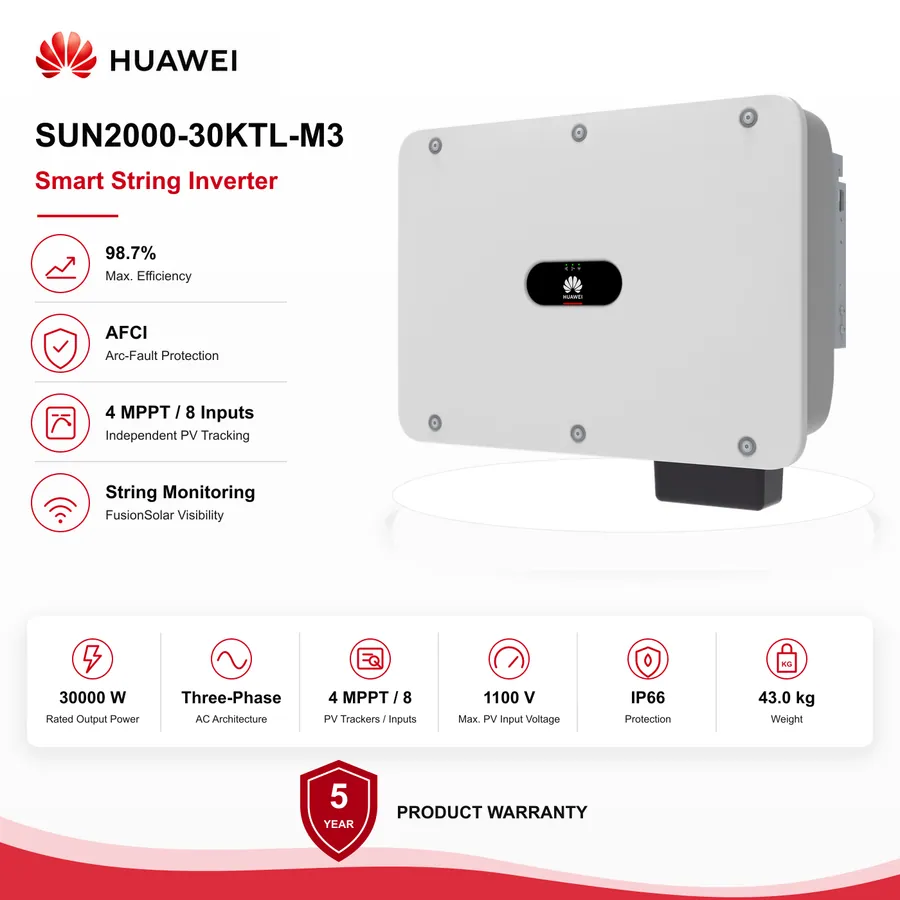
    Huawei SUN2000 30 kW Three-Phase String Inverter
    Huawei FusionSolar

    Huawei SUN2000 30 kW Three-Phase String Inverter

    A four-MPPT commercial string inverter for calculated three-phase PV arrays, with no battery or backup function.

    View product

    05 / Warranty & buyer questions

    Warranty coverage

    These periods apply to the residential inverter and LUNA configurations below. Battery coverage also has energy-throughput and remaining-capacity limits. The warranty document supplied with the exact model sets the final terms.

    10 years

    Residential inverters

    Manufacturer coverage for the L1, M1, MAP0 and MB0 series. Commercial inverter models have separate warranty terms.

    7 years

    LUNA S0

    In Morocco, the 5-E0 battery module is covered for seven years or 13.17 MWh of cumulative throughput, whichever comes first, at 60% end-of-life capacity. For its initial 5 kWh, 60% corresponds to 3 kWh under the manufacturer’s capacity test. The C0 controller has a separate seven-year warranty.

    10 years

    LUNA S1 · 7-E1

    The 7-E1 module’s Africa terms specify five basic plus five conditional years, or 19.23 MWh per module, whichever comes first, at 60% end-of-life capacity (4.14 kWh from the initial 6.9 kWh). The advanced cover requires FusionSolar connectivity; never connecting or disconnecting for more than six months voids it. The C1 controller has separate time-based cover.

    Questions before you buy

    The figures are cumulative energy-throughput limits per battery module, paired with a time limit and a retained-capacity condition. MWh means megawatt-hours: 13.17 MWh equals 13,170 kWh. It is energy passing through repeated charge/discharge cycles, not energy held at once or a promise of minimum lifetime production. Warranty ends at the first applicable limit; actual lifetime delivery depends on use, temperature and aging. The 60% figure is remaining capacity under the stated test conditions, not round-trip efficiency.

    No. Expansion without preliminary charge matching is different from maintaining an accurate charge estimate. The S1 manual, sections 7.6–7.7, documents natural and automatic health checks and SOC correction, including full charging under stated conditions. The system can automate some checks, but it is not calibration-free. These are system-level maintenance functions, not a requirement here to disconnect and individually recharge every module. The applicable manual and installer determine the appropriate check.

    MAP0 appears in 2024 presentations, after MB0’s 2023 rollout announcement, but they are parallel branches. MAP0 emphasizes residential phase and backup handling; MB0 offers higher power and more PV/battery connections. A later date does not make MAP0 the better choice for every larger installation.

    Not simply because MAP0 is newer. The relevant question is whether you need a documented capability the existing system lacks, such as its different SmartGuard transition or phase behavior. An operating M1 with suitable capacity and supported batteries can remain a valid choice; the guide does not turn a release date into a replacement recommendation.

    No. The residential L1/M1/MAP0/MB0 lists and S0/S1 generations are defined combinations. Our 100/115KTL-M2 and commercial M3/MG0 products must not inherit the direct residential battery claims just because they share SUN2000 in the name. S0 controller and battery modules are also not interchangeable with S1 parts.

    Local power conversion and online monitoring are different functions. A lost connection removes remote visibility, not necessarily solar conversion. However, S1’s advanced warranty has connectivity conditions, and supported backup behavior depends on the complete local architecture. “Works offline” must not be treated as “all cloud services and warranty benefits remain unchanged.”

    Our assessment considers conversion data, differentiated controls, storage power and published testing together. Warranty length is a genuine benefit, but it differs by product and market. Premium is our commercial positioning, not a promise of the fewest failures, fastest Moroccan claim handling or automatic compatibility with another brand’s battery.

    Understand the brand. Choose the exact reference.

    Sources · Reviewed 7 October 2026

    ReneWave is independent of Huawei FusionSolar. Manufacturer names and marks belong to their owners; this guide implies no authorization or endorsement.

    ReneWave markRENEWAVE

    Energy systems, held to standard.