Solar Technology Atlas
    Technology brief · Solar Panels

    Rigid vs Flexible Solar Panels

    Rigid panels use a framed glass module. Flexible panels use a thinner body that can follow lighter or curved surfaces, usually with different durability and cooling tradeoffs.

    This brief is intentionally concise. It helps you recognize the equipment term before a quote conversation; full Atlas articles go deeper where the topic needs diagrams, source-backed comparisons and finished recognition images.

    Rigid moduleFlexible moduleSurface fit
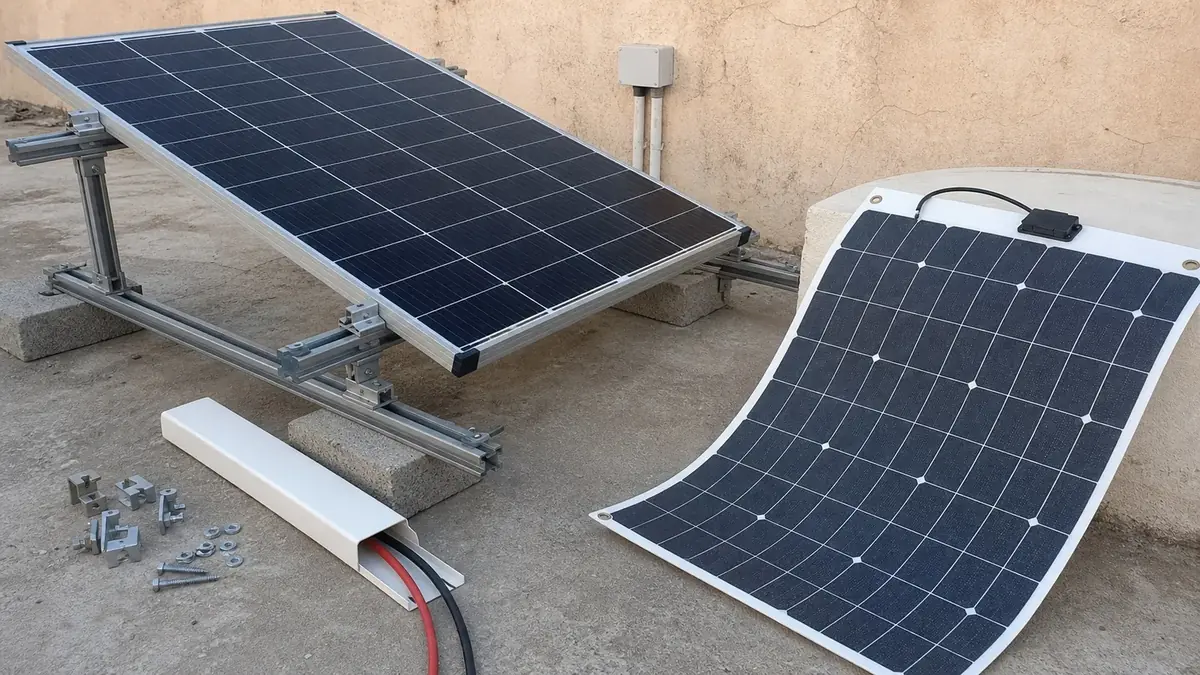
    Rigid framed solar panel beside a flexible solar panel sample on a Moroccan rooftop service area
    Surface-fit view: rigid frames and flexible laminates solve different mechanical problems.
    How it works

    Both panel types convert sunlight into DC electricity. The difference is mechanical: how the module is supported, cooled, fixed, protected and replaced later.

    Where it fits

    Rigid panels suit fixed rooftops, terraces, ground mounts and long-term solar structures.

    Flexible panels can help on mobile, curved or light surfaces when weight and shape are constraints.

    Temporary or small systems where mounting simplicity is more important than maximum lifetime.

    SOLAR TECHNOLOGY

    Have a Rigid vs Flexible question?

    Send the product name, quote page or photo. ReneWave can explain what the technology does, whether this brief is enough, and what needs a deeper study before purchase.

    ReneWave markRENEWAVE

    Energy systems, held to standard.