News date · 24/09/2026
Published by ReneWave 05/10/2026
ReneWave · News · International
Solar: a new global picture with relevance for Morocco
Published on 24 September, the report separates installation growth from equipment flows. That distinction helps explain Morocco’s place in the solar market.
ReneWave
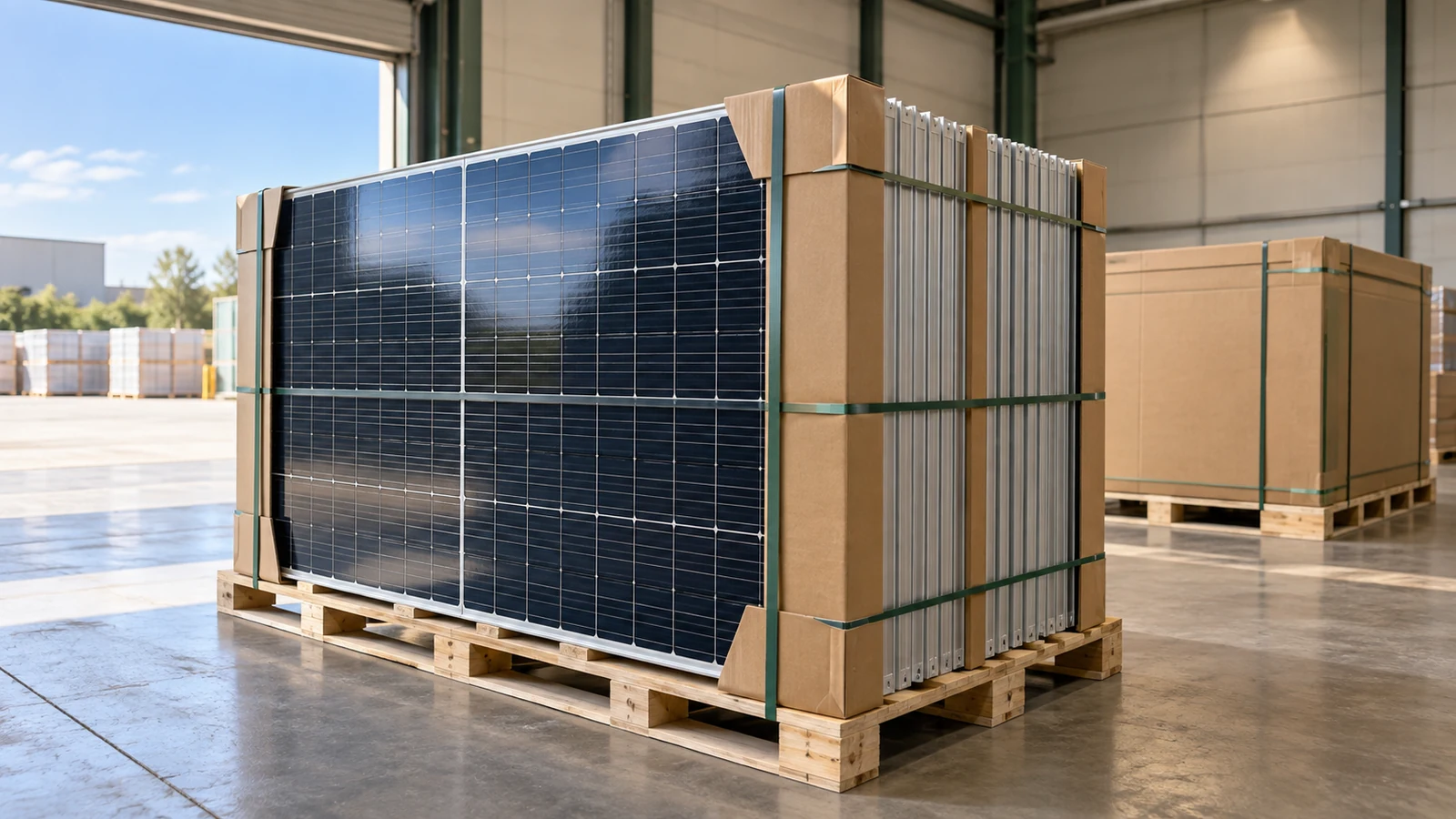
Generated contextual illustration; it does not depict the announced site or project.
- Worldwide additions in 2025
- ≈ 692 GWEstimate
Estimated newly installed photovoltaic power; approximately 15% growth year on year.
- Distributed share
- ≈ 41%Estimate
282 GW out of 692 GW: systems near consumers, including off-grid installations.
- An indicator for Morocco
- > 1 GW of imported modulesEstimate
Chinese modules in 2025, according to the report; imports do not measure completed installations.
A new report, covering 2025 data
The IEA PVPS programme published Trends in Photovoltaic Applications 2026 on 24 September. Its consolidated assessment estimates about 692 GW of photovoltaic capacity added worldwide in 2025, 15% more than in 2024. The global fleet reached almost 2.96 TW by year end. These figures cover photovoltaics, which turn light directly into electricity, rather than solar thermal power stations.
The report estimates that this fleet could generate around 3,845 TWh over a complete year, equivalent to about 12% of global electricity consumption. This is theoretical annual potential, calculated using representative yields, rather than electricity actually produced during 2025. A system connected in December did not operate for the whole year.
Consumer-side systems are a substantial part of growth
Large power plants account for about 410 GW of the 2025 additions. Distributed installations account for 282 GW, nearly 41% of the total. This category includes building-mounted systems and installations serving a local consumer; the report also includes off-grid systems within it. It therefore extends beyond household rooftop panels.
The main distinction is where the electricity goes. A large plant generally supplies the network, while a system near consumption can supply a building or activity directly. Both approaches contribute to the same global record, with different connection and operating needs.
Putting it in perspective
Two ways to deploy solar
Estimated worldwide additions in 2025: large sites and installations near consumers contribute to the same total.
Large installations / centralised
410 GW added
59% · of worldwide additions
410 GW, around 59%: these installations mainly supply the network.
Near users / distributed
282 GW added
41% · of worldwide additions
282 GW, around 41%: buildings, local consumers and off-grid systems.
Morocco within module trade flows
For Africa, the report identifies roughly 19 GW of modules imported from China in 2025. Morocco is among six African countries each exceeding 1 GW. Here, GW describes the combined nominal power of the equipment shipped, rather than an amount of electricity delivered.
That trade indicator cannot count commissioned plants or households supplied. Modules can remain in stock, be installed later or be re-exported. The document describes an expanding African market while highlighting limitations in the available statistics.
What the figures mean for reading the market
For Moroccan readers, two points stand out: solar is expanding at scale, and systems close to consumers play a substantial role. Self-consumption can reduce grid purchases when generation coincides with electricity use; it does not remove the need for electricity at other times.
The report also records very low module prices in 2025, without another marked fall during the year. This is not a forecast of Moroccan quotations or savings: transport, inverters, mounting structures, installation and local conditions also shape the final cost. A global record provides market context, not the economics of a particular site.
