News date · 18/09/2026
Published by ReneWave 29/09/2026
ReneWave · News · Morocco
AfDB selects Guelmim green-hydrogen proposal
The Moroccan proposal is one of four selected across Africa. The next step is preparation for an investment decision, not an operating plant.
ReneWave
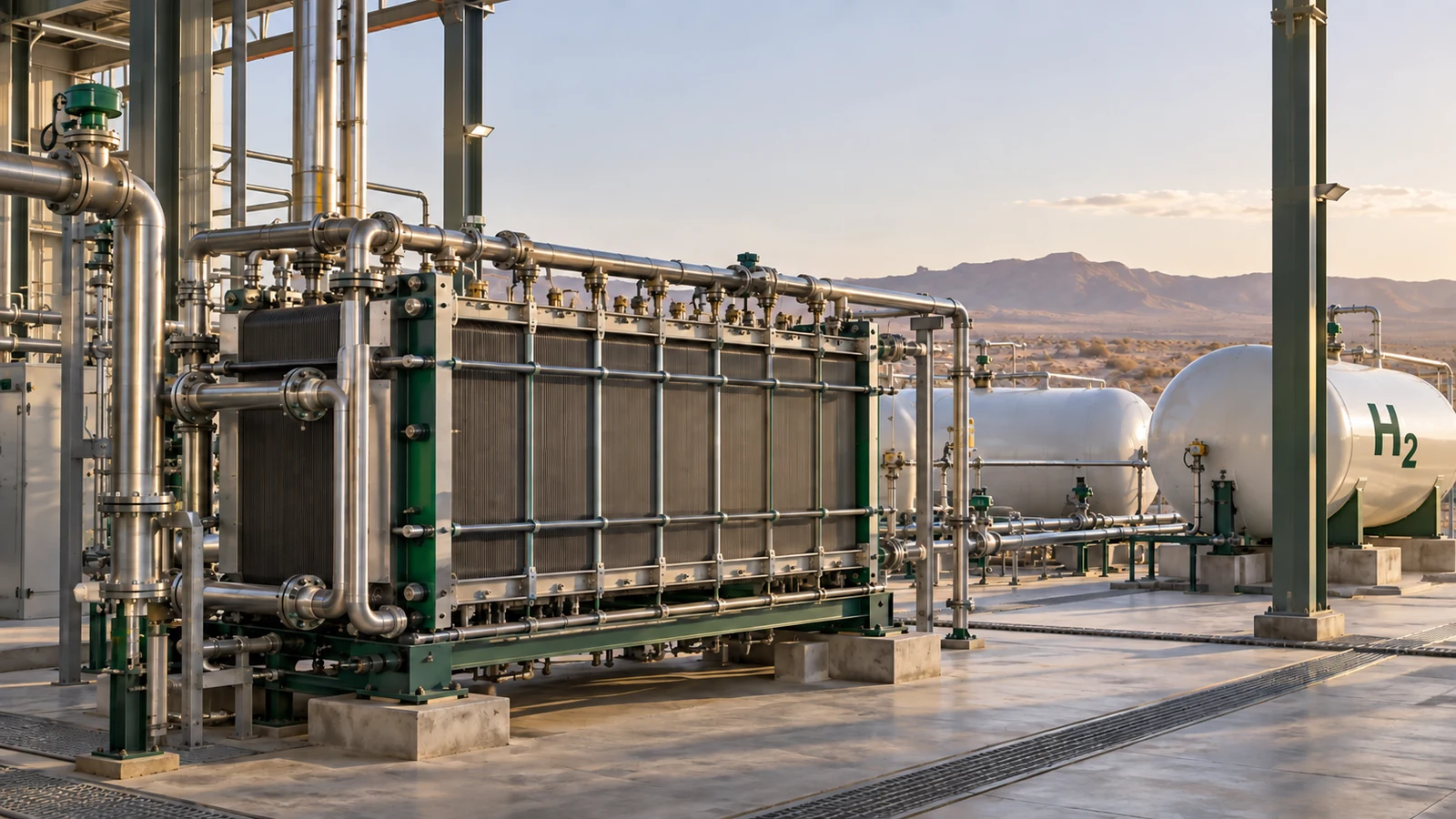
Generated contextual illustration; it does not depict the announced site or project.
- Proposed support
- $5.28mAnnouncement
About MAD 50 million at the indicative 18 September rate; subject to approval.
- Stage
- PreparationAnnouncement
Studies and structuring ahead of a possible investment decision; not construction funding.
A Moroccan proposal selected, subject to approval
On 18 September 2026, the African Development Bank (AfDB) announced that it had selected Nareva-sponsored Guelmim Green Hydrogen Valley among four African green-hydrogen and derivatives projects. The Moroccan proposal was allocated a proposed $5.28 million reimbursable grant. Provision of the funding remains subject to approval by the Bank’s Board of Directors.
At the indicative 18 September closing rate of about MAD 9.52 per dollar, the amount is roughly MAD 50 million. That is proposed project-preparation support, not the cost of the future complex or cash already disbursed. The AfDB announced $20 million across all four selected projects.
What could this support actually advance?
The useful question is what the money pays for if no plant is being built yet. The AfDB programme supports project preparation before a final investment decision. Its call for proposals mentions feasibility studies, engineering design and advisory work needed to structure financing. The precise work packages for Guelmim have not been publicly set out.
Those studies can test whether renewable resources, water supply, the process, likely buyers and financing can form a viable project. They do not amount to a construction permit or a commitment to make a stated quantity of fuel. The announcement provides neither a firm construction timetable nor a Guelmim-specific total investment budget.
How the process works
From renewable power to fuel: the pathway to study
General pathway described by Nareva and the IEA, not an approved Guelmim design.
Resources and inputs
- Renewable electricity
Powers the conversion
- Water
Input to electrolysis
- 01Electrolysis
Uses power to split water
- 02Hydrogen
Intermediate molecule
- 03Synthesis
Other inputs and route to be defined
- 04Synthetic fuel
Potential marine or aviation use
Why hydrogen?
Nareva says it is developing green hydrogen, ammonia and synthetic-fuel projects in southern Morocco. Its portfolio includes possible e-methanol for shipping and synthetic aviation fuel. The AfDB places the supported projects in Egypt, Morocco and Namibia in the sustainable marine and aviation fuels sector. These descriptions state an industrial ambition; they do not settle Guelmim’s final design. The announcement concerns prospective industrial fuels, with no stated target to supply household electricity.
Why turn renewable electricity into hydrogen instead of using it directly? Direct use avoids an extra conversion where electrification works. Aviation and much of shipping still rely on fuels, however, and hydrogen can be a feedstock for synthetic fuels. The International Energy Agency describes these fuels as a complement to electrification, while noting their high costs and early commercial stage. That explains interest in the pathway; it does not show that it is the best option for Guelmim or that a process has been selected there.
The diagram shows only a possible production pathway. The project’s precise technology, input sources, capacity and sales volumes remain unspecified. The practical value of the announcement is support for testing those choices before major capital is committed; it does not establish production, jobs or a commissioning date.
