TCL Solar brings a newer module identity backed by TCL’s semiconductor and solar manufacturing context. Our Best Value assessment concerns its documented panel offer, not the length of its name or warranty alone.
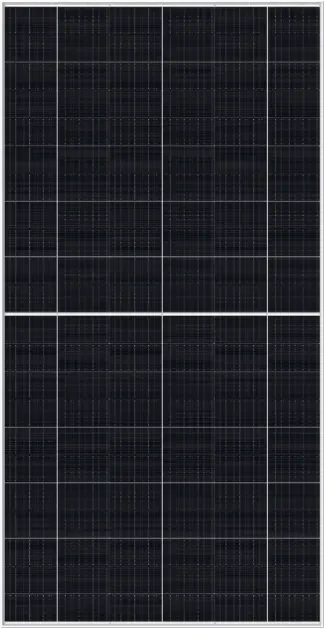
T-Class example. The listed models remain distinct.
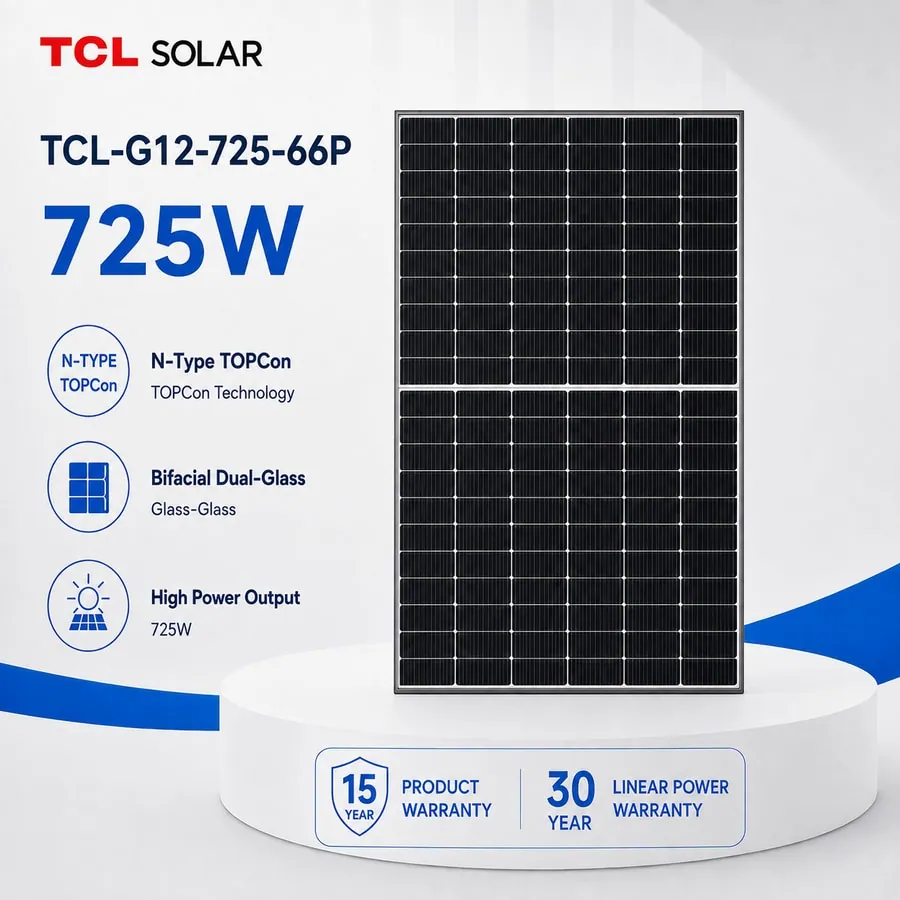
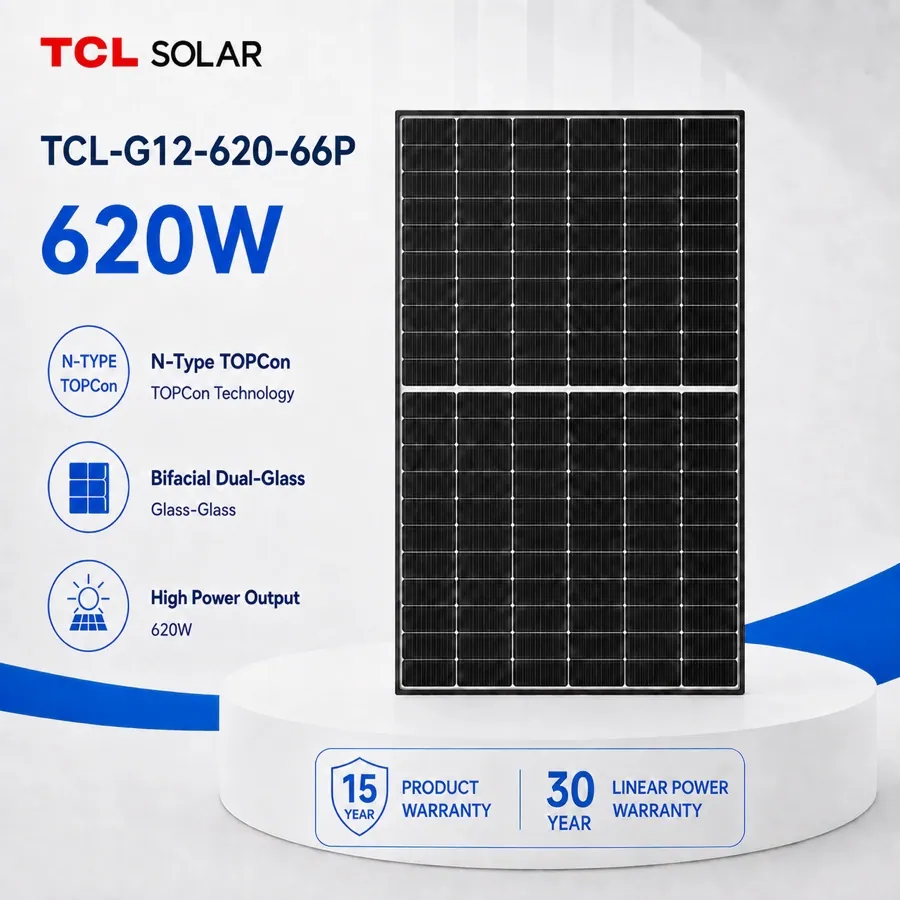
Authenticated manufacturer example. The selected product reference determines appearance and ratings.
01 / Who they are
A newer solar identity, an existing industrial base.
TCL Solar was introduced as a brand in 2025, after TCL’s 2020 acquisition of Zhonghuan brought an established silicon-wafer business into the group. Zhonghuan’s 1969 roots concern semiconductor materials, not production of today’s TCL panels. The solar industrial base includes G12 wafers; the TCL Solar module offer now separates half-cut TOPCon, shingled TOPCon and back-contact designs. The age of the parent group should not be read as field experience for these recent module references.
Corporate origin does not identify the factory of an individual module. The supplied label and batch documents establish that origin.
Business development and revenue
The available annual series belongs to TCL Technology, the parent that includes display and semiconductor activities alongside solar. Its revenue recovered in 2025 after the 2024 decline. TCL Solar standalone revenue is not separately disclosed in this series; the chart describes the scale of the parent, not sales of the new module brand.
Revenue trend · USD billion
Annual revenue · USD billion
Year
Revenue
2022
$24.75
2023
$24.62
2024
$22.91
2025
$25.61
TCL Technology parent-group revenue, including displays and other businesses. These are not TCL Solar standalone sales. Amounts shown in USD billion. EUR and CNY amounts are converted using Federal Reserve annual-average rates; rounding and exchange rates affect comparisons.
Business milestones
Zhonghuan joins TCL
The acquisition brings silicon materials and solar-wafer manufacturing, including the G12 platform, into TCL Technology. It precedes the TCL Solar module brand.
T-Class half-cut · illustrative example, not a photograph of this milestone.
TCL Solar becomes a module brand
The brand presents a portfolio spanning three cell/interconnection designs. A half-cut G12 module, a shingled module and a back-contact module require separate technical comparisons.
Shingled TOPCon · illustrative example, not a photograph of this milestone.
The ranges become more differentiated
The IFA presentation distinguishes T5 Pro shingled modules and C2 back-contact products. These newer branches do not change the identity of the listed G12 and G12R half-cut references.
Back-contact · illustrative example, not a photograph of this milestone.
02 / Technology
Selected technology advances
Selected developments in the brand’s specialty, not a complete history or catalog.
Understand the differences between the relevant families. Broader manufacturer offerings and the products ReneWave lists are kept separate below.
T-Class TOPCon example; not every variant
01
T-Class TOPCon
Half-cut n-type
The half-cut TOPCon branch includes the G12 and G12R references we list. The two formats have different dimensions and power ranges. T-Class 66 separates a 605–625 W rectangular-wafer branch from a 700–725 W large-format branch in the current technical library. G12 and G12R identify different wafer geometry, so module dimensions, current and string layout must be compared with the exact sheet.
The cell platform and module format are separate distinctions.
A 725 W format is not automatically more efficient than a smaller one.
02
TOPCon Shingled
Different cell interconnection
Shingled construction overlaps cell strips to change their interconnection and layout. It is a separate manufacturer branch, not another name for our half-cut modules. Shingled TOPCon cuts cells into narrower strips and overlaps their connections, reducing inactive spacing. The T5 Pro S library lists 450–475 W, while the larger T5 Pro L lists 640–670 W. These are different module formats, not a 200 W gain on the same rooftop panel.
Construction affects active area and electrical paths.
Not currently represented by our listed TCL references.
03
Back-Contact
Contacts on the rear
Moving cell contacts to the rear reduces front-side metal coverage. Back-contact describes the cell design, not automatically bifacial generation. Back-contact modules move the electrical contacts away from the illuminated front, reducing front shading. The E-Class 54 library lists 465–475 W and a distinct black 440–470 W branch. Back-contact describes cell wiring; it does not automatically establish bifacial performance or interchangeability with TOPCon models.
It is a different design route toward efficiency and appearance.
Broader manufacturer offering, not a promised catalog product.
Key terms
Short definitions for the names used in this guide.
Cell technology and two-sided construction are separate.
Current manufacturer families are not the launch dates of every reference. We do not assign an unverified first-production date.
03 / What stands behind the brand
Best Value
What Best Value means here.
Technology and clear terms matter alongside brand maturity.
Our positioning applies to the selected range. The documented differences above explain the choice.
A documented panel offer
The retained G12/G12R sheets specify construction and electrical data for the actual ranges.
Warranty is a genuine benefit
The retained EMEA UPP terms distinguish 15-year product and 30-year power coverage for the listed references. They do not rank every other brand.
Three cell architectures, different trade-offs
Half-cut, shingled and back-contact constructions change interconnection and front shading in different ways. Our listed half-cut references remain identifiable; the broader product story helps comparison without changing what the customer orders.
Published characteristics are useful evidence, not a promise of trouble-free operation or fast local warranty handling. Newer models do not inherit decades of field history from the company’s age.
The exact reference, market and supplied terms govern coverage. A datasheet or compliance certificate is not itself a warranty.
15 years
Listed EMEA product coverage
15 years under the retained EMEA UPP statement for our exact models. Other TCL ranges and markets may differ.
30 years
Listed EMEA power coverage
30 years with the stated degradation limits. This is retained module power, not a guarantee of site energy.
Questions before you buy
Warranty length matters, but is not the only distinction. Product development history, exact performance, construction and evidence also count. Our tier is a commercial assessment, not a warranty leaderboard.
The group has an older industrial history; the TCL Solar identity was introduced in 2025. Do not confuse the two.
No blanket claim applies. Our two listed references have documented bifacial construction; other families must be checked separately.