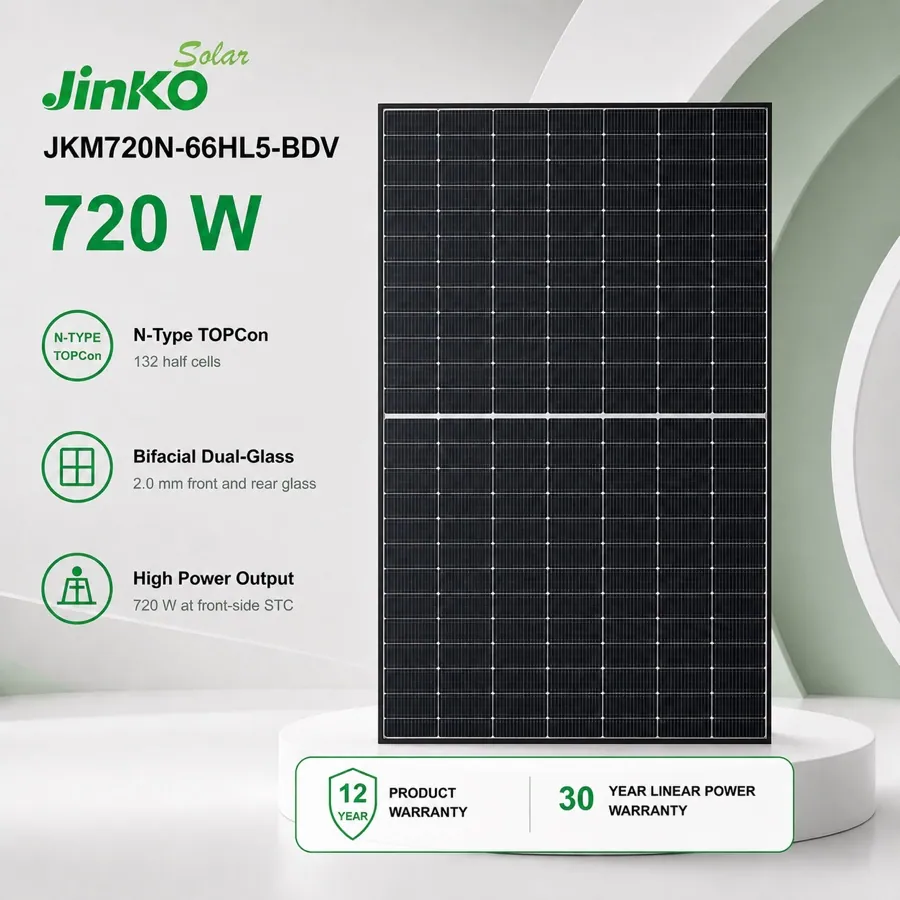
A high-volume photovoltaic manufacturer whose Tiger Neo family helped bring n-type TOPCon into mainstream projects. The useful story is the cell platform and its evolution, not a shipment ranking.
Authenticated manufacturer example. The selected product reference determines appearance and ratings.
01 / Who they are
An industrial solar manufacturer.
JinkoSolar began in June 2006 by recovering silicon for the solar supply chain. It added monocrystalline ingots in 2007 and wafers in 2008, then solar cells in July 2009 and its own module production and first module shipments in August 2009. That progression matters: today’s panel maker grew through the materials and cell stages before selling complete panels. Its Tiger ranges belong to later product generations, and its storage business is a separate equipment branch.
Corporate origin does not identify the factory of an individual module. The supplied label and batch documents establish that origin.
Business development and revenue
Module shipments drove rapid expansion through 2023. Revenue then contracted as module selling prices fell; the 2025 results also record lower shipments. The figures cover JinkoSolar Holding and its consolidated subsidiaries, rather than a single factory or the Tiger Neo range. Manufacturing scale and technical performance answer different questions.
Revenue trend · USD billion
Annual revenue · USD billion
Year
Revenue
2022
$12.11
2023
$16.72
2024
$12.64
2025
$9.37
JinkoSolar Holding consolidated revenue. USD equivalents use the issuer’s exchange rate in each annual release.
Business milestones
Solar materials first
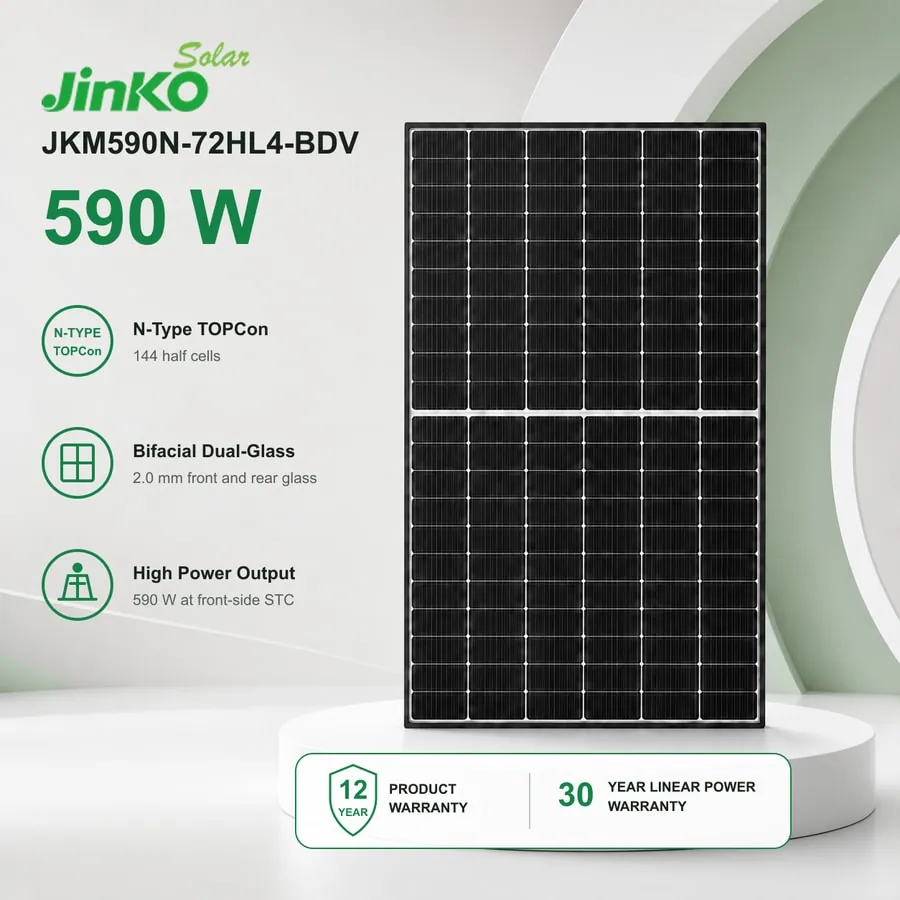
Commercial operations start with recovered silicon. Ingot and wafer manufacturing follow in 2007–08, building an upstream industrial base.
Tiger Neo 72HL4 · illustrative example, not a photograph of this milestone.
Cells and complete panels
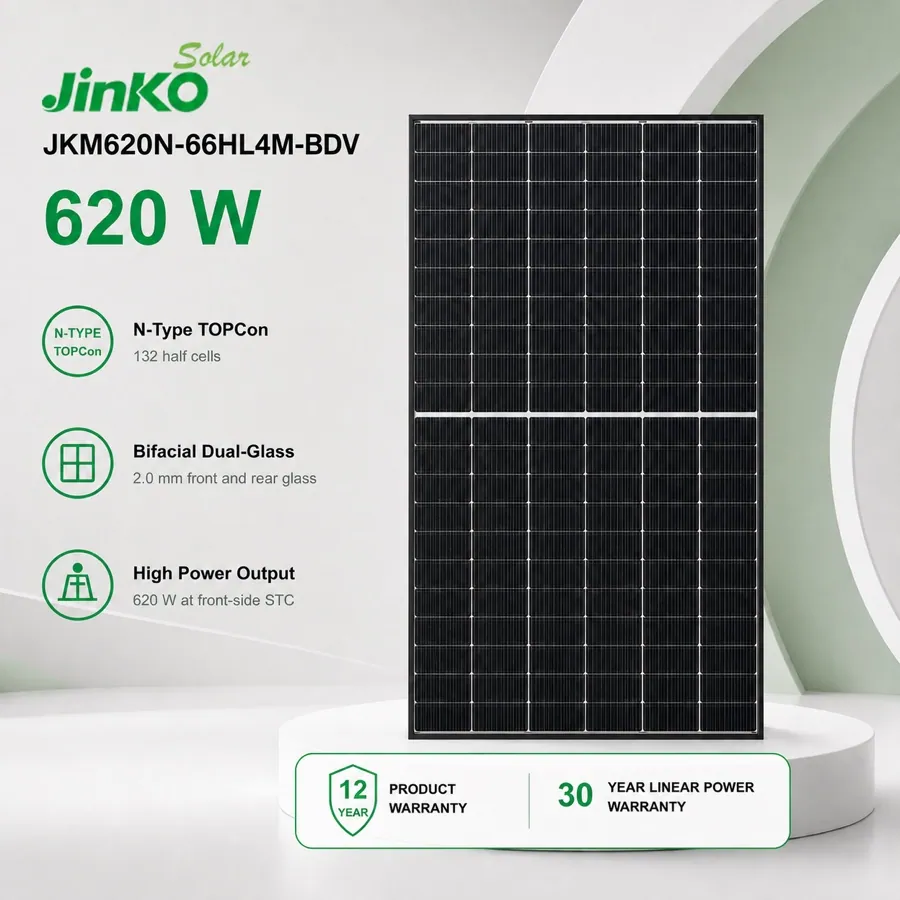
The Zhejiang Jinko acquisition adds cell production in July. Module manufacturing and the first commercial module shipments begin in August.
Tiger Neo 66HL4M · illustrative example, not a photograph of this milestone.
Tiger Neo changes the cell platform
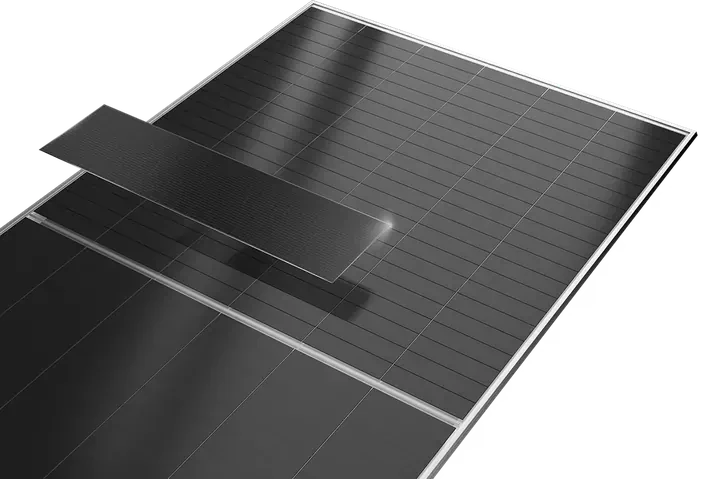
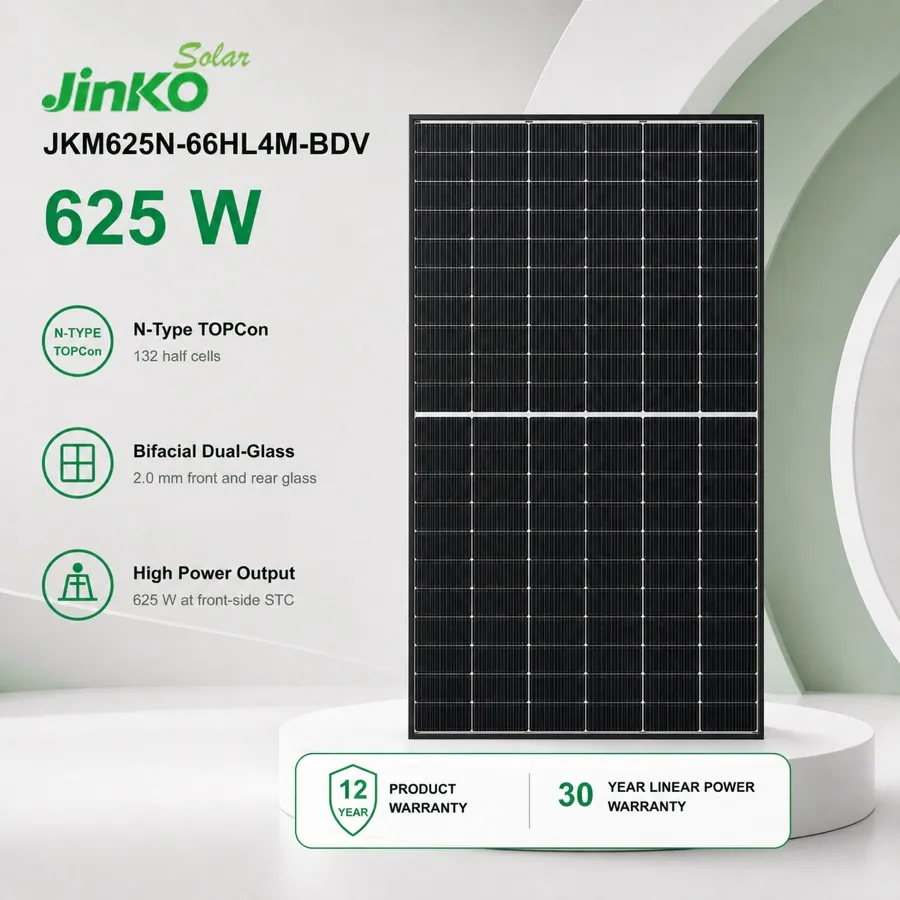
Launched in November, Tiger Neo moves from the earlier p-type PERC branch to n-type TOPCon. Lower temperature losses and a different degradation profile become concrete selection criteria.
Tiger Neo 3.0 · illustrative example, not a photograph of this milestone.
02 / Technology
Selected technology advances
Selected developments in the brand’s specialty, not a complete history or catalog.
Understand the differences between the relevant families. Broader manufacturer offerings and the products ReneWave lists are kept separate below.
01
Tiger Pro
Earlier p-type platform
Tiger Pro describes an earlier high-power PERC branch, not another spelling of Tiger Neo. The earlier p-type platform is associated with a −0.35%/°C power temperature coefficient in Jinko’s comparison, versus −0.29%/°C for the earlier Neo platform. At the same cell temperature, the less negative coefficient reduces thermal power loss.
It explains why two Jinko modules can have different cell technology.
Older does not mean unusable; compare the exact sheet.
Tiger Neo example; not every variant
02
Tiger Neo
N-type TOPCon
November 2021Tiger Neo launch announcement
Introduced in November 2021, Tiger Neo moved to n-type TOPCon. It later expanded across monofacial and bifacial formats. N-type passivating contacts reduce recombination losses. The original Neo platform’s 30-year power schedule states at most 1% loss in year one and 0.4% per following year. This concerns tested module power, not a guaranteed site yield.
The advance concerns the cell’s electrical losses and performance, not only more watts.
Rear-side production still depends on rear-side light.
03
Tiger Neo 3.0
A later family iteration
Later Tiger Neo development brings new reference-specific performance and construction. A generation label is not the release date of every module bearing it. The October 2024 launch separates a 670 W utility format and a 495 W distributed-generation format, both advertised up to 24.8% module efficiency. The newer platform specifies −0.26%/°C and bifaciality up to 85%. More rear-side response still requires useful reflected light and clearance.
Read the full model and document revision, not just “Neo”.
Manufacturer test results apply to their tested configuration.
Key terms
Short definitions for the names used in this guide.
TOPCon
Cell contact technology, not a warranty category.
Bifacial / all-black
Two active faces and visual finish are different choices.
Wattage measures power; efficiency relates power to module area.
03 / What stands behind the brand
Premium
Why our listed range is Premium.
A few concrete reasons, with the limits kept visible.
Our positioning applies to the selected range. The documented differences above explain the choice.
A documented transition
The 2021 launch establishes the platform’s history; it does not prove decades of TOPCon field life.
Exact-model evidence
Efficiency, temperature behavior, construction and warranty are compared at the product reference level.
A measurable heat-response change
Neo’s less negative power-temperature coefficient is useful on hot roofs. We compare that coefficient with roof packing and inverter current limits, rather than treating a larger wattage label as better performance in every installation.
Published characteristics are useful evidence, not a promise of trouble-free operation or fast local warranty handling. Newer models do not inherit decades of field history from the company’s age.
The exact reference, market and supplied terms govern coverage. A datasheet or compliance certificate is not itself a warranty.
30 years
Tiger Neo power retention
The stated 30-year linear power schedule allows up to 1% first-year loss, then 0.4% per year. That gives 87.4% of initial rated power at year 30 under the warranty test, rather than 87.4% of a site’s original annual production.
Model-specific product cover
The Tiger Neo 3.0 launch states 12 or 25 years of product coverage across its two flagship branches. That is not one universal term for every Jinko module; use the supplied model and applicable market statement.
Questions before you buy
Not by itself. Area, efficiency and the exact electrical characteristics matter; a bigger module can simply have more cells.
No. Several manufacturers use TOPCon. Jinko’s particular models, development history and documented terms are the meaningful distinctions.
No. Only the exact products in the catalog section are offered through this website.