Solar Payback Changes When the Site’s Operating Pattern Changes
Self-consumption is created by the overlap between generation and demand. When the site changes, that overlap changes too, and the original savings forecast may need to be rebuilt.
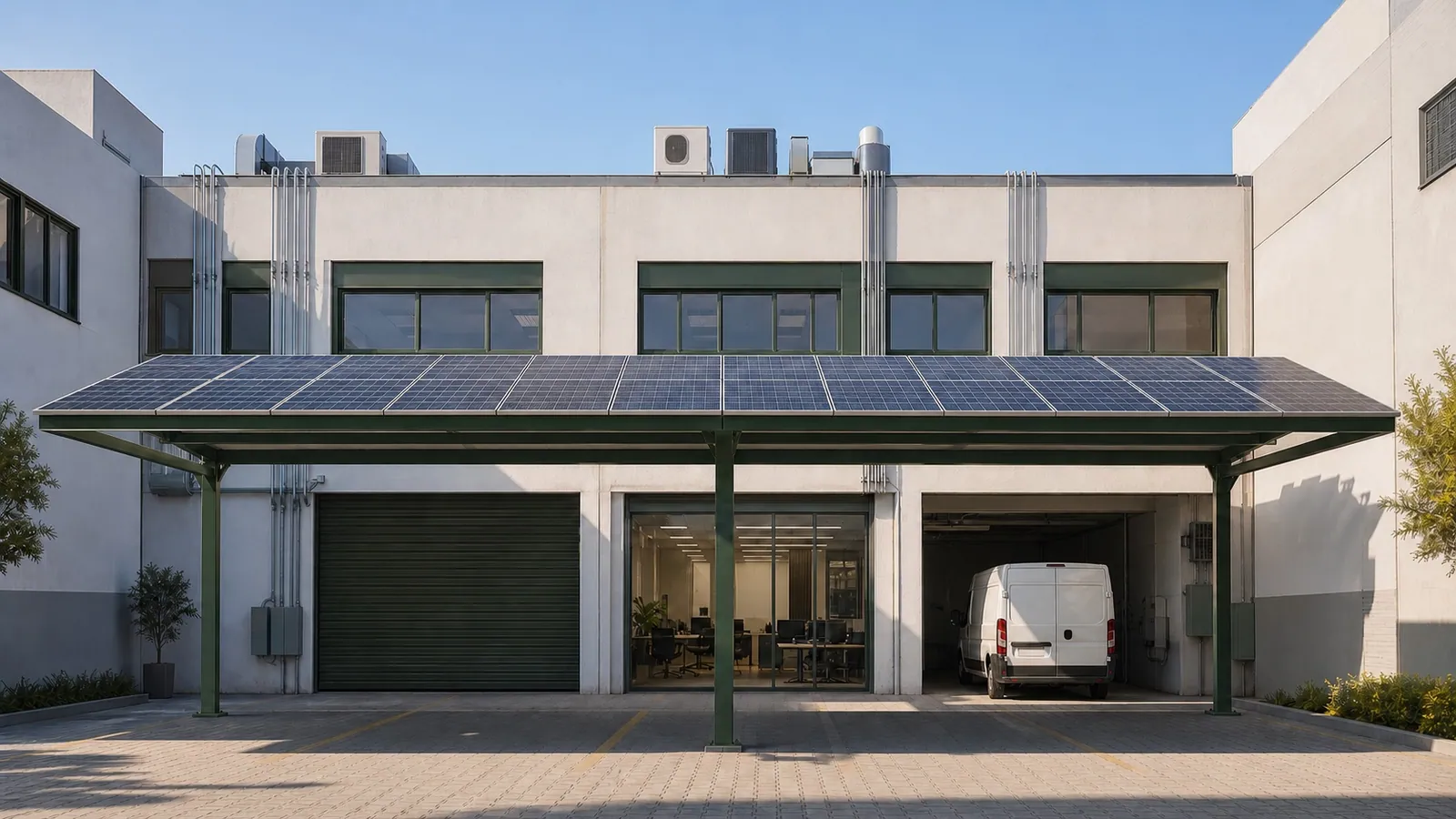
Solar savings depend on when the site needs electricity.
A photovoltaic array produces according to sunlight, system design and availability. The site creates the value by consuming electricity during the same intervals or by receiving an applicable value for eligible surplus.
Most business cases begin with a demand profile. Bills establish monthly consumption and cost, while interval data or a justified operating model shows when demand occurs. The solar model places expected generation against that profile and estimates self-consumption, export, avoided purchases and any other applicable value.
That calculation has a shelf life. A tenant can leave, a factory can add a second shift, a hotel can change seasonal operation, a cold store can replace its cooling controls, or an office can remain partly vacant. The array may continue to perform correctly while the economic result moves away from the original forecast.
The same production can create a different self-consumption result.
The example below fixes monthly solar generation at an illustrative 100 MWh. Only the operating pattern changes. The values demonstrate model behaviour and do not represent a forecast for a specific site.
Original operating month
Full tenant occupancy, weekday cooling and stable daytime service activity.
Reduced daytime activity
One tenant leaves and a production shift moves outside the solar window.
Expansion with daytime load
A new process and cooling demand operate during generation hours.
In the reduced-activity month, a larger share of generation leaves the self-consumption path. Its value then depends on export eligibility, curtailment, storage or another use. In the expansion month, the same array meets a larger daytime load and may reduce purchases that were absent from the original business case.
Annual totals can hide this movement. A site may consume the same annual energy after shifting work from day to night, while solar self-consumption falls. Another site may use more annual energy and improve solar economics because the new demand occurs during production hours.
The model should follow operational events with financial consequences.
Routine variation does not justify a full redesign every month. A material event should trigger a review when it changes the level, timing or value of electricity use.
Tenant or occupancy change
Vacancy, a new tenant or a different business activity can change daytime base load, cooling, opening hours and internal cost allocation.
Production schedule
A new shift, weekend operation, seasonal closure or outsourced process moves demand into or away from the solar window.
Cooling and process controls
Setpoints, staging, thermal storage, maintenance condition and control changes alter the load that usually overlaps with midday generation.
Efficiency work
An efficient motor, chiller, compressor or lighting project may reduce the exact daytime load the solar model expected to serve.
Expansion or electrification
New equipment, vehicle charging, heat pumps or an additional production line can create a larger and differently timed demand profile.
Tariff or export framework
The value of avoided purchases and eligible surplus can change even when the physical load and generation remain stable.
A useful update starts with measured change and preserves the original comparison.
The owner should be able to see why the forecast changed. Replacing the original model with a new total removes that learning.
Retain from the original case
- • Production model and loss assumptions.
- • Baseline demand period and operating calendar.
- • Tariff, export and degradation assumptions.
- • Capital, financing and maintenance scope.
Update with current evidence
- • Interval demand and current operating calendar.
- • Actual solar production and availability.
- • Measured self-consumption, export and curtailment.
- • Confirmed business changes and planned loads.
The revised model can then separate three questions. Is the solar plant producing as expected? Has the site changed the quantity of generation it can use? Has the value assigned to each energy path changed? Each answer points to a different action.
A production issue may need inspection or maintenance. A changed operating profile may support load scheduling, storage evaluation, a revised export strategy or a new capacity phase. A tariff change may alter the financial value while requiring no physical modification.
Keeping both model versions gives finance and operations one traceable explanation for why the revised return differs from the approved case.
Treat the solar model as a governed business record.
A recalculation is justified when the operating evidence has changed enough to alter the decision.
- 01A tenant, shift, process, opening schedule or cooling strategy that materially changes daytime demand.
- 02A sustained gap between expected and measured solar production or availability.
- 03A changing self-consumption, export or curtailment share across comparable periods.
- 04A new tariff, surplus framework, storage objective or planned electrical load.
- 05The investment review date assigned to the demand baseline and project model.
