Morocco Has Set a Surplus-Electricity Tariff. What Changes for a Business Solar Project?
ANRE has established the first regulated purchase tariff for surplus renewable electricity. Its present network scope, the pending low-voltage framework and the value gap between self-consumption and export all matter before a business revises its solar model.
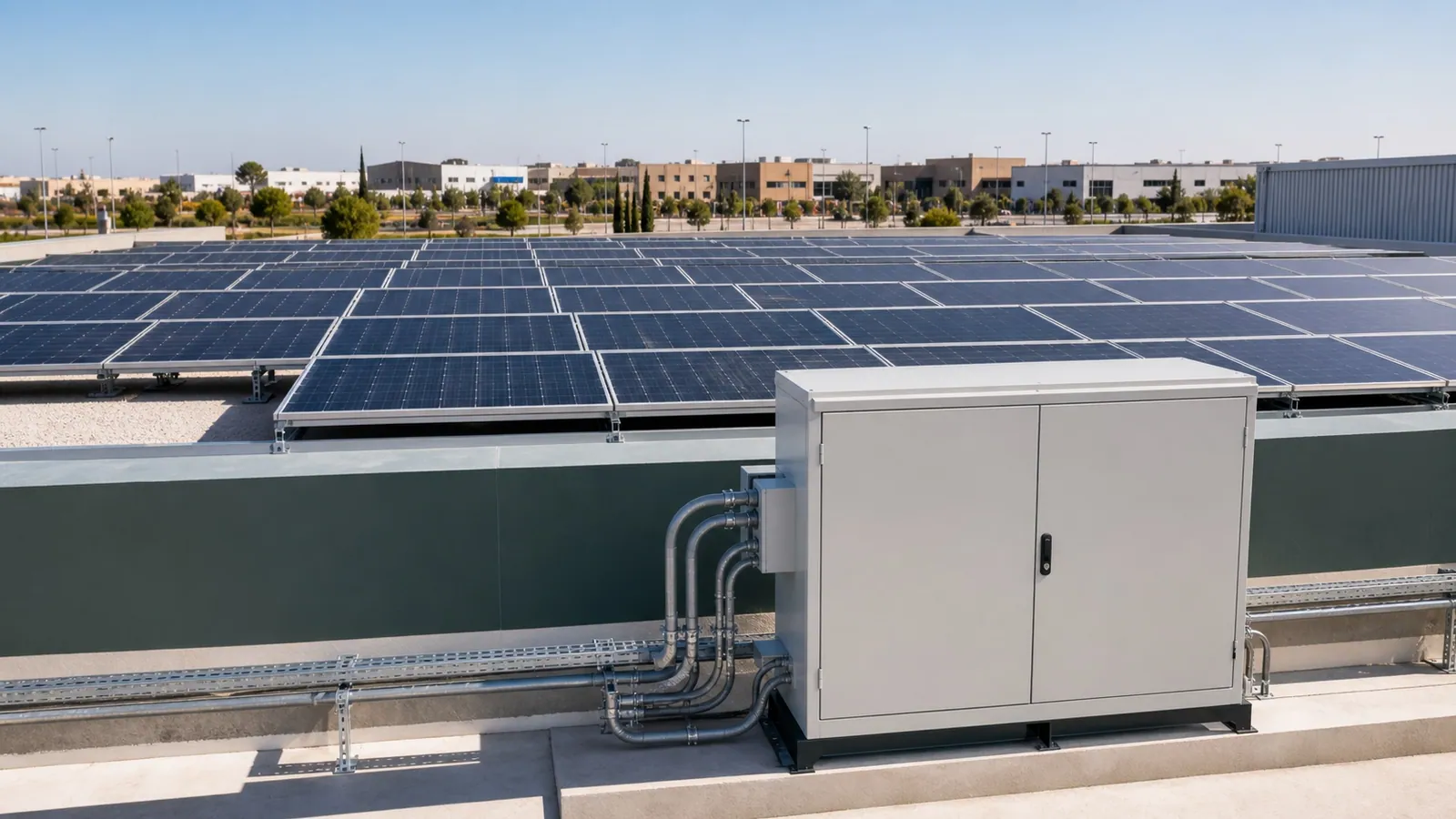
The tariff gives eligible surplus electricity a defined purchase value.
ANRE’s decision covers the regulatory period from 1 March 2026 to 28 February 2027. It sets separate purchase rates for electricity delivered during peak and off-peak periods.
The published rates create a regulated reference for eligible surplus renewable electricity. At 18 centimes per kilowatt-hour, an illustrative 1,000 kWh export corresponds to 180 MAD. The same quantity at 21 centimes corresponds to 210 MAD. That arithmetic is useful because it makes the export stream visible inside a financial model.
The decision does not establish one universal business-solar return. A project still has to determine how much generation is consumed on site, how much becomes surplus, which time periods apply, what metering and connection conditions govern the exchange, and which retail purchases are avoided through self-consumption.
The current rates and regulatory period come directly from ANRE’s 2026 surplus-tariff decision. They should be checked again whenever the model extends beyond that period.
The network level determines whether the decision applies today.
The published framework presently covers installations connected at medium, high and very-high voltage. ANRE states that the low-voltage purchase tariff will be set after the related regulatory framework is completed.
MV, HV and VHV projects
The 2026 decision provides peak and off-peak purchase rates for eligible surplus electricity at these network levels. Project-specific connection, metering and contractual conditions still need confirmation.
Low-voltage projects
A business connected at low voltage should not insert the 18 or 21 centime rates into a committed base case as though eligibility were already established. The future framework must define the applicable route.
Existing project studies
A study prepared before the decision may need a new export line and a revised sensitivity analysis. Its demand profile and self-consumption assumptions remain relevant.
The Journal’s Law 13-09 and grid-injection explainer separates physical reverse flow, authorized injection and compensated surplus sale, then shows which project conditions connect them.
Self-consumption and export belong on separate lines in the model.
Each generated kilowatt-hour follows one of several paths. The financial value changes with that path, so a credible model preserves the split instead of applying one blended value to the whole production estimate.
| Generation path | Economic evidence | Question to retain |
|---|---|---|
| Used immediately on site | Avoided electricity purchase under the site’s actual tariff and time period. | Was the load present when the array generated? |
| Eligible surplus exported | Applicable regulated purchase tariff and verified export record. | Which network level, period and agreement apply? |
| Curtailed or unavailable | No useful energy value during the affected interval. | Which technical or contractual limit caused the loss? |
The avoided-purchase value of self-consumed electricity will often differ from the surplus purchase tariff. The model therefore needs the operating profile behind the annual totals. A hotel, factory, cold store and office building can install the same nominal solar capacity and produce different export shares because their daytime demand behaves differently.
The surplus tariff can improve the treatment of production that would otherwise have little or no modelled value. It can also support a larger technically sensible array where export is eligible. Those possibilities require a fresh scenario rather than a shortcut that assumes every additional panel earns the published rate.
A business case should now show its dependence on export.
Owners can ask for a small set of model outputs that expose the project’s sensitivity without turning the proposal into a regulatory report.
Annual generation split
Show self-consumed, eligible exported, curtailed and otherwise unvalued generation as separate quantities.
Time-period treatment
Explain how peak and off-peak exports are estimated and which interval data supports the split.
Low-voltage sensitivity
For an LV site, keep a case that excludes surplus revenue until the framework and eligibility route are confirmed.
Connection assumptions
Identify export limits, required studies, metering, protection and contractual steps as assumptions that need confirmation.
Operating-profile risk
Show what happens if opening hours, production shifts, tenants or cooling loads change during the project life.
This review also helps compare design responses. One option may prioritize high self-consumption. Another may include a larger array, export capability, storage, load scheduling or a phased expansion. The correct comparison keeps the same demand evidence and changes one design assumption at a time.
ReneWave’s essay on operating-pattern changes and solar payback explains why the original demand profile needs an owner inside the business after commissioning.
The next useful updates concern scope, eligibility and the next tariff period.
The decision is important because surplus now has a published reference within the current scope. Project governance still depends on the rules and records around that price.
- 01Publication of the low-voltage regulatory framework and its purchase tariff.
- 02Project-level connection, metering, protection and export conditions issued by the relevant network operator.
- 03The site’s measured self-consumption and export profile after commissioning.
- 04ANRE’s tariff decision for the period after 28 February 2027.
- 05Any material change in operating hours, tenants, production or cooling that alters the generation split.
