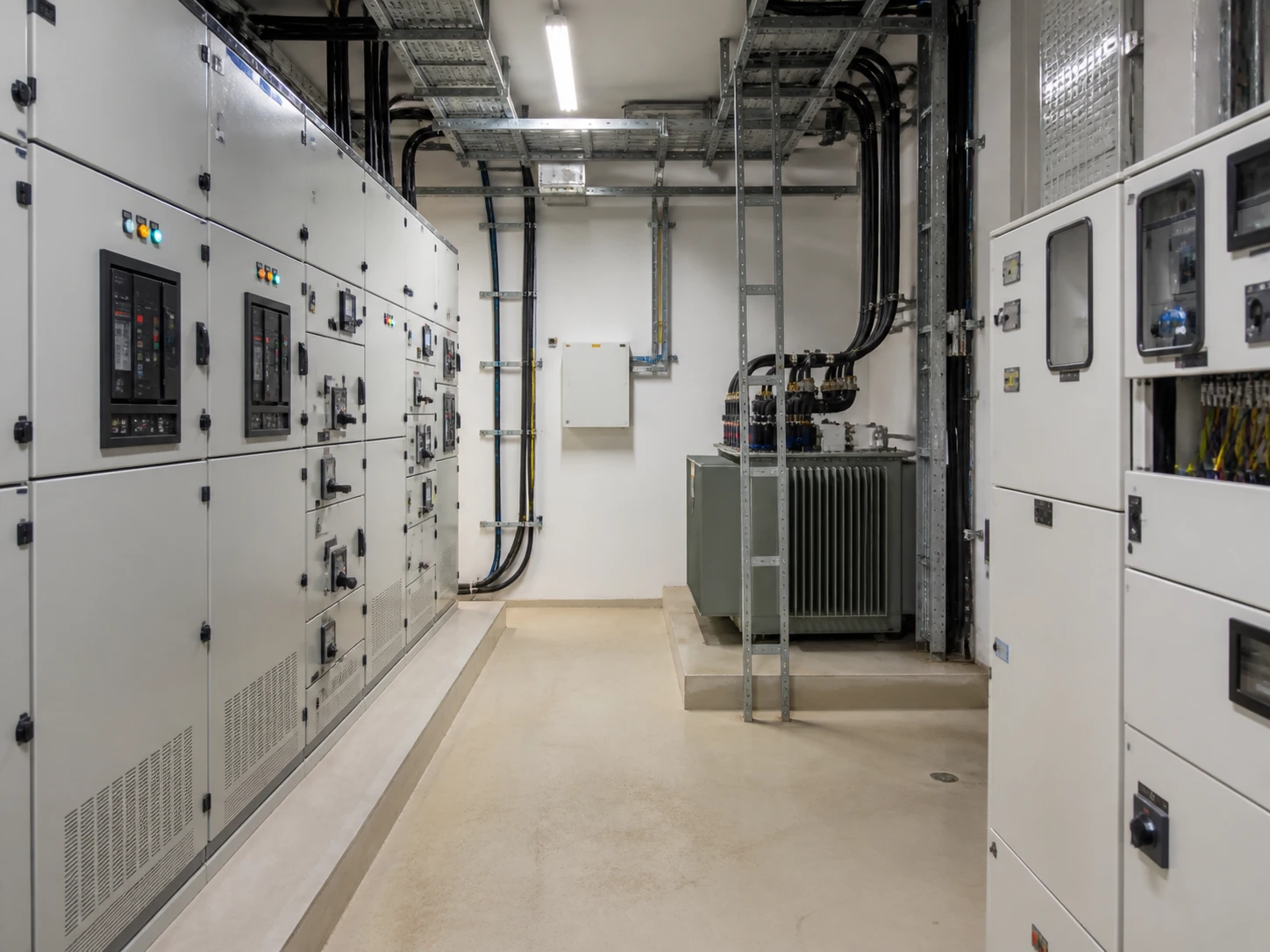
Technical uncertainty usually shows up before the project starts.
The first complaint may be a repeated trip, a panel nobody wants to touch, missing labels, a room blocked by storage, a smell or heat concern, old interventions nobody can explain, or a solar or backup quote that assumes the existing room is ready. The owner feels the problem through hesitation: each provider asks for photos, each visit starts from a different story, and each proposal carries exclusions that are difficult to compare.
Technical rooms become a gateway decision because each site depends on the room differently. A home may need clarity before a battery proposal. A restaurant may need to understand which loads protect service and stock. A school, clinic or hotel may need records that survive staff changes. A factory may need trip patterns and technical-room evidence before power quality, backup or corrective work becomes credible. When the room remains vague, the site pays through repeated visits, rushed assumptions and work that is hard to hand over.
The room carries the memory of the site.
Technical rooms serve different buildings in different ways. In a villa, the room may connect solar, backup, pumps, gates and household loads. In a hotel or riad, it may support guest comfort, pumps, hot water, lighting and access. In a restaurant, it may sit behind refrigeration, extraction, POS and service continuity. In a clinic or school, it can affect reception, IT, security, occupied rooms and sensitive loads. In industry, it may sit between production rhythm, drives, compressors, controls and restart procedures.
The same visual symptom can therefore carry different consequences. A missing label in a low-risk storage area may slow a visit. A missing label tied to refrigeration, access control, a pump or a production line can slow a decision during a stressful moment. The operator needs enough room memory to understand what exists, what changed, what keeps recurring, who owns follow-up and what any new quote is assuming.
Useful evidence clarifies the owner-level boundary.
Technical-room evidence should help the operator make a safer first decision. Safety sources establish that qualified people handle electrical work. Maintenance sources explain why records and condition matter. Local inspection context shows why documented review can matter in real projects. Each source below translates into the same practical question: what can the owner collect safely, and what should a qualified review clarify next?
CDC/NIOSH electrical-safety guidance explains that electrical work belongs with qualified people trained for the hazards and procedures involved.
For an owner, this sets the boundary. The useful job is to collect safe evidence, name symptoms and preserve records so qualified review starts from context instead of guesswork.
Collect photos from normal safe access, symptoms, dates, affected loads and any old reports or intervention notes before asking for a technical review.
OSHA electrical-safety guidance highlights the need for sufficient access and working space around electrical equipment for safe operation and maintenance.
Blocked doors, stored items, poor lighting or awkward access can turn a simple visit into a rushed or incomplete intervention. Access clarity affects emergency response, maintenance quality and quote assumptions.
Photograph the room entrance, panel surroundings, lighting, access path, storage around the area and any practical constraints for a qualified visit.
ESFI summarizes NFPA 70B as a maintenance standard focused on safeguarding people, property and processes from electrical-equipment failure, breakdown or malfunction.
The operator lesson is technical memory. A panel file, open-action register and maintenance history make repeated symptoms easier to classify and future work easier to hand over.
Look for the latest panel list, single-line diagram, maintenance log, corrective actions, open items and who owns each follow-up.
HSE electrical inspection and testing guidance frames inspection and testing as part of maintaining electrical safety across equipment and installations.
Testing is useful when it answers a defined question. A vague request for checking everything can become expensive and unclear; a symptom pattern makes the review sharper.
Write the pattern in plain language: when the trip happens, what was running, which area was affected, what changed recently and whether the same symptom returned.
DEKRA Morocco describes periodic electrical inspections as a way to support safety, functionality, regulatory confidence and planned maintenance.
Use this as local inspection-service context. For owners, the practical lesson is documentation: public access, staff responsibility and recurring symptoms deserve a recorded review path before the next project is approved.
Ask what output the inspection or audit will deliver: findings, priorities, photos, records, action classes, responsible owner and follow-up date.
The first board separates room facts from project assumptions.
A technical-room conversation becomes useful when the evidence is organized before the site chooses a path. Access, labels, visible state, old notes, affected loads and the next decision are separate facts. Mixing them together creates vague requests such as "check the panel" or "tell me if it is ready." A better first request shows what the owner sees, what keeps happening and what decision depends on the answer.
The board keeps the discussion from becoming a repair guess. A qualified review can then classify the next step: documentation cleanup, technical audit, maintenance follow-up, deeper diagnosis, quote review or corrective action. The owner gains a practical baseline without needing to become technical.
The first review collects safe operating evidence.
The operator does not need a complete technical file before asking for help. The useful first review starts with evidence that can be collected safely from normal access: photos, dates, symptoms, records, affected loads and the decision being considered. Missing evidence creates expensive ambiguity. A solar quote may assume the receiving room is ready. A backup quote may protect the wrong loads. A maintenance visit may fix a symptom while the open action disappears.
Staff observations matter. A trip after closing, a trip during lunch service, a fault after a pump starts or a room that is inaccessible during operating hours says more than a generic note that "the panel has a problem." A serious first review turns those observations into a clear next question for qualified people.
Audit and maintenance keep the baseline alive.
Technical audit and maintenance should lead when the room has weak labels, blocked access, visible uncertainty, repeated trips, missing records, old corrective work, unclear ownership or a proposal that depends on the room being ready. The audit creates the baseline: what exists, what is unclear, what needs qualified correction, what can be monitored and what should be recorded for the next visit.
Preventive and corrective maintenance become more valuable when they preserve that register. The next visit should begin from photos, labels, findings, actions, owners and follow-up dates. Without that memory, the same site can pay for the same explanation every time a symptom returns.
A trip pattern is more useful than a trip story.
Recurring trips, flicker, alarms, heat complaints, damaged equipment or unexplained restarts need a pattern before they become a power-quality or corrective scope. A whole-site outage points to a different conversation from one area that trips every evening. A symptom that appears when a pump, compressor, kitchen line or HVAC starts may need timing and load evidence before measurement is justified.
The trail helps the operator describe the event with enough precision. Dates, timing, affected area, equipment running, previous action and restart behavior make the next review safer and more useful. When that pattern is missing, the site can spend money on broad checking while the real question stays hidden.
New systems need a known receiving room.
Solar, batteries, generators and major equipment additions all connect back to the site baseline. A strong solar screen needs bills, daytime loads, roof or equipment-space reality, monitoring and a technical room that can be understood by the people pricing the work. Backup needs selected continuity loads, runtime, restart expectations and handover records. Equipment additions need access, exclusions and responsibility after commissioning.
The gate protects the owner from approving a scope whose hidden assumptions belong in the baseline. If the room is unclear, the first project may be a technical review. If the room is clear, solar feasibility, selected backup, maintenance structure or quote review can move faster because the receiving site is visible.
A serious quote names the room assumptions.
A technical-room quote should show what the provider assumes about access, labels, affected loads, existing records, commissioning, exclusions and follow-up responsibility. A solar quote should explain the receiving-site assumptions. A backup quote should name protected loads and runtime. An audit or maintenance quote should explain the output: findings, records, open actions, priorities and owner of follow-up.
Two quotes can look similar while answering different questions. One may document labels and open actions. Another may price equipment while leaving room assumptions vague. Another may include commissioning and handover records. The owner should compare those assumptions before comparing price, because a cheaper scope can become expensive when the room baseline remains unclear.
A technical-room quote is easier to trust when the owner can see what it clarifies, what it leaves outside scope and what record remains after handover.
Use value numbers to decide what deserves modeling.
Technical-room clarity rarely produces a simple savings percentage by itself. Its value appears through better decisions: fewer repeated visits, fewer vague quotes, cleaner commissioning, clearer backup scope, safer maintenance timing and stronger solar or equipment modeling. Use financial ranges as screening context only after the baseline is visible.
A strong self-consumption solar case without storage is usually worth detailed modeling when the early screen sits around this range. A technical room with clear access, labels, load information and handover records makes that screen more credible because the receiving site is easier to understand.
Best early candidates have daytime loads, clear technical rooms, usable roof or equipment space, named exclusions and monitoring after commissioning.
When batteries, generators or hybrid backup lead the discussion, the first value is continuity: named loads, runtime, restart expectations and staff procedure. Financial payback is usually slower and depends on the protected-load list and the consequence of losing those loads.
Use backup scope after the room baseline, protected loads, runtime and handover responsibility are visible.
Technical-room value should be counted from the site’s own exposure: repeated visits, emergency callouts, unclear quotes, staff disruption, equipment stress, delayed projects, lost records and repeated explanations.
The useful question is whether the next decision starts from a documented baseline or from scattered memory.
Information that makes the first answer useful.
Use this as a preparation checklist. Perfect documents are rare. Honest evidence is enough to move from a vague technical-room complaint to a useful first review.
Avoid weak technical-room decisions.
Approving work around an unclear room.
A polished quote can still rest on weak assumptions when access, labels, records and affected loads are missing.
Treating every trip as the same event.
A whole-site outage, one-area trip, equipment alarm and rush-period symptom lead to different evidence and different next steps.
Letting labels age silently.
Labels help the next qualified visit understand what the site believes today. Old labels become risky when equipment changes and records do not follow.
Adding backup before naming loads.
Backup scope becomes vague when runtime, protected loads and restart expectations are missing.
Using maintenance visits without memory.
A visit that leaves no finding, action, owner or follow-up date makes the next symptom restart from verbal history.
Forgetting handover after commissioning.
Solar, backup, maintenance and corrective work all need records the next provider or manager can actually use.
How ReneWave reads a technical-room request.
ReneWave starts from the decision the technical room needs to support. The review clarifies access, labels, visible condition, symptoms, affected loads, documentation, old interventions, open actions and responsibility before the scope becomes equipment. Audit creates the baseline. Maintenance keeps it alive. Quote review exposes assumptions. Solar and backup become stronger when the receiving room, load list, handover and exclusions are visible.
The method is deliberately practical. It is designed to catch problems early: a backup scope that misses the actual continuity loads, a solar quote that assumes a clean receiving site, a maintenance visit with no open-action record, or a repeated trip that never becomes a pattern. The first path removes those surprises before they become expensive.
Questions operators ask first.
Related guides & services.
Applications Hub
Choose the site type first, then move into the right service path.
Open Audit guideWhat Should Be Checked During a Technical Audit?
Review visible condition, panels, protections, access, documentation and recurring symptoms.
Open Audit guideElectrical Audit for Business Sites
Clarify electrical-room condition, symptoms, critical loads, labels and action priorities.
Open Power qualityHow to Understand Power Quality Problems Without Being an Engineer
Use symptoms and measurement questions before power quality becomes a label.
Open Audit guideFrom Audit Findings to Action Plan
Turn findings into priorities, owners, corrective actions and follow-up.
Open Maintenance guideHow to Build a Preventive Maintenance Plan
Critical systems, frequency, open actions, documentation and technical memory.
Open Backup guideBackup Power and Critical Loads
Define selected continuity loads before backup architecture is priced.
Open Buyer guideHow to Read a Solar Quote
Check assumptions, exclusions, architecture, support and financial claims before approval.
Open ServiceTechnical Audit
Create a baseline before decisions become expensive or technically unclear.
Open ServiceReneWcare Max
Structured technical follow-up for business sites with critical systems and recurring needs.
Open Talk to usContact ReneWave
Send photos, symptoms, quotes, records or operating context for review.
Open