Why the difference matters in practice.
An energy audit studies how the site uses energy. A technical audit studies whether the systems behind that energy use are reliable, documented and fit for the next decision. Both can be useful, but each one asks a different operational question.
When the scope is unclear, decisions become blurred. A maintenance issue can be presented as an efficiency project. A technical fault can be treated as a billing problem. A solar conversation can begin before anyone understands when and how the site actually uses electricity. That is how a report can look professional and still lead to weak priorities.
- Bills
- Consumption
- Load Profile
- Operating Hours
- Efficiency Opportunities
Decisions
- Equipment Condition
- Electrical Reliability
- Recurring Faults
- Documentation
- Maintenance Readiness
The strongest audit work starts by naming the question. Are we trying to understand consumption? Are we trying to understand technical condition? Are we preparing for solar, maintenance, replacement, or deeper diagnosis? The answer changes the evidence needed and the decision that follows.
Define the scope before calculating ROI.
ROI is useful only when the action is correctly classified. A filter-cleaning task, a pump repair, a controls upgrade, a power-quality investigation and a solar project may all affect cost, but they belong to different decision categories.
Reports become confusing when a site visit finds several useful actions, then presents them together as “savings.” Some may be maintenance that should happen anyway. Some may be corrective work to restore reliability. Some may be true efficiency measures. Some may need deeper diagnosis before anyone should attach a number to them.
Conceptual. Final classification depends on engineering review of the actual finding.
Consider a hotel where an audit recommends changing control settings and cleaning neglected HVAC filters. The control change may belong in an efficiency roadmap. The filter issue may belong in maintenance. If both are bundled into one ROI number, the proposal can make a normal maintenance obligation look like an investment return. The business may still need to do both, but for different reasons.
A practical check is to ask what the number is counting: avoidable runtime, restored equipment condition, lower consumption, reduced repeated visits, or capital investment. Each category needs its own evidence, budget owner and follow-up record.
Classification protects the decision before the financial table appears.
Engineering principle
What an energy audit looks for.
An energy audit reads the site through consumption. It studies bills, demand behavior, operating schedules, major loads, controls and the way activity changes across the day, week or season.
The practical question is: where is energy being used, and which part of that use is avoidable without damaging the operation? For a factory, this may mean production hours and motor loads. For a riad, it may mean hot water, laundry, kitchen, lighting and air conditioning. For a commercial building, it may mean occupancy patterns, ventilation and control settings.
- Bills and demand. What the site is paying for, and when consumption is rising.
- Operating hours. When the site is active and which schedules drive consumption.
- Major loads. HVAC, hot water, refrigeration, kitchen, lighting, motors or production.
- Controls. Setpoints, timers, manual practices and unnecessary runtime.
Before solar sizing, this lens is essential. Roof area alone leaves major questions open: whether solar output will match useful daytime consumption, whether schedules should change first, or whether the site has a larger technical issue hiding behind the bill.
What a technical audit looks for.
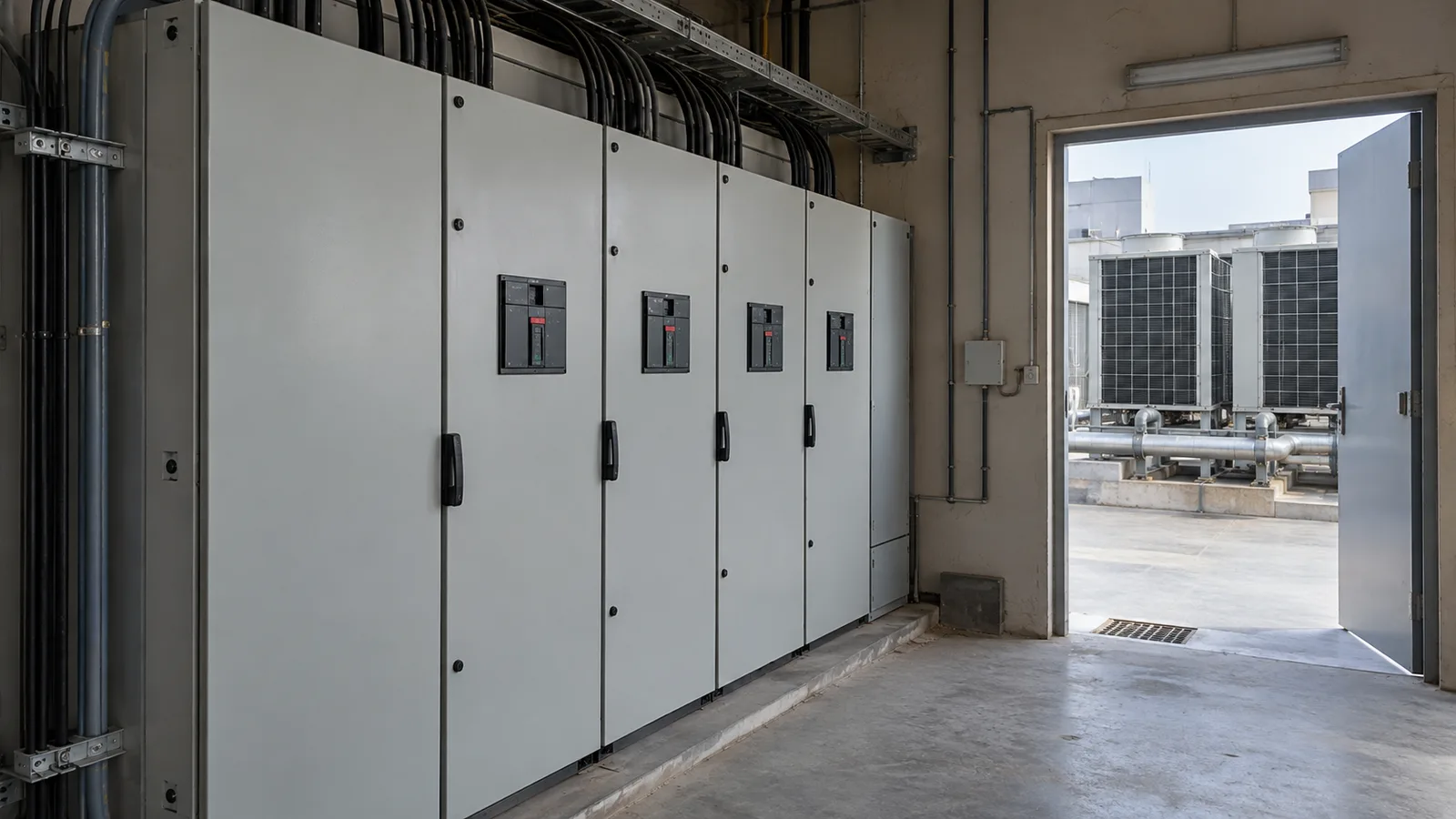
A technical audit reads the site through condition, reliability and technical memory. It asks whether the systems behind the consumption are stable, maintainable, documented and safe enough for the next decision.
This becomes important when symptoms repeat. A hotel with recurring HVAC trips may not have an energy problem first. It may have deteriorated equipment, poor documentation, an overloaded section, weak maintenance history or symptoms that justify deeper qualified diagnosis.
- Electrical condition. Electrical rooms and panels reviewed at owner level: access, visible condition and risk.
- Equipment behavior. Pumps, HVAC, hot water, ventilation, motors, refrigeration and technical rooms.
- Recurring faults. Repeated trips, repeated breakdowns, unstable operation and unresolved patterns.
- Technical memory. Maintenance history, records, photos, open actions and missing documentation.
This lens protects the business from cheap short-term fixes becoming expensive long-term habits. A quick intervention may solve a simple isolated fault. When the same symptom comes back, the site needs evidence and history before another reset turns into another undocumented repeat.
The same symptom can need two readings.
Energy and technical issues often meet at the same symptom. A high bill can be caused by long operating hours, poor controls, inefficient equipment, weak maintenance, or a technical fault that makes equipment run harder than it should. A repeated fault can also create energy waste if the system keeps operating outside normal condition.
- When is energy used?
- Which loads dominate?
- Are schedules efficient?
- Are controls working?
or Repeated Fault
- Is equipment deteriorated?
- Are faults recurring?
- Is the system documented?
- Is deeper diagnosis needed?
A useful audit follows the evidence before naming the service. If the energy pattern explains the issue, the next step may be an energy roadmap. If the equipment condition or fault history explains it, the next step may be technical correction, maintenance planning or deeper diagnosis.
Choosing the right first step.
If the site mainly needs to understand consumption, cost and efficiency, the energy lens is usually the right start. If the site has repeated faults, unclear technical condition, old equipment, weak documentation or a maintenance contract under discussion, the technical lens usually comes first.
Many business sites need both, but at different depths. The risk is paying for the wrong certainty. A polished energy report can leave undocumented technical risk unresolved. A technical report can leave solar sizing unclear if it never reads the load profile.
Conceptual selector. Final scope depends on site context and engineering review.
Where maintenance fits in this picture.
Maintenance can absolutely reduce energy waste. Dirty filters, neglected pumps, poor ventilation, weak controls and worn components can all increase consumption or reduce comfort. But those actions should still be named correctly.
If cleaning filters restores HVAC performance, that is a maintenance action with an energy benefit. If a pump repair restores normal operation, that is corrective work that may also reduce avoidable consumption. If schedule changes reduce unnecessary runtime, that may be an efficiency measure. The label matters because budget, urgency, approval and follow-up are different.
Where power quality belongs.
Power quality describes how stable and clean the electricity feeding the site is. It becomes relevant when symptoms point beyond ordinary maintenance or straightforward correction: nuisance trips, unstable equipment, motor issues, sensitive electronics problems, repeated unexplained failures or voltage-related symptoms.
- Nuisance trips that return.
- Unstable equipment behavior.
- Recurring motor issues.
- Sensitive electronics problems.
- Repeated unexplained failures.
- Voltage-related symptoms.
It requires qualified equipment, proper measurement conditions and interpretation. In the right case, it protects the business from repeatedly replacing parts while the electrical symptom behind the failure remains unknown.
How the final recommendation changes.
The audit type changes the output. Energy findings usually lead toward consumption monitoring, scheduling, control improvements, efficiency measures, solar feasibility or investment prioritization. Technical findings usually lead toward corrective actions, condition review, maintenance planning, documentation cleanup, recurring-fault tracking or deeper diagnosis.
- Efficiency measures
- Operating-schedule changes
- Control improvements
- Consumption monitoring
- Solar feasibility
- Investment prioritization
- Corrective actions
- Equipment condition review
- Maintenance planning
- Documentation cleanup
- Recurring fault tracking
- Power quality investigation
- Replacement planning
- Risk prioritization
The output should leave management with a clean decision path: what to correct now, what to maintain, what to monitor, what to study more deeply and what deserves investment. If the report cannot separate those categories, the next step is still unclear.
Asking for savings too early creates false confidence.
“How much will this save?” is a reasonable question, but it should come after the problem, baseline and action category are clear. Otherwise the answer may look precise while resting on weak assumptions.
This is the hidden cost of skipping proper scope. The business may approve a low-cost visit, a fast ROI table or a simple replacement recommendation, then keep paying through repeated call-outs, unclear responsibility, lost technical history or a solution that addresses the symptom instead of the cause.
ROI becomes useful when the scope, baseline and action category are clear.
Engineering principle
How ReneWave approaches both kinds of audit.
ReneWave starts by clarifying the baseline: bills, operating schedules, major loads, equipment condition, electrical symptoms, recurring faults, maintenance history, site constraints and the client objective. The goal is to classify findings correctly so recommendations reflect site reality rather than assumptions.
- Maintenance action
- Corrective action
- Efficiency measure
- Deeper diagnosis
- Solar feasibility
- Investment project
- Monitoring item
- Documentation cleanup
In service terms: a Technical Audit creates the technical baseline; energy and consumption analysis supports the efficiency roadmap and solar feasibility where relevant; and ReneWcare Max keeps technical findings visible over time through maintenance, documentation, recurring-fault tracking and structured follow-up.
The key takeaway.
An energy audit explains how energy is used and where efficiency opportunities may exist. A technical audit explains whether the systems behind that energy use are reliable, documented, maintainable and technically ready for the next decision.
The strongest recommendations come from reading both lenses when needed, then classifying findings before calculating ROI, approving corrective work, planning maintenance or investing in new equipment.
Frequently asked questions.
Related guides & services.
Technical & Energy Audit Playbook
All practical guides on technical audits, energy performance, electrical reliability, power quality and action planning.
Open ArticleWhat Is a Technical & Energy Audit?
What an audit reviews on a business site, how it builds a technical baseline, and how findings become prioritized decisions.
Open ServiceTechnical Audit
The baseline assessment for sites with unknown systems, recurring faults, old equipment or unclear technical condition.
Open ServiceReneWcare Max
Structured preventive and corrective maintenance with reports, follow-up and warranty coordination where applicable.
Open HubMaintenance Guides
Practical guides on planning, scope, electrical reliability and continuity for business sites.
Open Talk to usDiscuss an Audit Need
Tell us about your site. We respond with a structured assessment shaped by your operating reality.
Open