News date · 14/09/2026
Published by ReneWave 21/09/2026
ReneWave · News · Morocco
OCP tests solar battery storage at Benguerir
OCP aims to use more of its solar electricity and reduce grid purchases during high-consumption hours. The batteries are being tested; savings remain to be confirmed.
ReneWave
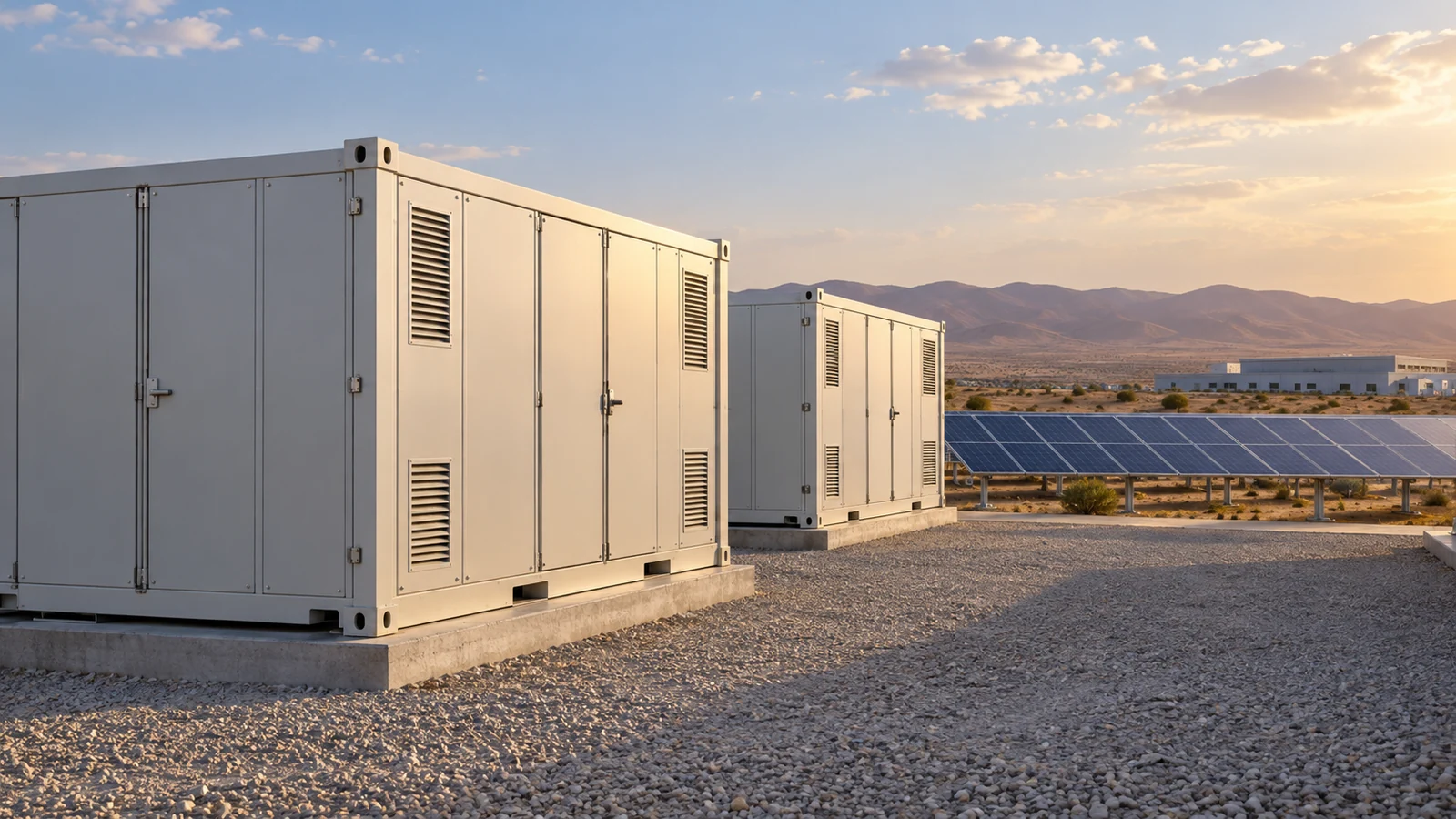
Generated contextual illustration; it does not depict the announced site or project.
- Announced stored energy
- 125 MWhAnnouncement
An electricity reserve, not annual production.
- Announced power
- 25 MWAnnouncement
The system’s nominal discharge rate.
- Reported investment
- About MAD 170 millionAnnouncement
Equipment, construction and engineering, according to Médias24.
OCP moves into industrial storage testing
OCP Green Energy announced the energisation of its Benguerir battery storage installation on 14 September. On 21 September, supplier Envision confirmed that the 25 MW / 125 MWh system was undergoing testing before commercial operation. It uses lithium iron phosphate batteries, known as LFP.
The installation accompanies the mining site’s existing 67 MWp photovoltaic plant in Rehamna province. The electricity serves OCP’s activities. Storage is intended to make some of that solar available at a different time from its generation, with an economic goal: reducing electricity purchases during high-consumption hours.
Why store electricity if the grid can supply it?
A demand peak means the site needs a lot of electricity at the same time, for example when several machines work together. It does not, by itself, mean the grid is short of electricity. The reviewed sources do not describe an inability to supply Benguerir during these periods.
Continuing to buy from the grid is therefore the alternative against which to understand storage. The stated aim here is to make better use of the site’s solar and reduce those purchases, not to enable an activity described as impossible without batteries. Envision forecasts approximately 25% lower electricity bills during peak hours.
In practice, surplus daytime solar charges the batteries. During high consumption, that reserve supplies part of the electricity needed: the machines still have the same requirements, but stored solar replaces some grid purchases. The diagram shows this change in electricity source without simulating site measurements.
The 125 MWh is nominal stored energy; 25 MW is discharge power. Their ratio corresponds to five hours at full power before losses and limits, not five hours of battery autonomy for the entire mine. The announcements do not specify discharge hours or a demand curve.
WHAT STORAGE CHANGES
Understand the demand, then the role of the reserve
A teaching example without numerical data, followed by the solar-shifting principle announced for Benguerir.
UNDERSTANDING A PEAK
More demand at the same moment
Less intensive activity, for example.
Several machines working together, for example.
A peak is a period of particularly high electricity demand. It is not necessarily at night.
The battery changes where electricity comes from
The equipment keeps working
Part of the electricity comes from the reserve: less needs to be bought from the grid at that moment.
Conceptual example, without proportions: this is not an equipment inventory or site measurements. Direct solar and other supplies are omitted to isolate the battery’s role.
01During daylight: store part of the solar energy
Generation can supply the site directly; the surplus intended for storage charges the batteries.
02During peaks: use that reserve on site
Stored solar replaces some grid purchases; actual savings remain to be measured.
The grid remains an electricity source. Stored solar aims to reduce purchases without reducing the machines’ needs.
MAD 170 million to weigh against actual savings
Médias24 reports investment of close to MAD 170 million, covering batteries and equipment, civil and electrical works, studies and project management. The outlet says Moroccan expertise handled integration and project delivery.
Storage has its own cost and delivers less energy than it receives. Assessing its economics therefore requires comparing avoided purchases with investment, energy losses and operating costs. Using more of the site’s solar does not automatically guarantee a profitable project.
The announced 25% is a forecast for peak-hour bills, not the entire annual bill or a return on investment. High consumption does not necessarily mean a higher tariff. OCP’s contract, annual net savings and payback period are not published in the reviewed sources.
The next step is to complete testing and enter commercial operation, with no firm date given. For Moroccan industry, Benguerir is testing the value of storage paired with solar at scale. Operating results will help assess the economic promise.
