Solar Technology Atlas
    Technology sheet · Inverters

    Hybrid Inverters What matters before buying

    A hybrid inverter can coordinate solar, battery, grid interaction and selected backup behavior. The useful question is whether the proposed model fits the site objective, the battery ecosystem, the protected-load plan and the support path that will remain after installation.

    Solar + batteryBackup outputCompatibility
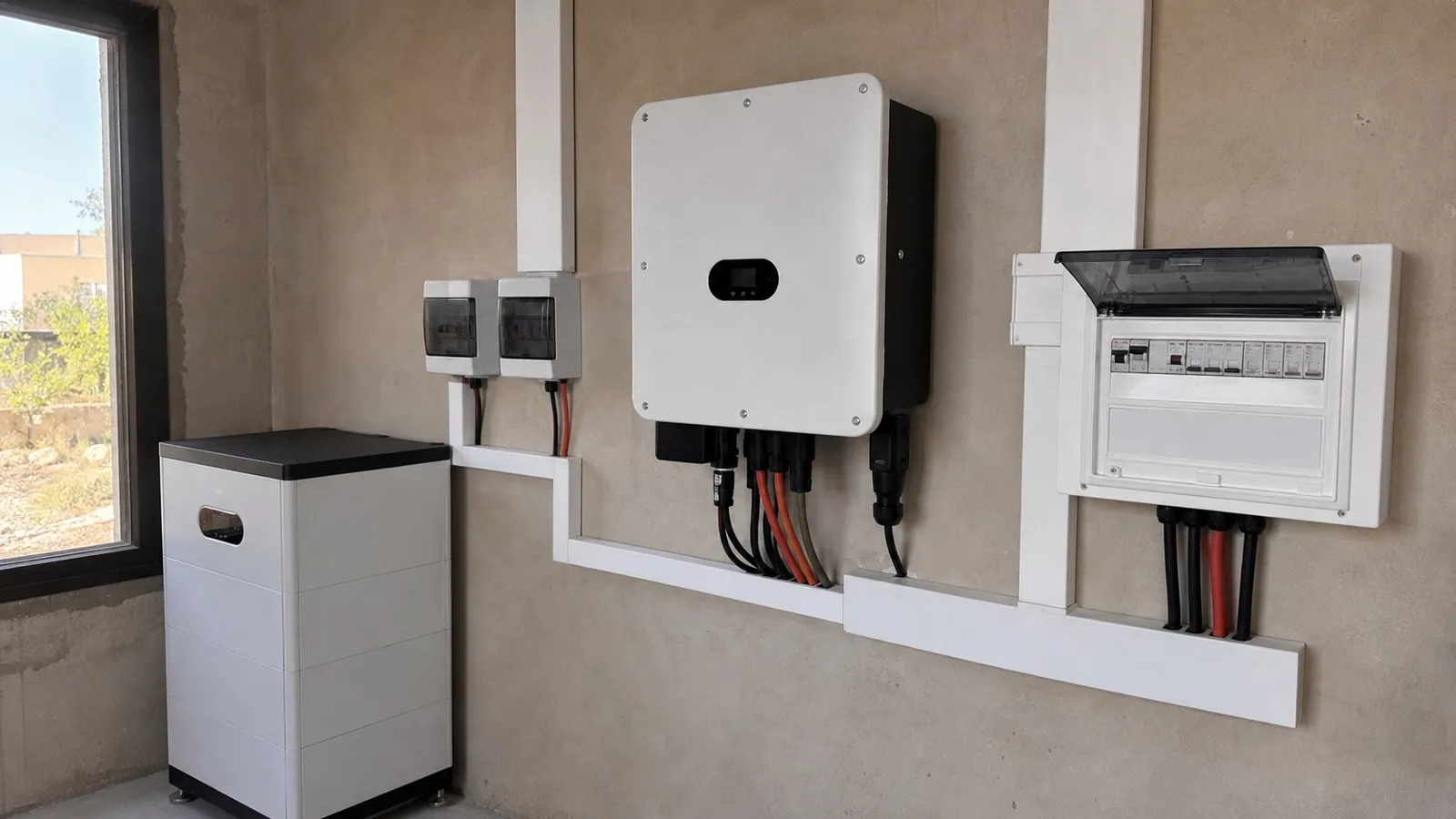
    Generic hybrid inverter, battery cabinet and protected-load boxes installed with white PVC cable trunking on a Moroccan utility wall
    System view: the inverter, battery cabinet, protection boxes and goulotte belong to one installed scope.
    01 · Start with the energy objective

    Hybrid only makes sense when the job is named.

    A hybrid inverter may be chosen for self-consumption, future battery readiness, selected backup, or a coordinated solar-and-storage ecosystem. Those are different project promises.

    The strongest quote names the objective first, then shows how the inverter model, battery family, protected-load list, monitoring and support route serve that objective.

    01

    Strongest fit

    Hybrid is most convincing when solar, storage and selected backup all have a clear job in the same architecture.

    Solar plus battery path
    Named protected loads
    Future battery readiness with a real plan
    02

    Depends on design

    The useful result is shaped by compatibility, operating mode and commissioning more than by the product label.

    Battery model and communication protocol
    Phase, grid rules and backup output
    Surge loads, monitoring and local support
    03

    Weak fit

    Hybrid can add cost and complexity when the objective is only bill reduction or when backup expectations are vague.

    Stable-grid bill reduction only
    Whole-building backup expectations
    Unsupported batteries or unclear load list
    02 · What the inverter coordinates

    A hybrid inverter connects solar, battery path, grid input and selected loads.

    A solar inverter turns the DC electricity from panels into AC electricity. A hybrid inverter adds a storage path and operating logic: it can coordinate solar production, a compatible battery, grid input where the project allows it, and selected backup loads.

    The word hybrid describes an architecture role. Battery runtime, outage behavior and load coverage still come from the exact model, the supported battery, the protected-load list and the commissioning settings.

    Inverters are older than solar; DOE describes early inverters as 19th-century mechanical devices, while modern PV inverters use solid-state electronics. Hybrid models became more relevant as distributed solar moved toward storage, self-consumption, monitoring and selected backup behavior.

    Operating path

    Grid present and grid lost are different system states.

    Follow the available inputs through the inverter to the circuits the design actually serves.

    01

    While the grid is available

    The system follows its configured operating mode
    Available paths
    PV arrayCompatible battery, if fittedUtility grid
    System control
    Hybrid inverter

    Configured operating mode

    Load outcome
    Normal site supply and selected circuits

    Which circuits are backed up is a separate design decision.

    02

    During a grid outage

    Only designed backup circuits remain in scope
    Available paths
    PV, if the system supports itBattery, if fitted and chargedUtility grid isolated
    System control
    Hybrid inverter

    Backup mode, if specified and commissioned

    Load outcome
    Selected protected loads only

    Other circuits are not backed up by this path.

    Conceptual operating paths, not a wiring diagram. Outage behavior depends on the exact inverter, compatible battery, isolation, protected-load wiring and commissioning.
    03 · Three jobs hybrid can serve

    The same equipment can serve very different project jobs.

    A normal solar inverter handles the solar-to-AC job. Hybrid logic becomes useful when the project also needs storage readiness, battery charging behavior, selected backup output, or a monitored operating mode that coordinates those paths.

    A villa with stable grid power might use hybrid architecture mainly to prepare for a future battery. A small business may care about keeping a router, lighting circuit or control device alive during outages. A farm or workshop may have motor loads that make surge behavior and protected-load selection more important than the word hybrid on the box.

    Once the job is named, the inverter, battery, PV strings, backup output and support route all have to belong together. That is the bridge into value: the extra cost is only useful when it buys a defined system behavior.

    Solar self-consumption

    Hybrid logic can prioritize using solar energy on site before the battery or grid path enters the conversation.

    Battery path

    The inverter becomes part of the battery decision because charge, discharge and communication limits all need to match.

    Selected backup output

    A protected-load output can support chosen circuits when the system is designed for that behavior.

    04 · Scope drives value

    Hybrid value comes from the full installed scope.

    IEA PVPS reports inverter price pressure across multiple market segments, but local quote comparisons still need caution. A hybrid inverter usually sits above a simple on-grid inverter because it carries more roles.

    The useful price question is what that extra scope changes: storage readiness, selected backup, monitoring, battery compatibility, commissioning confidence or support after installation.

    Installed scope stack

    Hybrid value builds layer by layer.

    The inverter is only one layer. Battery capacity, protected-load work, commissioning and support can change the value more than the equipment premium alone.

    Standard on-grid inverter

    Solar-to-AC baseline

    A focused choice when the project objective is direct solar use and no battery or protected-load behavior is being designed.

    Hybrid inverter

    Control layer

    The inverter adds operating modes, battery path logic, monitoring and backup possibilities that need a named project objective.

    Compatible battery

    Storage layer

    The cost case changes again when usable capacity, approved battery models, BMS communication and future replacement path are included.

    Protected-load work

    Continuity layer

    Backup value becomes real only when selected loads, phase behavior, transfer logic and wiring scope are designed and documented.

    Commissioning and support

    Handover layer

    Monitoring access, firmware state, operating settings, warranty records and local support decide whether the installed system remains understandable.

    Source: IEA PVPS Trends in Photovoltaic Applications 2025

    05 · Names on the quote line

    Inverter labels should point back to compatibility and operating mode.

    Hybrid inverter quotes often mix product labels, storage language and backup claims. Each term should help explain the architecture, supported equipment or study assumption.

    Hybrid inverterRead
    Seen as

    Hybrid inverter, storage inverter, solar hybrid inverter

    A power-electronics unit that can coordinate solar input, AC output, battery path and selected grid or backup behavior in one architecture.

    Ask what objective it is serving: self-consumption, battery readiness, selected backup, or a combination of those jobs.

    Battery-ready / storage-readyRead
    Seen as

    Battery-ready, storage-ready, future battery compatible

    The inverter may support batteries later, but only within specific voltage, chemistry, communication and firmware limits.

    The quote should name compatible battery models or a supported battery family before storage readiness carries weight.

    MPPT / PV inputRead
    Seen as

    2 MPPT, PV voltage range, max PV current, string input

    The PV input tells the study how solar strings can connect to the inverter and how different roof areas can be tracked.

    Look for a layout note showing that the proposed panel strings fit the inverter voltage and current window.

    Backup output / EPSRead
    Seen as

    Backup output, EPS output, critical-load output, protected loads

    A separate output or operating mode intended for selected loads when the system is in backup behavior.

    The protected-load list should be named before the backup output rating carries meaning.

    Battery communication / BMS protocolRead
    Seen as

    CAN, RS485, BMS communication, approved battery list

    The inverter and battery may need to exchange state-of-charge, limits, alarms and safety information.

    Compatibility should be confirmed from approved lists, commissioning settings and the support route.

    DC-coupled / AC-coupledRead
    Seen as

    DC-coupled hybrid, AC-coupled storage, retrofit storage

    DC-coupled systems charge storage through a DC path. AC-coupled systems place storage around an AC-side architecture.

    The architecture affects retrofit options, conversion losses, backup behavior and what existing equipment can remain.

    06 · Protected-load proof

    Backup becomes credible when the evidence is filled in.

    A hybrid inverter can be a good solar-plus-storage foundation for self-consumption, future storage or selected backup. Battery-ready and backup-ready deserve separate evidence.

    A real backup proposal names the protected loads, confirms the inverter output, checks battery usable capacity and leaves a commissioning record that explains the operating mode.

    Protected-load worksheet

    A backup claim needs a record behind it.

    A hybrid inverter label opens the conversation. This record shows whether the backup claim is ready to be tested.

    01

    System job

    Self-consumption, battery readiness, selected backup or another named objective.

    Named
    02

    Protected loads

    The circuits or equipment that stay on during backup: network, lighting, pump, controls or other selected loads.

    Listed
    03

    Inverter output

    Continuous and surge capability checked against the protected-load list.

    Checked
    04

    Battery usable capacity

    Usable capacity, discharge limits and battery communication matched to the expected backup behavior.

    Matched
    05

    Transfer behavior

    Backup or EPS behavior, phase requirements and grid interaction documented for the proposed site.

    Defined
    06

    Commissioning record

    Monitoring access, operating mode, firmware state, warranty path and support contact preserved at handover.

    Recorded
    If a line is blank

    Treat the backup promise as unfinished until the load list, battery behavior and commissioning record are explicit.

    07 · Compatibility numbers

    The useful specs connect the objective to the equipment.

    Hybrid inverter specs are useful when they connect the PV array, battery, AC output and protected-load plan. A single power rating cannot explain those relationships alone.

    Treat datasheet numbers as study inputs. Continuous output, peak behavior, MPPT limits, battery compatibility and backup output all need to be read with the site objective.

    kW / kVA
    Continuous AC power
    Details
    Where it appears

    Datasheet, quote line, product label

    What it changes

    Sets the normal output capacity before surge behavior or backup mode is discussed.

    The load profile still decides whether that rating fits the site.

    Peak
    Surge or backup peak
    Details
    Where it appears

    Datasheet backup section

    What it changes

    Helps assess startup behavior for selected motors, pumps, compressors or other demanding loads.

    Peak power is useful only with a named load list and expected startup behavior.

    MPPT
    PV input window
    Details
    Where it appears

    Datasheet electrical input table

    Source: IEA PVPS Task 13 inverter performance report

    What it changes

    Connects the panel string design to voltage, current and tracker count.

    Different roof areas or orientations may need separate MPPT handling.

    Battery
    Compatibility limits
    Details
    Where it appears

    Approved battery list, datasheet, firmware notes

    What it changes

    Defines voltage, chemistry, communication, charge current and discharge current limits.

    A battery-ready inverter still needs a supported battery model and commissioning path.

    EPS / phase
    Backup output and grid behavior
    Details
    Where it appears

    Datasheet backup output and certification sections

    Source: IEEE 1547 and UL 1741 coordination overview

    What it changes

    Connects selected loads, phase requirements, transfer behavior and local interconnection rules.

    Grid and backup behavior should be handled by the study and documented at handover.

    08 · Commissioning and support trail

    The handover should make the operating logic visible.

    A serious proposal shows why hybrid architecture is being used, which equipment is compatible, how the operating mode was commissioned, and what support trail remains.

    Study proof

    Energy objective

    A strong proposal names the reason for using hybrid architecture before equipment size becomes persuasive.

    Self-consumption
    Battery readiness or storage now
    Selected backup or continuity
    Study proof

    Compatibility and sizing

    The technical study connects the inverter to PV strings, battery limits, phase and the protected-load list.

    MPPT and PV voltage/current window
    Battery/BMS model and limits
    Surge loads and backup output
    Study proof

    Commissioning and support

    Hybrid systems depend on settings, monitoring and support staying traceable after installation.

    Monitoring and configuration access
    Firmware and commissioning record
    Warranty and local support route
    09 · Quote review

    Questions that keep the hybrid choice traceable.

    These questions keep the quote practical. They ask the provider to explain the objective, compatibility, protected-load plan and support route in plain terms.

    01

    What exact hybrid inverter model is proposed?

    The model name anchors the datasheet, approved battery list, warranty document and support route.

    02

    Is the battery installed now or only planned later?

    Battery readiness should be tied to a real compatible battery family and a future installation path.

    03

    Which battery models and communication protocols are supported?

    The inverter and BMS need to agree on limits, alarms and state-of-charge logic.

    04

    Which loads are protected during an outage?

    Selected loads should be named before backup behavior or runtime expectations become credible.

    05

    Does the study show PV input, battery limits, phase and backup output compatibility?

    Those checks belong in the solar study and should remain visible in the final proposal.

    06

    What monitoring, commissioning record and warranty route remain after installation?

    Hybrid systems need settings, firmware, serial records and support contacts that survive handover.

    Takeaway

    Hybrid works when the objective, battery path and protected loads are clear.

    The strongest decision starts with the exact inverter model, the battery ecosystem, the operating mode, the protected-load plan and the support record that remain after installation.

    The inverter gives solar and storage one coordinated path.

    The study and commissioning record decide whether backup expectations are realistic.

    Main misunderstanding

    Hybrid value is proven by the project objective. The model, compatible battery, selected loads, monitoring and support path decide whether the technology belongs on the site.

    SOLAR TECHNOLOGY

    Have a hybrid inverter question?

    Send the product name, quote page, datasheet, battery plan or protected-load list. ReneWave can explain what the hybrid inverter line means and which operating assumptions should be visible before it shapes the system.

    ReneWave markRENEWAVE

    Energy systems, held to standard.